
Tập
Modern Marvels: Episode 9
Tóm tắt
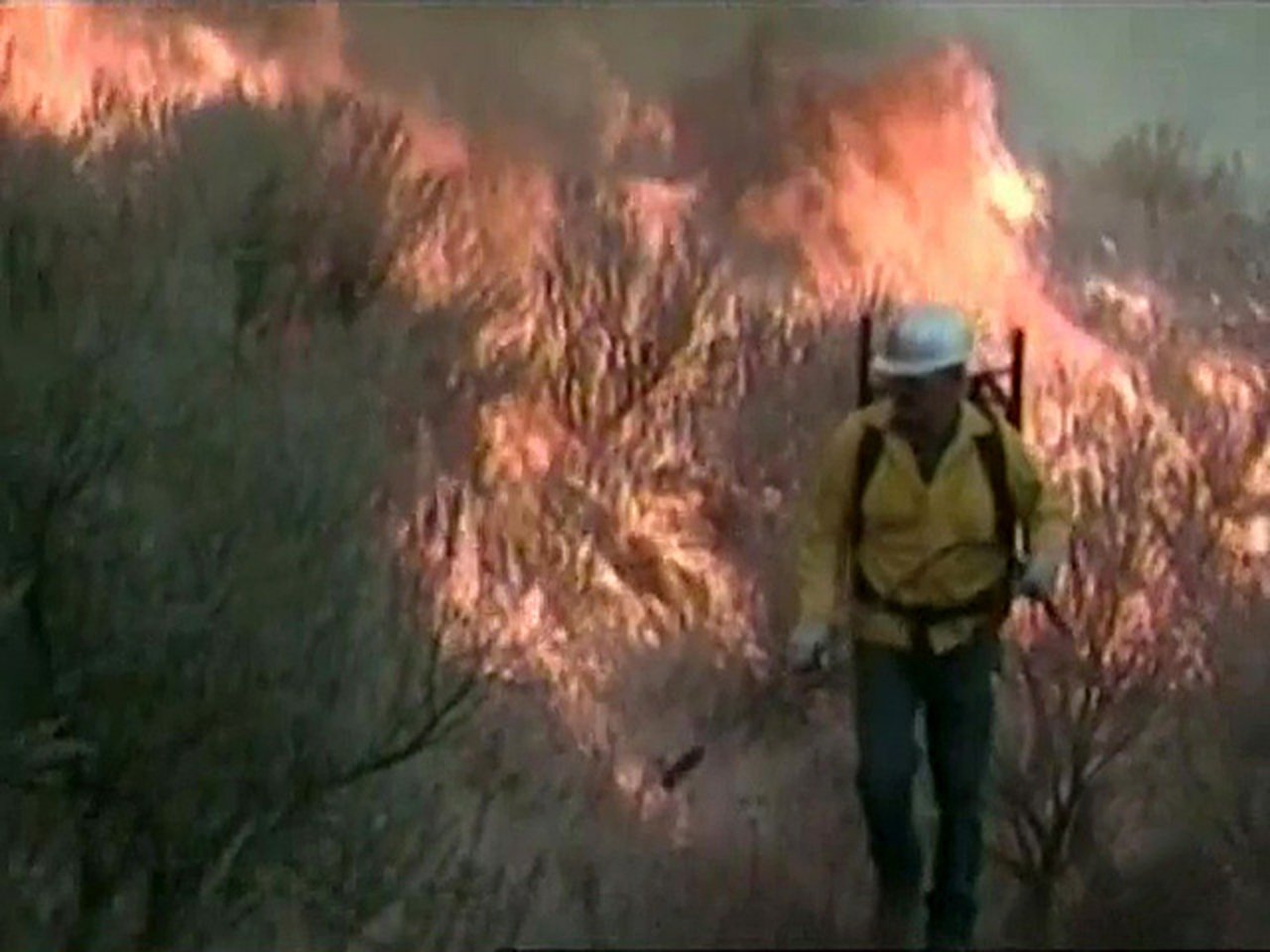
This episode of Modern Marvels examines the most extreme raging fires and the firefighters who tame them. The program features interviews with a World War II firefighter who helped contain the London’s blitz fire. We also meet “Hell Fighters” who fight raging oil well fires, and “smoke jumpers” who parachute into forest fires. Firefighting: Extreme Conditions also takes a look at how NASA guards against the very real risk of a fire aboard a space vessel.
Chi tiết
- Phim bộ
- Modern Marvels
- Mùa
- Mùa 12
- Tập
- Tập 9
- Ngày phát sóng
- 2005-02-15
- Thời lượng
- 44 min
Thông tin tập
Episode 9 là tập 9 trong Season 12 của Modern Marvels. Tập này phát sóng ngày 2005-02-15. Thời lượng là 44 min.
Tập trước / tập sau
 Tập 8
One of the 20th century’s greatest scientists, George Washington Carver’s influence is still felt. Rising from slavery to become one of the world’s most respected and honored men, he devoted his life to understanding nature and the many uses for the simplest of plant life. His scientific research in the late 1800s produced agricultural innovations like crop rotation and composting. Part of the “chemurgist” movement that changed the rural economy, he found ingenious applications for the peanut, soybean, and sweet potato. At Tuskegee Institute, Dr. Carver invented more than 300 uses for the peanut, while convincing poor farmers to rotate cotton crops with things that would add nutrients to the soil. A visionary, Carver shared his knowledge free of charge, happy in his Tuskegee laboratory where he could use his gifts to help others.
Tập 8
One of the 20th century’s greatest scientists, George Washington Carver’s influence is still felt. Rising from slavery to become one of the world’s most respected and honored men, he devoted his life to understanding nature and the many uses for the simplest of plant life. His scientific research in the late 1800s produced agricultural innovations like crop rotation and composting. Part of the “chemurgist” movement that changed the rural economy, he found ingenious applications for the peanut, soybean, and sweet potato. At Tuskegee Institute, Dr. Carver invented more than 300 uses for the peanut, while convincing poor farmers to rotate cotton crops with things that would add nutrients to the soil. A visionary, Carver shared his knowledge free of charge, happy in his Tuskegee laboratory where he could use his gifts to help others.
 Tập 10
It’s hot, dry, deadly, and hard to ignore with close to 40% of Earth classified as desert. But in this scorching hour, the desert turns from barren wasteland into an environment rich with hope. In the Middle East, desalination of seawater now fills water needs. Americans have created booming desert communities like Las Vegas, where the Hoover Dam produces hydroelectric power and manmade Lake Mead supplies water. Native Americans farmed the desert on a small scale, but 20th-century technology begot greater opportunity. Once desolate areas of California and Mexico now grow agriculture due to irrigation, and the desert’s abundant sunshine allows solar-energy and wind-power production. And in the future, desert technology may enable colonization of planets like Mars. We also take a look at how refrigeration and air conditioning have made life in desert communities tolerable, and examine the latest in survival gear and equipment.
Tập 10
It’s hot, dry, deadly, and hard to ignore with close to 40% of Earth classified as desert. But in this scorching hour, the desert turns from barren wasteland into an environment rich with hope. In the Middle East, desalination of seawater now fills water needs. Americans have created booming desert communities like Las Vegas, where the Hoover Dam produces hydroelectric power and manmade Lake Mead supplies water. Native Americans farmed the desert on a small scale, but 20th-century technology begot greater opportunity. Once desolate areas of California and Mexico now grow agriculture due to irrigation, and the desert’s abundant sunshine allows solar-energy and wind-power production. And in the future, desert technology may enable colonization of planets like Mars. We also take a look at how refrigeration and air conditioning have made life in desert communities tolerable, and examine the latest in survival gear and equipment.
Các tập khác trong mùa này
 Tập 7
In a carnivorous world, a butcher is a necessary link in the food chain, carving a carcass of unsavory flesh into mouthwatering cuts. We trace the grisly trade's evolution–from yesteryear's butcher-on-every-corner to today's industrial butcher working on a "disassembly" line. We tour the infamous remains of the Chicago Stockyards, where Upton Sinclair, Clarence Birdseye, and refrigeration changed butchering forever; witness high-speed butchering; and travel to a non-stop sausage factory. And if you're still squeamish, a USDA inspector offers the lowdown on HACCP–the country's new system of checks and balances on everything from quality grading to E. coli, Salmonella, and Mad Cow Disease. Finally, we visit the last bastion of old-school butchering–the rural custom butcher, who slaughters, eviscerates, skins, and cuts to his customer's wishes.
Tập 7
In a carnivorous world, a butcher is a necessary link in the food chain, carving a carcass of unsavory flesh into mouthwatering cuts. We trace the grisly trade's evolution–from yesteryear's butcher-on-every-corner to today's industrial butcher working on a "disassembly" line. We tour the infamous remains of the Chicago Stockyards, where Upton Sinclair, Clarence Birdseye, and refrigeration changed butchering forever; witness high-speed butchering; and travel to a non-stop sausage factory. And if you're still squeamish, a USDA inspector offers the lowdown on HACCP–the country's new system of checks and balances on everything from quality grading to E. coli, Salmonella, and Mad Cow Disease. Finally, we visit the last bastion of old-school butchering–the rural custom butcher, who slaughters, eviscerates, skins, and cuts to his customer's wishes.
 Tập 11
Come in from the cold while we explore some of Earth's most frigid places and examine how man copes with sub-zero climates. With the advance of technology, our boundaries have expanded–from the North and South Poles, to the depths beneath the Arctic and Antarctic sea ice, to the Moon, Mars, and outward to Saturn. Enter these forbidding territories, guided by a special breed of experts as we inspect the new US South Pole Station, try on the latest Polartec fashions with anti-microbial fibers, ride on the newest snowmobiles and Sno-Cats, sail through glacial waters on ice-breaking ships, and fly on an LC-130 transport plane. And we'll see what NASA has on the planning board for deep-space exploration, including a beach-ball robot explorer, and learn from scientists studying fish in the waters off Antarctica to understand glycoproteins, which may keep frozen tissue healthy longer for transplantation.
Tập 11
Come in from the cold while we explore some of Earth's most frigid places and examine how man copes with sub-zero climates. With the advance of technology, our boundaries have expanded–from the North and South Poles, to the depths beneath the Arctic and Antarctic sea ice, to the Moon, Mars, and outward to Saturn. Enter these forbidding territories, guided by a special breed of experts as we inspect the new US South Pole Station, try on the latest Polartec fashions with anti-microbial fibers, ride on the newest snowmobiles and Sno-Cats, sail through glacial waters on ice-breaking ships, and fly on an LC-130 transport plane. And we'll see what NASA has on the planning board for deep-space exploration, including a beach-ball robot explorer, and learn from scientists studying fish in the waters off Antarctica to understand glycoproteins, which may keep frozen tissue healthy longer for transplantation.
 Tập 6
Designed in the late 1950s by aeronautical genius Kelly Johnson at the mysterious Skunkworks, the SR-71 Blackbird was the world’s first stealthy aircraft, designed to over-fly enemy territory with impunity while photographing 100,000 square miles in an hour. While serving six American presidents, it saw action on hot and cold war fronts alike. Interviews with crews and commanders, combined with unbelievable footage, put viewers in the cockpit of this amazing spy plane, flying at speeds of 2,000 miles per hour.
Tập 6
Designed in the late 1950s by aeronautical genius Kelly Johnson at the mysterious Skunkworks, the SR-71 Blackbird was the world’s first stealthy aircraft, designed to over-fly enemy territory with impunity while photographing 100,000 square miles in an hour. While serving six American presidents, it saw action on hot and cold war fronts alike. Interviews with crews and commanders, combined with unbelievable footage, put viewers in the cockpit of this amazing spy plane, flying at speeds of 2,000 miles per hour.
 Tập 12
The Oakland Bay Bridge in San Francisco boasts more superlatives than any bridge on earth. Bridge builders of the depression era defied logic and economics and succeeded in building an 8 mile long structure connecting Oakland and San Francisco. Engineer Charles Purcell built two suspension bridges side by side on the San Francisco side of the bay, then built the largest bore tunnel in the world to connect the west side with Oakland’s eastern shores. Modern Marvels shows you how this great feat was accomplished.
Tập 12
The Oakland Bay Bridge in San Francisco boasts more superlatives than any bridge on earth. Bridge builders of the depression era defied logic and economics and succeeded in building an 8 mile long structure connecting Oakland and San Francisco. Engineer Charles Purcell built two suspension bridges side by side on the San Francisco side of the bay, then built the largest bore tunnel in the world to connect the west side with Oakland’s eastern shores. Modern Marvels shows you how this great feat was accomplished.
 Tập 5
Giant robots on the factory floor and in outer space. A floating fortress that's home to 6,000 military personnel, which is almost as long as the Empire State Building is tall. And a diesel engine with 108,000 horsepower. (You read that right.) These giants must be seen to be believed! In this episode, we travel over land and sea to find these and more of the biggest, baddest, most audacious feats of engineering in the world.
Tập 13
An in-depth look at the technology conceived or developed by America’s first billionaire. A passionate aviator, Howard Hughes built and flew planes that broke speed records, and developed war machines, spy aircraft, and commercial airliners. Despite the impressive heights reached by his technological empire, his health and mental well-being were fragile. During his last years, he wasn’t seen publicly or photographed, rarely left the hotel suites he occupied, and was terrified of germs. But when Hughes died in 1976, he left a huge legacy in aviation and technology. When we board an airliner, view TV via satellite, or marvel at America’s military might, we might do well to remember the risk-taker who flew faster than his peers and was at heart an aviator obsessively dedicated to both the art and science of flight.
Tập 5
Giant robots on the factory floor and in outer space. A floating fortress that's home to 6,000 military personnel, which is almost as long as the Empire State Building is tall. And a diesel engine with 108,000 horsepower. (You read that right.) These giants must be seen to be believed! In this episode, we travel over land and sea to find these and more of the biggest, baddest, most audacious feats of engineering in the world.
Tập 13
An in-depth look at the technology conceived or developed by America’s first billionaire. A passionate aviator, Howard Hughes built and flew planes that broke speed records, and developed war machines, spy aircraft, and commercial airliners. Despite the impressive heights reached by his technological empire, his health and mental well-being were fragile. During his last years, he wasn’t seen publicly or photographed, rarely left the hotel suites he occupied, and was terrified of germs. But when Hughes died in 1976, he left a huge legacy in aviation and technology. When we board an airliner, view TV via satellite, or marvel at America’s military might, we might do well to remember the risk-taker who flew faster than his peers and was at heart an aviator obsessively dedicated to both the art and science of flight.
 Tập 4
Think man is unique within the animal kingdom? You might not after this hour that features an amazing collection of earth's non-human inhabitants that use tools, build intricate structures, create traps to capture prey, and perform complex procedures, including farming. From Egyptian vultures utilizing stones to crack open hard-shelled ostrich eggs to chimpanzees using a "tool kit" to extract termites from their nests, we learn that our ability to create tools is not exclusive. Other mammals create subterranean structures, including those prodigious diggers Prairie Dogs, and many animals and insects make devices to augment hunting, such as the Ogre-faced Spider that spins a small web to throw down on unsuspecting passersby. And we're not the only ones to work as a unified, multi-skilled force. Aphid-Raising Ants protect and care for herds of plant juice-sucking aphids that they "milk".
Tập 4
Think man is unique within the animal kingdom? You might not after this hour that features an amazing collection of earth's non-human inhabitants that use tools, build intricate structures, create traps to capture prey, and perform complex procedures, including farming. From Egyptian vultures utilizing stones to crack open hard-shelled ostrich eggs to chimpanzees using a "tool kit" to extract termites from their nests, we learn that our ability to create tools is not exclusive. Other mammals create subterranean structures, including those prodigious diggers Prairie Dogs, and many animals and insects make devices to augment hunting, such as the Ogre-faced Spider that spins a small web to throw down on unsuspecting passersby. And we're not the only ones to work as a unified, multi-skilled force. Aphid-Raising Ants protect and care for herds of plant juice-sucking aphids that they "milk".
 Tập 14
Examine the colorful history of the premier flight test center, and America’s most important aviation facility for more than 60 years, Edwards Air Force Base in California. Every single aircraft to enter the Air Force’s inventory has been put through its paces at Edwards, along with many Navy and Army aircraft as well. With unprecedented access to several forgotten and abandoned facilities on the base, we are guided by Richard Hallion, former chief historian for the US Air Force. Today, Edwards continues to push the envelope. Among the many cutting-edge projects currently being tested is the Airborne Laser, designed to focus a basketball-sized spot of intense heat that could destroy a ballistic missile.
Tập 3
Join us as we explore the vast and varied world of the arch, one of the strongest and most versatile structures made by man. Deceptively simple, an arch can support tremendous weight because its structure is compressed by pressure, and it provides a much more spacious opening than its predecessor–post and lintel construction. Although ancient Egyptians and Greeks experimented with the arch, the Romans perfected it. Medieval Arabs incorporated it into stunning mosque architecture, soon followed by Europe's great medieval churches. In the 19th and 20th centuries, the steel arch became a favorite of architects and structural engineers. Dam builders employed it horizontally, using the water behind the dam to provide the pressure to compress it. And tomorrow, the arch will continue to serve mankind in every form–from nanotechnology to domes on Mars and beyond.
Tập 15
It began as a tool used by prehistoric man to attract animals to the hunt. Over time it became an invaluable study aid for the natural scientist and a popular hobby for hunters and fishermen. Join us for a tantalizing look at the history of taxidermy, the craft of preserving animal skins and using them to recreate a still life of the animal as it appeared in life. We also check out fiberglass reproduction, which is gaining popularity as fish and game regulations become stricter. Finally, we examine human subjects in taxidermy. Using the very latest process of plastination, the once taboo science and art of preserving and displaying human corpses, now draws crowds in Europe, Asia, and the US, proving the age-old practice continues to mesmerize us!
Tập 14
Examine the colorful history of the premier flight test center, and America’s most important aviation facility for more than 60 years, Edwards Air Force Base in California. Every single aircraft to enter the Air Force’s inventory has been put through its paces at Edwards, along with many Navy and Army aircraft as well. With unprecedented access to several forgotten and abandoned facilities on the base, we are guided by Richard Hallion, former chief historian for the US Air Force. Today, Edwards continues to push the envelope. Among the many cutting-edge projects currently being tested is the Airborne Laser, designed to focus a basketball-sized spot of intense heat that could destroy a ballistic missile.
Tập 3
Join us as we explore the vast and varied world of the arch, one of the strongest and most versatile structures made by man. Deceptively simple, an arch can support tremendous weight because its structure is compressed by pressure, and it provides a much more spacious opening than its predecessor–post and lintel construction. Although ancient Egyptians and Greeks experimented with the arch, the Romans perfected it. Medieval Arabs incorporated it into stunning mosque architecture, soon followed by Europe's great medieval churches. In the 19th and 20th centuries, the steel arch became a favorite of architects and structural engineers. Dam builders employed it horizontally, using the water behind the dam to provide the pressure to compress it. And tomorrow, the arch will continue to serve mankind in every form–from nanotechnology to domes on Mars and beyond.
Tập 15
It began as a tool used by prehistoric man to attract animals to the hunt. Over time it became an invaluable study aid for the natural scientist and a popular hobby for hunters and fishermen. Join us for a tantalizing look at the history of taxidermy, the craft of preserving animal skins and using them to recreate a still life of the animal as it appeared in life. We also check out fiberglass reproduction, which is gaining popularity as fish and game regulations become stricter. Finally, we examine human subjects in taxidermy. Using the very latest process of plastination, the once taboo science and art of preserving and displaying human corpses, now draws crowds in Europe, Asia, and the US, proving the age-old practice continues to mesmerize us!