
Tập
Modern Marvels: Episode 14
Tóm tắt
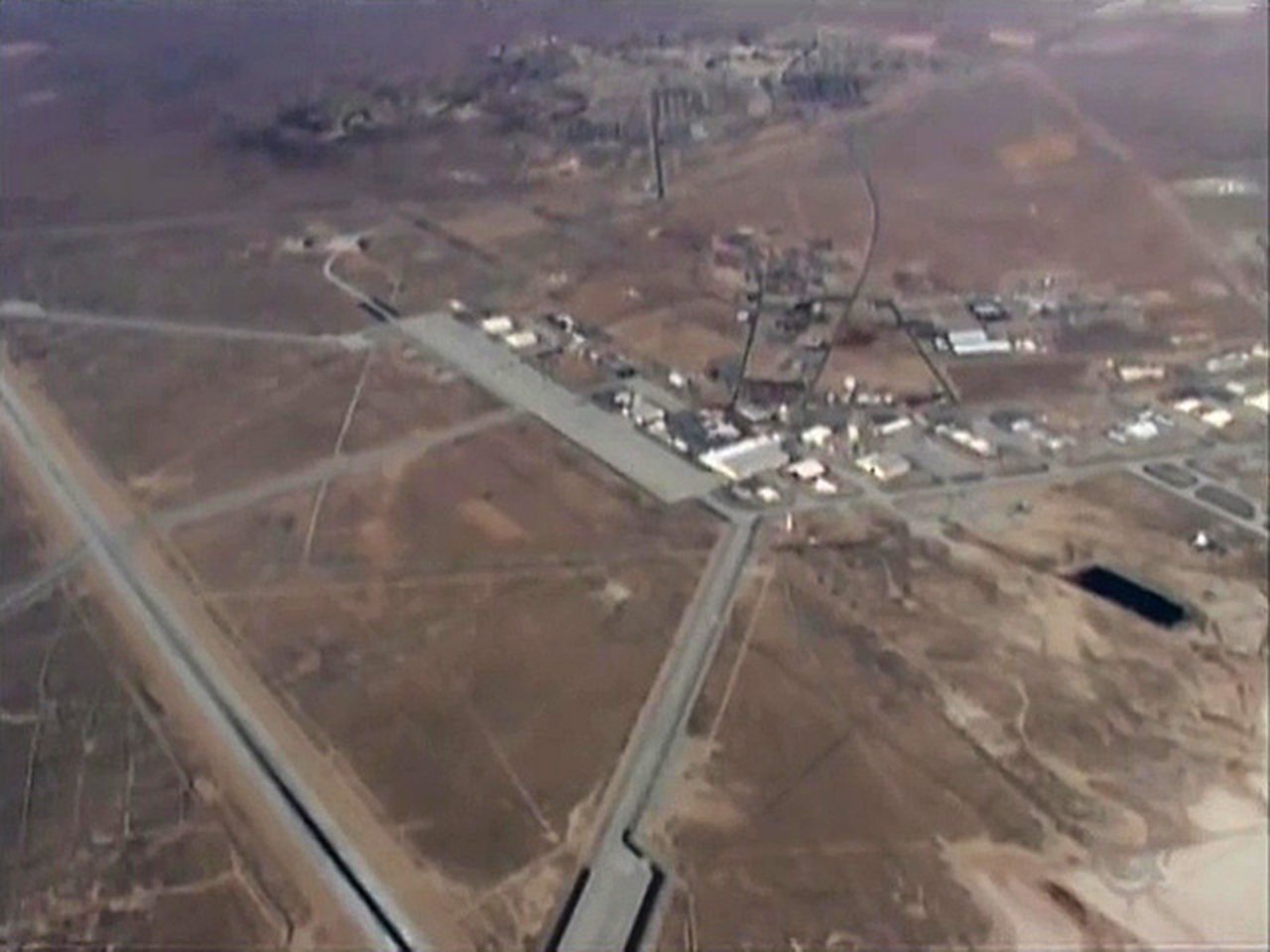
Examine the colorful history of the premier flight test center, and America’s most important aviation facility for more than 60 years, Edwards Air Force Base in California. Every single aircraft to enter the Air Force’s inventory has been put through its paces at Edwards, along with many Navy and Army aircraft as well. With unprecedented access to several forgotten and abandoned facilities on the base, we are guided by Richard Hallion, former chief historian for the US Air Force. Today, Edwards continues to push the envelope. Among the many cutting-edge projects currently being tested is the Airborne Laser, designed to focus a basketball-sized spot of intense heat that could destroy a ballistic missile.
Chi tiết
- Phim bộ
- Modern Marvels
- Mùa
- Mùa 12
- Tập
- Tập 14
- Ngày phát sóng
- 2005-03-02
- Thời lượng
- 44 min
Thông tin tập
Episode 14 là tập 14 trong Season 12 của Modern Marvels. Tập này phát sóng ngày 2005-03-02. Thời lượng là 44 min.
Tập trước / tập sau
 Tập 13
An in-depth look at the technology conceived or developed by America’s first billionaire. A passionate aviator, Howard Hughes built and flew planes that broke speed records, and developed war machines, spy aircraft, and commercial airliners. Despite the impressive heights reached by his technological empire, his health and mental well-being were fragile. During his last years, he wasn’t seen publicly or photographed, rarely left the hotel suites he occupied, and was terrified of germs. But when Hughes died in 1976, he left a huge legacy in aviation and technology. When we board an airliner, view TV via satellite, or marvel at America’s military might, we might do well to remember the risk-taker who flew faster than his peers and was at heart an aviator obsessively dedicated to both the art and science of flight.
Tập 13
An in-depth look at the technology conceived or developed by America’s first billionaire. A passionate aviator, Howard Hughes built and flew planes that broke speed records, and developed war machines, spy aircraft, and commercial airliners. Despite the impressive heights reached by his technological empire, his health and mental well-being were fragile. During his last years, he wasn’t seen publicly or photographed, rarely left the hotel suites he occupied, and was terrified of germs. But when Hughes died in 1976, he left a huge legacy in aviation and technology. When we board an airliner, view TV via satellite, or marvel at America’s military might, we might do well to remember the risk-taker who flew faster than his peers and was at heart an aviator obsessively dedicated to both the art and science of flight.
 Tập 15
It began as a tool used by prehistoric man to attract animals to the hunt. Over time it became an invaluable study aid for the natural scientist and a popular hobby for hunters and fishermen. Join us for a tantalizing look at the history of taxidermy, the craft of preserving animal skins and using them to recreate a still life of the animal as it appeared in life. We also check out fiberglass reproduction, which is gaining popularity as fish and game regulations become stricter. Finally, we examine human subjects in taxidermy. Using the very latest process of plastination, the once taboo science and art of preserving and displaying human corpses, now draws crowds in Europe, Asia, and the US, proving the age-old practice continues to mesmerize us!
Tập 15
It began as a tool used by prehistoric man to attract animals to the hunt. Over time it became an invaluable study aid for the natural scientist and a popular hobby for hunters and fishermen. Join us for a tantalizing look at the history of taxidermy, the craft of preserving animal skins and using them to recreate a still life of the animal as it appeared in life. We also check out fiberglass reproduction, which is gaining popularity as fish and game regulations become stricter. Finally, we examine human subjects in taxidermy. Using the very latest process of plastination, the once taboo science and art of preserving and displaying human corpses, now draws crowds in Europe, Asia, and the US, proving the age-old practice continues to mesmerize us!
Các tập khác trong mùa này
Tập 12
The Oakland Bay Bridge in San Francisco boasts more superlatives than any bridge on earth. Bridge builders of the depression era defied logic and economics and succeeded in building an 8 mile long structure connecting Oakland and San Francisco. Engineer Charles Purcell built two suspension bridges side by side on the San Francisco side of the bay, then built the largest bore tunnel in the world to connect the west side with Oakland’s eastern shores. Modern Marvels shows you how this great feat was accomplished.
Tập 16
 Tập 11
Come in from the cold while we explore some of Earth's most frigid places and examine how man copes with sub-zero climates. With the advance of technology, our boundaries have expanded–from the North and South Poles, to the depths beneath the Arctic and Antarctic sea ice, to the Moon, Mars, and outward to Saturn. Enter these forbidding territories, guided by a special breed of experts as we inspect the new US South Pole Station, try on the latest Polartec fashions with anti-microbial fibers, ride on the newest snowmobiles and Sno-Cats, sail through glacial waters on ice-breaking ships, and fly on an LC-130 transport plane. And we'll see what NASA has on the planning board for deep-space exploration, including a beach-ball robot explorer, and learn from scientists studying fish in the waters off Antarctica to understand glycoproteins, which may keep frozen tissue healthy longer for transplantation.
Tập 11
Come in from the cold while we explore some of Earth's most frigid places and examine how man copes with sub-zero climates. With the advance of technology, our boundaries have expanded–from the North and South Poles, to the depths beneath the Arctic and Antarctic sea ice, to the Moon, Mars, and outward to Saturn. Enter these forbidding territories, guided by a special breed of experts as we inspect the new US South Pole Station, try on the latest Polartec fashions with anti-microbial fibers, ride on the newest snowmobiles and Sno-Cats, sail through glacial waters on ice-breaking ships, and fly on an LC-130 transport plane. And we'll see what NASA has on the planning board for deep-space exploration, including a beach-ball robot explorer, and learn from scientists studying fish in the waters off Antarctica to understand glycoproteins, which may keep frozen tissue healthy longer for transplantation.
 Tập 17
In this fiery hour, we profile five of man's deadliest weapons, focusing on the inventors, battles, and dark technology behind their lethality. We begin with the deadliest bomb ever created, the Tsar Bomba–a 50-megaton nuclear bomb with a yield thousands of times greater than the one dropped on Hiroshima. During WWI, technological advances in weaponry led to the deaths of over 8-million, and one of the deadliest killers was the machine gun. In WWII, the use of incendiary bombs killed hundreds of thousands of people. Another deadly invention of WWII was the proximity fuse, or VT fuse, that allowed artillery to detonate within a predetermined range of an enemy target. Finally, we examine VX nerve gas, thought by many to be the deadliest chemical agent ever created and suspected to have been used by Saddam Hussein with devastating results. We'll visit Edgewood Chemical BioCenter, which plays a large role in protection and detection for our troops in Iraq.
Tập 17
In this fiery hour, we profile five of man's deadliest weapons, focusing on the inventors, battles, and dark technology behind their lethality. We begin with the deadliest bomb ever created, the Tsar Bomba–a 50-megaton nuclear bomb with a yield thousands of times greater than the one dropped on Hiroshima. During WWI, technological advances in weaponry led to the deaths of over 8-million, and one of the deadliest killers was the machine gun. In WWII, the use of incendiary bombs killed hundreds of thousands of people. Another deadly invention of WWII was the proximity fuse, or VT fuse, that allowed artillery to detonate within a predetermined range of an enemy target. Finally, we examine VX nerve gas, thought by many to be the deadliest chemical agent ever created and suspected to have been used by Saddam Hussein with devastating results. We'll visit Edgewood Chemical BioCenter, which plays a large role in protection and detection for our troops in Iraq.
 Tập 10
It’s hot, dry, deadly, and hard to ignore with close to 40% of Earth classified as desert. But in this scorching hour, the desert turns from barren wasteland into an environment rich with hope. In the Middle East, desalination of seawater now fills water needs. Americans have created booming desert communities like Las Vegas, where the Hoover Dam produces hydroelectric power and manmade Lake Mead supplies water. Native Americans farmed the desert on a small scale, but 20th-century technology begot greater opportunity. Once desolate areas of California and Mexico now grow agriculture due to irrigation, and the desert’s abundant sunshine allows solar-energy and wind-power production. And in the future, desert technology may enable colonization of planets like Mars. We also take a look at how refrigeration and air conditioning have made life in desert communities tolerable, and examine the latest in survival gear and equipment.
Tập 10
It’s hot, dry, deadly, and hard to ignore with close to 40% of Earth classified as desert. But in this scorching hour, the desert turns from barren wasteland into an environment rich with hope. In the Middle East, desalination of seawater now fills water needs. Americans have created booming desert communities like Las Vegas, where the Hoover Dam produces hydroelectric power and manmade Lake Mead supplies water. Native Americans farmed the desert on a small scale, but 20th-century technology begot greater opportunity. Once desolate areas of California and Mexico now grow agriculture due to irrigation, and the desert’s abundant sunshine allows solar-energy and wind-power production. And in the future, desert technology may enable colonization of planets like Mars. We also take a look at how refrigeration and air conditioning have made life in desert communities tolerable, and examine the latest in survival gear and equipment.
 Tập 18
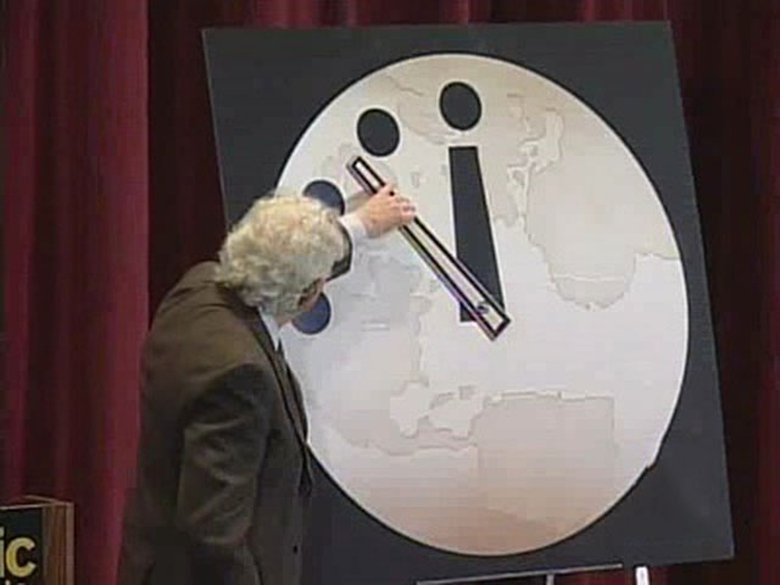
Developed in 1947 as an image to symbolize urgency in the Cold War and the threat of nuclear disaster, the mission of the Doomsday Clock has expanded to include non-nuclear global security issues. Maintained by the Board of Directors of the Bulletin of the Atomic Scientists, it’s based at the University of Chicago. In response to world events, they move the clock’s minute hand closer to or away from midnight–doomsday. In this hour, we cover the clock’s history, its effectiveness, and its critics.
Tập 18
Developed in 1947 as an image to symbolize urgency in the Cold War and the threat of nuclear disaster, the mission of the Doomsday Clock has expanded to include non-nuclear global security issues. Maintained by the Board of Directors of the Bulletin of the Atomic Scientists, it’s based at the University of Chicago. In response to world events, they move the clock’s minute hand closer to or away from midnight–doomsday. In this hour, we cover the clock’s history, its effectiveness, and its critics.
 Tập 9
This episode of Modern Marvels examines the most extreme raging fires and the firefighters who tame them. The program features interviews with a World War II firefighter who helped contain the London’s blitz fire. We also meet “Hell Fighters” who fight raging oil well fires, and “smoke jumpers” who parachute into forest fires. Firefighting: Extreme Conditions also takes a look at how NASA guards against the very real risk of a fire aboard a space vessel.
Tập 9
This episode of Modern Marvels examines the most extreme raging fires and the firefighters who tame them. The program features interviews with a World War II firefighter who helped contain the London’s blitz fire. We also meet “Hell Fighters” who fight raging oil well fires, and “smoke jumpers” who parachute into forest fires. Firefighting: Extreme Conditions also takes a look at how NASA guards against the very real risk of a fire aboard a space vessel.
 Tập 19
Venture down that creaky staircase to explore the most misunderstood room in the house! From Pompeii to Pittsburgh, the dark, cool, and forlorn spaces beneath our living quarters have always contained things that helped us live comfortably. Ancient Hittites, Phrygians, and Persians carved subterranean rooms for food, water, and wine storage, and for shelter from weather and marauders. For ancient Greeks and Romans, a basement greatly increased a house’s value. Ruins of homes at Pompeii reveal the importance of basements in providing both heat and storage for rich Roman families. Renaissance architects placed kitchens, servant quarters, and laundry rooms there, hidden from the eyes of their aristocratic patrons! Colonial Americans expanded the practice, and by the 20th century, the basement was a routine feature. Come along as we demystify this domestic underworld, which turns out to be an area of innovation, imagination, and creativity.
Tập 19
Venture down that creaky staircase to explore the most misunderstood room in the house! From Pompeii to Pittsburgh, the dark, cool, and forlorn spaces beneath our living quarters have always contained things that helped us live comfortably. Ancient Hittites, Phrygians, and Persians carved subterranean rooms for food, water, and wine storage, and for shelter from weather and marauders. For ancient Greeks and Romans, a basement greatly increased a house’s value. Ruins of homes at Pompeii reveal the importance of basements in providing both heat and storage for rich Roman families. Renaissance architects placed kitchens, servant quarters, and laundry rooms there, hidden from the eyes of their aristocratic patrons! Colonial Americans expanded the practice, and by the 20th century, the basement was a routine feature. Come along as we demystify this domestic underworld, which turns out to be an area of innovation, imagination, and creativity.
 Tập 8
One of the 20th century’s greatest scientists, George Washington Carver’s influence is still felt. Rising from slavery to become one of the world’s most respected and honored men, he devoted his life to understanding nature and the many uses for the simplest of plant life. His scientific research in the late 1800s produced agricultural innovations like crop rotation and composting. Part of the “chemurgist” movement that changed the rural economy, he found ingenious applications for the peanut, soybean, and sweet potato. At Tuskegee Institute, Dr. Carver invented more than 300 uses for the peanut, while convincing poor farmers to rotate cotton crops with things that would add nutrients to the soil. A visionary, Carver shared his knowledge free of charge, happy in his Tuskegee laboratory where he could use his gifts to help others.
Tập 8
One of the 20th century’s greatest scientists, George Washington Carver’s influence is still felt. Rising from slavery to become one of the world’s most respected and honored men, he devoted his life to understanding nature and the many uses for the simplest of plant life. His scientific research in the late 1800s produced agricultural innovations like crop rotation and composting. Part of the “chemurgist” movement that changed the rural economy, he found ingenious applications for the peanut, soybean, and sweet potato. At Tuskegee Institute, Dr. Carver invented more than 300 uses for the peanut, while convincing poor farmers to rotate cotton crops with things that would add nutrients to the soil. A visionary, Carver shared his knowledge free of charge, happy in his Tuskegee laboratory where he could use his gifts to help others.
 Tập 20
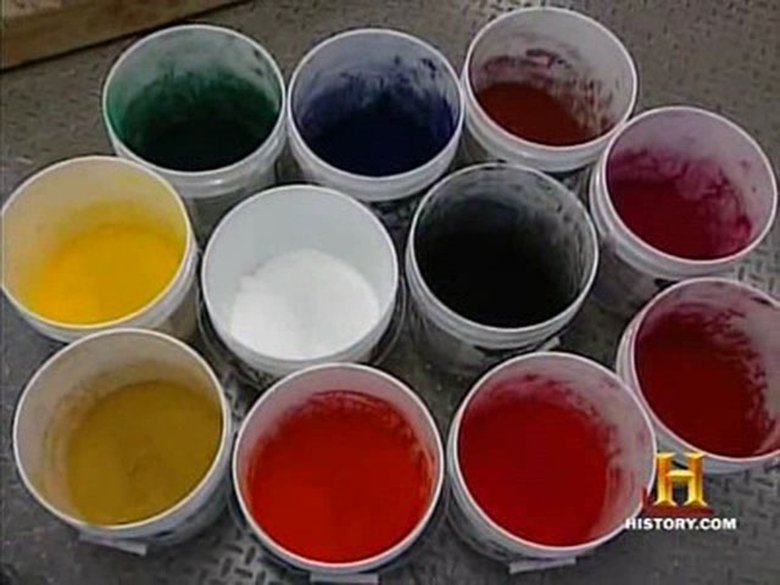
From the Impressionist canvas to the Space Shuttle…from customized hotrods to the brilliant orange hue of the Golden Gate Bridge or tiny electronic devices–paint is one of our most ubiquitous products. And paint adds more than just pigmentation. It’s a crucial engineering element, protecting ships from water corrosion, stovetops from heat, and the Stealth Bomber from radar detection. In homes and businesses, it provides a balanced spectrum of light and protects surfaces from wear. In this colorful hour, we discover how this marvel of chemistry and engineering is made, and how it is applied. Come see what’s beneath the surface as we reveal one of man’s most ingenious methods of defeating the elements and adding spice to life!
Tập 20
From the Impressionist canvas to the Space Shuttle…from customized hotrods to the brilliant orange hue of the Golden Gate Bridge or tiny electronic devices–paint is one of our most ubiquitous products. And paint adds more than just pigmentation. It’s a crucial engineering element, protecting ships from water corrosion, stovetops from heat, and the Stealth Bomber from radar detection. In homes and businesses, it provides a balanced spectrum of light and protects surfaces from wear. In this colorful hour, we discover how this marvel of chemistry and engineering is made, and how it is applied. Come see what’s beneath the surface as we reveal one of man’s most ingenious methods of defeating the elements and adding spice to life!