Tập
NOVA: Episode 1
Tóm tắt
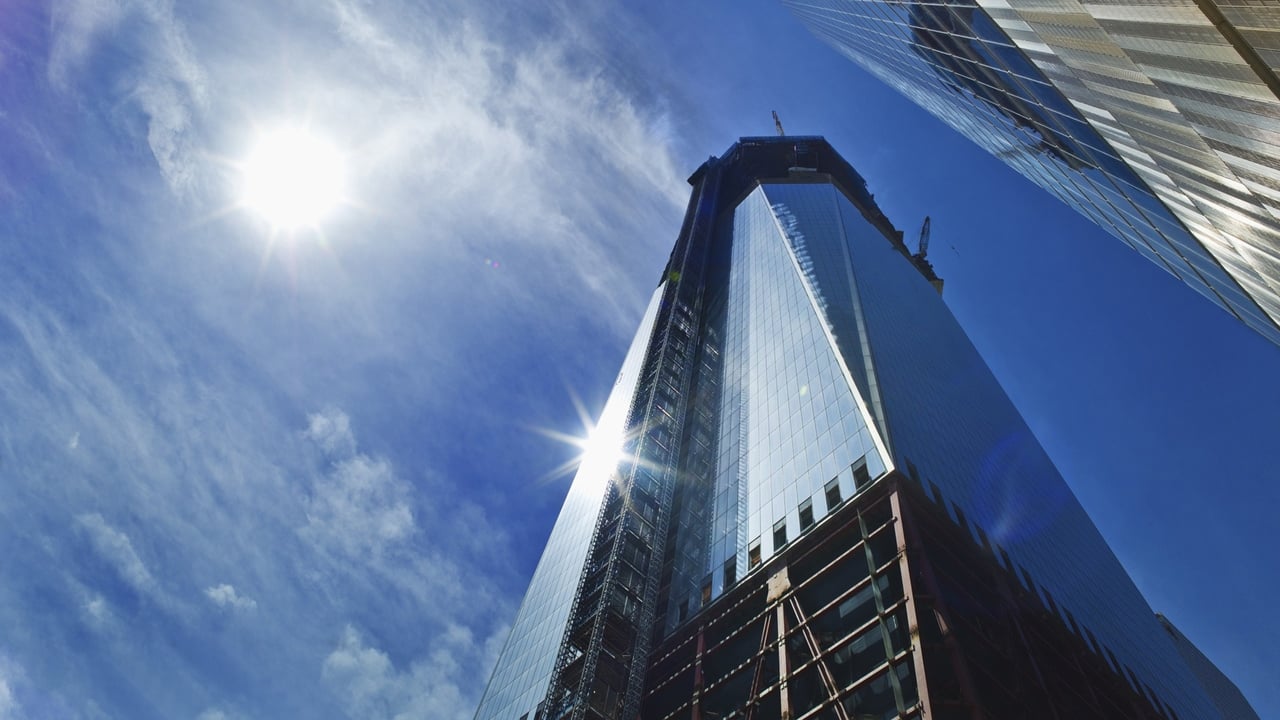
NOVA kicks off the fall season with a return to Ground Zero to witness the final chapter in an epic story of engineering, innovation, and the perseverance of the human spirit. “Ground Zero Supertower” examines the new skyscraper, One World Trade Center, rising up 104 stories and 1,776 feet from the site where the Twin Towers once stood. NOVA also goes underground to see another engineering marvel taking shape here: the construction of the National September 11 Memorial Museum that will house almost a thousand artifacts from that devastating day. In this update of NOVA’s Emmy-nominated special “Engineering Ground Zero,” which featured extraordinary behind-the-scenes access to the struggles of the engineers and architects working at 1 WTC and the 9/11 Memorial, NOVA goes inside the construction of the tower’s final floors and the installation of its soaring, 408-foot spire and beacon.
Chi tiết
- Phim bộ
- NOVA
- Mùa
- Mùa 41
- Tập
- Tập 1
- Ngày phát sóng
- 2013-09-11
- Thời lượng
- 55 min
Thông tin tập
Episode 1 là tập 1 trong Season 41 của NOVA. Tập này phát sóng ngày 2013-09-11. Thời lượng là 55 min.
Tập trước / tập sau
Các tập khác trong mùa này
 Tập 3
Ever since humans stood on two feet we have had the basic urge to go faster. But are there physical limits to how fast we can go? David Pogue wants to find out, and in "Making Stuff Faster," he’ll investigate everything from electric muscle cars and the America’s cup sailboat to bicycles that smash speed records. Along the way, he finds that speed is more than just getting us from point A to B, it's also about getting things done in less time. From boarding a 737 to pushing the speed light travels, Pogue's quest for ultimate speed limits takes him to unexpected places where he’ll come face-to-face with the final frontiers of speed.
Tập 3
Ever since humans stood on two feet we have had the basic urge to go faster. But are there physical limits to how fast we can go? David Pogue wants to find out, and in "Making Stuff Faster," he’ll investigate everything from electric muscle cars and the America’s cup sailboat to bicycles that smash speed records. Along the way, he finds that speed is more than just getting us from point A to B, it's also about getting things done in less time. From boarding a 737 to pushing the speed light travels, Pogue's quest for ultimate speed limits takes him to unexpected places where he’ll come face-to-face with the final frontiers of speed.
 Tập 4
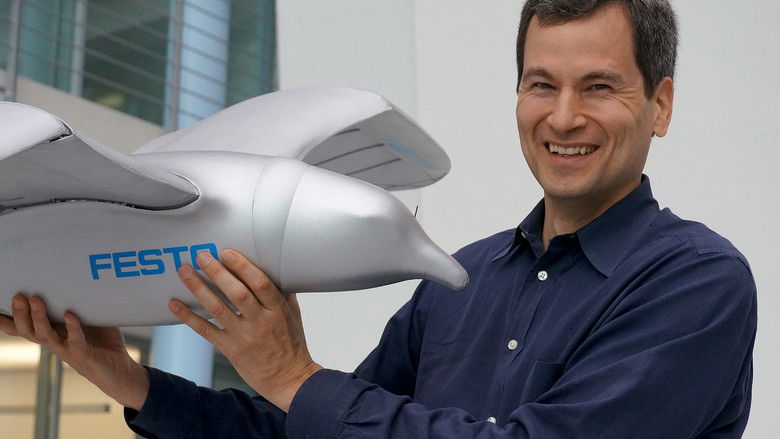
What happens when scientists open up nature's toolbox? In "Making Stuff Wilder," David Pogue explores bold new innovations inspired by the Earth's greatest inventor, life itself. From robotic "mules" and "cheetahs" for the military, to fabrics born out of fish slime, host David Pogue travels the globe to find the world’s wildest new inventions and technologies. It is a journey that sees today's microbes turned into tomorrow’s metallurgists, viruses building batteries, and ideas that change not just the stuff we make, but the way we make our stuff. As we develop our own new technologies, what can we learn from billions of years of nature’s research?
Tập 4
What happens when scientists open up nature's toolbox? In "Making Stuff Wilder," David Pogue explores bold new innovations inspired by the Earth's greatest inventor, life itself. From robotic "mules" and "cheetahs" for the military, to fabrics born out of fish slime, host David Pogue travels the globe to find the world’s wildest new inventions and technologies. It is a journey that sees today's microbes turned into tomorrow’s metallurgists, viruses building batteries, and ideas that change not just the stuff we make, but the way we make our stuff. As we develop our own new technologies, what can we learn from billions of years of nature’s research?
 Tập 5
Cold is the new hot in this brave new world. For centuries we've fought it, shunned it, and huddled against it. Cold has always been the enemy of life, but now it may hold the key to a new generation of science and technology that will improve our lives. In "Making Stuff Colder," David Pogue explores the frontiers of cold science from saving the lives of severe trauma patients to ultracold physics, where bizarre new properties of matter are the norm and the basis of new technologies like levitating trains and quantum computers.
Tập 5
Cold is the new hot in this brave new world. For centuries we've fought it, shunned it, and huddled against it. Cold has always been the enemy of life, but now it may hold the key to a new generation of science and technology that will improve our lives. In "Making Stuff Colder," David Pogue explores the frontiers of cold science from saving the lives of severe trauma patients to ultracold physics, where bizarre new properties of matter are the norm and the basis of new technologies like levitating trains and quantum computers.
 Tập 6
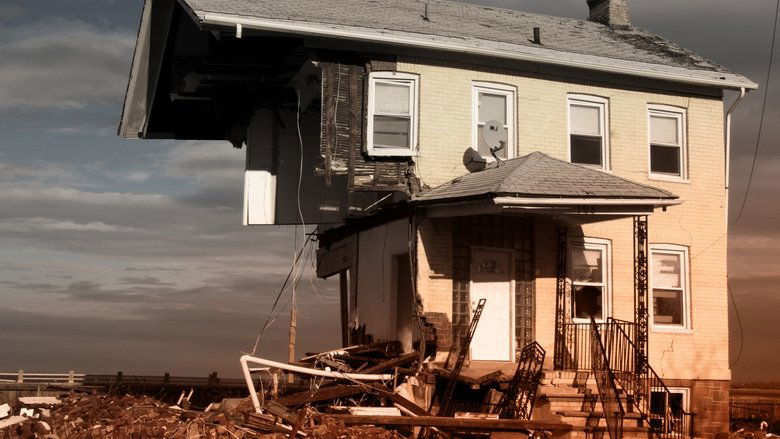
The world has always been a dangerous place, so how do we increase our odds of survival? In "Making Stuff Safer," David Pogue explores the cutting-edge research of scientists and engineers who want to keep us out of harm’s way. Some are countering the threat of natural disasters with new firefighting materials and safer buildings. Others are at work on technologies to thwart terrorist attacks. A next-generation vaccine will save millions from deadly disease. And innovations like smarter cars and better sports gear will reduce the risk of everyday activities. We’ll never eliminate danger—but science and technology are making stuff safer.
Tập 6
The world has always been a dangerous place, so how do we increase our odds of survival? In "Making Stuff Safer," David Pogue explores the cutting-edge research of scientists and engineers who want to keep us out of harm’s way. Some are countering the threat of natural disasters with new firefighting materials and safer buildings. Others are at work on technologies to thwart terrorist attacks. A next-generation vaccine will save millions from deadly disease. And innovations like smarter cars and better sports gear will reduce the risk of everyday activities. We’ll never eliminate danger—but science and technology are making stuff safer.
 Tập 7
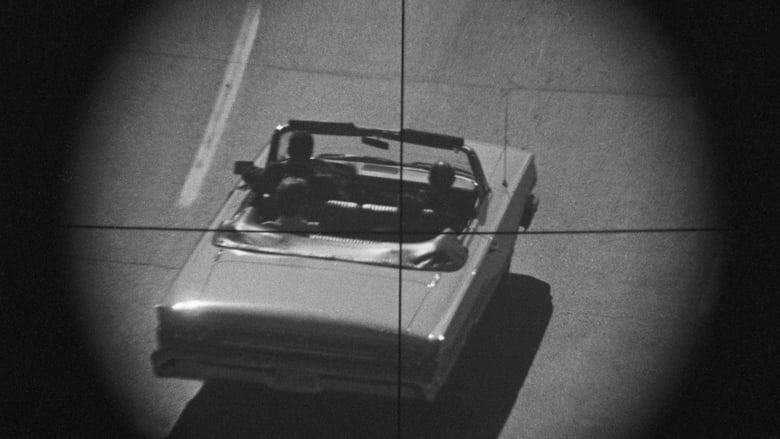
For decades, the assassination of John F. Kennedy has fueled dark rumors of conspiracies and mishandled evidence. Now, fifty years later, NOVA asks: Could modern investigators do better? We’ll see how state-of-the art forensic tools would be applied to the investigation were it to happen today. At the same time, NOVA takes a critical look at contemporary cases, like the murders of Nicole Brown Simpson and Ronald Goldman, to reveal how charges of evidence mishandling and human error can mar even scientifically sophisticated detective work.
Tập 7
For decades, the assassination of John F. Kennedy has fueled dark rumors of conspiracies and mishandled evidence. Now, fifty years later, NOVA asks: Could modern investigators do better? We’ll see how state-of-the art forensic tools would be applied to the investigation were it to happen today. At the same time, NOVA takes a critical look at contemporary cases, like the murders of Nicole Brown Simpson and Ronald Goldman, to reveal how charges of evidence mishandling and human error can mar even scientifically sophisticated detective work.
 Tập 8
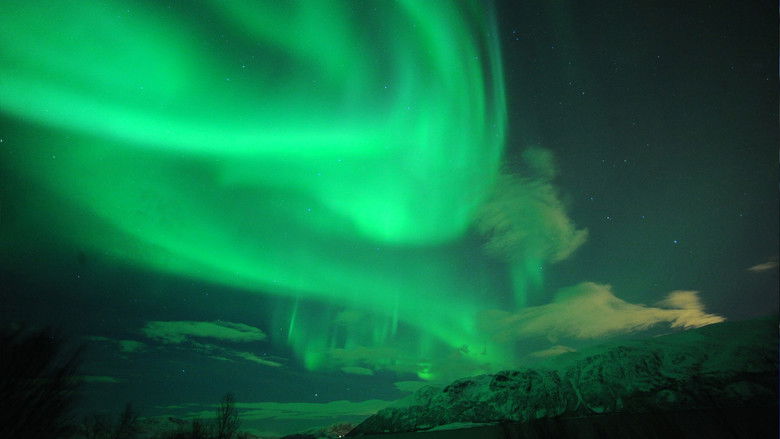
Between the blue sky above and the infinite blackness beyond lies a frontier that scientists have only just begun to investigate. In "At the Edge of Space," NOVA takes viewers on a spectacular exploration of the Earth-space boundary that's home to some of nature's most puzzling and alluring phenomena: the shimmering aurora, streaking meteors, and fleeting flashes that shoot upwards from thunderclouds, known as sprites. Only discovered in 1989, sprites have eluded capture because they exist for a mere split-second—40-times faster than an eye blink. NOVA rides with scientists in a high-flying weather observation plane on a hunt for sprites, finally snaring them in 3D video and gaining vital clues to unraveling their mystery. Combining advanced video technology with stunning footage shot from the International Space Station, "At the Edge of Space" probes the boundary zone and offers an entirely new perspective on our home planet.
Tập 8
Between the blue sky above and the infinite blackness beyond lies a frontier that scientists have only just begun to investigate. In "At the Edge of Space," NOVA takes viewers on a spectacular exploration of the Earth-space boundary that's home to some of nature's most puzzling and alluring phenomena: the shimmering aurora, streaking meteors, and fleeting flashes that shoot upwards from thunderclouds, known as sprites. Only discovered in 1989, sprites have eluded capture because they exist for a mere split-second—40-times faster than an eye blink. NOVA rides with scientists in a high-flying weather observation plane on a hunt for sprites, finally snaring them in 3D video and gaining vital clues to unraveling their mystery. Combining advanced video technology with stunning footage shot from the International Space Station, "At the Edge of Space" probes the boundary zone and offers an entirely new perspective on our home planet.
 Tập 9
The asteroid that exploded over Siberia—injuring more than 1,000 and damaging buildings in six cities—was a shocking reminder that Earth is a target in a cosmic shooting range. From the width of a football field to the size of a small city, these space rocks have the potential to be killers. In a collision with Earth, they could set off deadly blast waves, raging fires and colossal tidal waves. But some audacious entrepreneurs look up at asteroids and see payday, not doomsday. Some asteroids are loaded with billions of dollars’ worth of elements like iron, nickel, and platinum. NASA is planning an ambitious mission to return samples from a potentially hazardous asteroid, and would-be asteroid miners are dreaming up their own program to scout for potentially profitable asteroids. Will asteroids turn out to be our economic salvation—or instruments of extinction?
Tập 9
The asteroid that exploded over Siberia—injuring more than 1,000 and damaging buildings in six cities—was a shocking reminder that Earth is a target in a cosmic shooting range. From the width of a football field to the size of a small city, these space rocks have the potential to be killers. In a collision with Earth, they could set off deadly blast waves, raging fires and colossal tidal waves. But some audacious entrepreneurs look up at asteroids and see payday, not doomsday. Some asteroids are loaded with billions of dollars’ worth of elements like iron, nickel, and platinum. NASA is planning an ambitious mission to return samples from a potentially hazardous asteroid, and would-be asteroid miners are dreaming up their own program to scout for potentially profitable asteroids. Will asteroids turn out to be our economic salvation—or instruments of extinction?
 Tập 10
It’s a golden age for planet hunters: NASA's Kepler mission has identified more than 3,500 potential planets orbiting stars beyond our Sun. Some of them, like a planet called Kepler-22b, might even be able to harbor life. How did we come upon this distant planet?
Tập 10
It’s a golden age for planet hunters: NASA's Kepler mission has identified more than 3,500 potential planets orbiting stars beyond our Sun. Some of them, like a planet called Kepler-22b, might even be able to harbor life. How did we come upon this distant planet?
 Tập 11
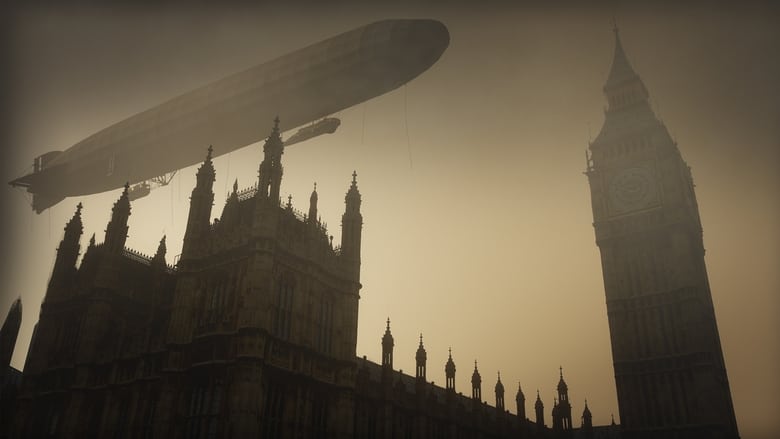
NOVA investigates the technology behind the World War One Zeppelin bombing campaigns, both the airships themselves and the weapons used to try to bring them down.
Tập 11
NOVA investigates the technology behind the World War One Zeppelin bombing campaigns, both the airships themselves and the weapons used to try to bring them down.
 Tập 12
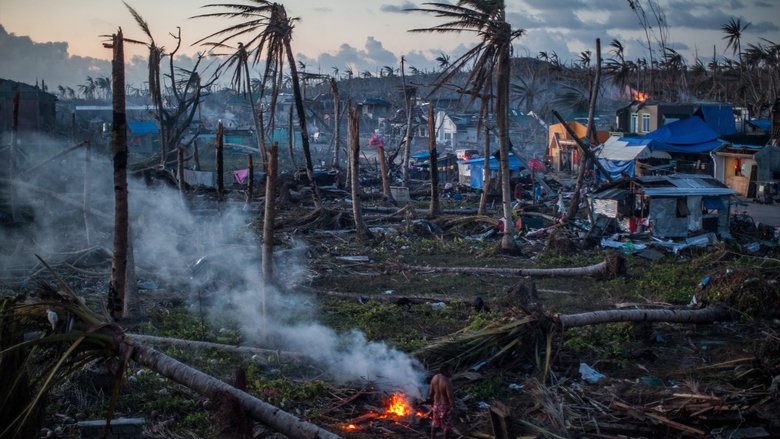
It was the strongest cyclone to hit land in recorded history. On November 8, 2013, Typhoon Haiyan slammed into the Philippines, whipping the low-lying and densely-populated islands with 200 mph winds and sending a two-story-high storm surge flooding into homes, schools, and hospitals. It wiped villages off the map and devastated cities, including the hard-hit provincial capital Tacloban. Estimates count more than 5,000 dead and millions homeless. What made Haiyan so destructive? Meteorologists charged with tracking Pacific storms reveal why the Pacific is such fertile ground for cyclones, and NOVA’s film crew documents how conditions dramatically deteriorated in the storm’s aftermath, as impassable roads and shuttered gas stations paralyzed the critical relief effort, leaving food, water, and medicine to pile up at the airport. Disaster preparedness experts scramble to understand why the Philippines was so vulnerable. As climate change and sea level rise threaten millions of the world’s most impoverished people with stronger, and perhaps more frequent, storms, how can we prepare for the next monster typhoon?
Tập 12
It was the strongest cyclone to hit land in recorded history. On November 8, 2013, Typhoon Haiyan slammed into the Philippines, whipping the low-lying and densely-populated islands with 200 mph winds and sending a two-story-high storm surge flooding into homes, schools, and hospitals. It wiped villages off the map and devastated cities, including the hard-hit provincial capital Tacloban. Estimates count more than 5,000 dead and millions homeless. What made Haiyan so destructive? Meteorologists charged with tracking Pacific storms reveal why the Pacific is such fertile ground for cyclones, and NOVA’s film crew documents how conditions dramatically deteriorated in the storm’s aftermath, as impassable roads and shuttered gas stations paralyzed the critical relief effort, leaving food, water, and medicine to pile up at the airport. Disaster preparedness experts scramble to understand why the Philippines was so vulnerable. As climate change and sea level rise threaten millions of the world’s most impoverished people with stronger, and perhaps more frequent, storms, how can we prepare for the next monster typhoon?