
Tập
Modern Marvels: Episode 36
Tóm tắt
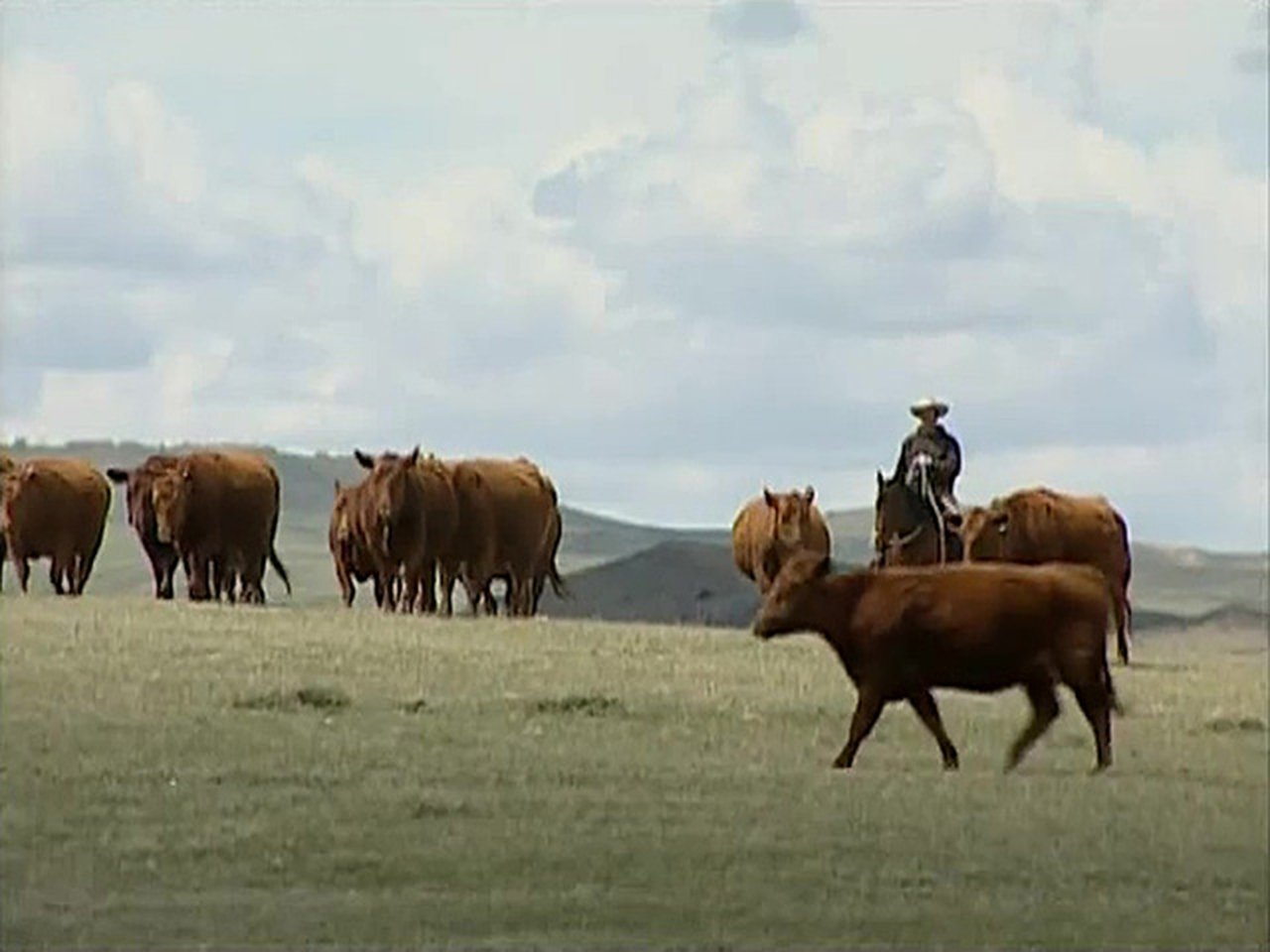
Today’s cowboy plants one boot firmly in the traditions of the Old West and the other in the world of modern technology. Beginning in the 19th century, the era in which the American cattle industry boomed, we examine cowboy technology. Learn how North American cowboys converted saddles, ropes, spurs, and other equipment originally developed by the Spanish, into tools of the trade perfectly suited for the developing cattle industry. And see how the invention of barbed wire revolutionized the cowboy’s world. Step into the 21st century with today’s cowboys who use computer chips, retinal scans, DNA evidence to round up cattle rustlers, and high-tech digital-imaging devices to aid in shoeing horses…and ride ATVs as often as their horses. In the world of rodeo, witness today’s cowboys as they utilize advanced theories of genetics and artificial insemination in an attempt to breed the perfect bucking bull.
Chi tiết
- Phim bộ
- Modern Marvels
- Mùa
- Mùa 12
- Tập
- Tập 36
- Ngày phát sóng
- 2005-07-20
- Thời lượng
- 44 min
Thông tin tập
Episode 36 là tập 36 trong Season 12 của Modern Marvels. Tập này phát sóng ngày 2005-07-20. Thời lượng là 44 min.
Tập trước / tập sau
 Tập 35
Route 66, encompassing eight states from Illinois to California and 2,400 miles, represented an American myth–that something better lay over the rainbow. Route 66 began in the early 20th century when a confluence of technologies–automotive, steel construction, and concrete paving–merged with population explosion, westward migration, and prosperity after WWI. The federal government responded with highway bills that converted existing roadways into an interstate called Route 66. Later, WWII highlighted the need for a strategic system similar to Germany's Autobahn–wider, safer, and more advanced. As federal and state governments worked on a superhighway, millions sought "their kicks on Route 66." By 1985, the abandoned roadway no longer "officially" existed, yet, it remains a destination for nostalgic travelers wishing to recapture a simpler, more adventurous era.
Tập 35
Route 66, encompassing eight states from Illinois to California and 2,400 miles, represented an American myth–that something better lay over the rainbow. Route 66 began in the early 20th century when a confluence of technologies–automotive, steel construction, and concrete paving–merged with population explosion, westward migration, and prosperity after WWI. The federal government responded with highway bills that converted existing roadways into an interstate called Route 66. Later, WWII highlighted the need for a strategic system similar to Germany's Autobahn–wider, safer, and more advanced. As federal and state governments worked on a superhighway, millions sought "their kicks on Route 66." By 1985, the abandoned roadway no longer "officially" existed, yet, it remains a destination for nostalgic travelers wishing to recapture a simpler, more adventurous era.
 Tập 37
A simple flush and it’s forgotten. But haven’t you secretly wondered where it all goes when we go? Join us as we explore this less-than-polite topic, and examine the network of underground pipes and tunnels that carries human waste and excess storm water away. From ancient Rome’s pristine sewage-conveying systems, through the disease-spreading, out-the-window system of Europe in the Middle Ages, and into the progressive sanitation engineering of the 19th and 20th centuries, we go with the flow of sewage history. And we sift through the flotsam and jetsam of our cities’ sewer systems and delve into the sewers of Paris, Boston, and Los Angeles to study waste management’s evolution. We meet a sewer diver (and his robotic counterpart) who inspects and ensures the efficient operation of the conduits; decipher the myths about “treasures” and creatures found in the murky depths; and find out exactly where it goes, how it gets there, and how we’ve learned to use it to our benefit.
Tập 37
A simple flush and it’s forgotten. But haven’t you secretly wondered where it all goes when we go? Join us as we explore this less-than-polite topic, and examine the network of underground pipes and tunnels that carries human waste and excess storm water away. From ancient Rome’s pristine sewage-conveying systems, through the disease-spreading, out-the-window system of Europe in the Middle Ages, and into the progressive sanitation engineering of the 19th and 20th centuries, we go with the flow of sewage history. And we sift through the flotsam and jetsam of our cities’ sewer systems and delve into the sewers of Paris, Boston, and Los Angeles to study waste management’s evolution. We meet a sewer diver (and his robotic counterpart) who inspects and ensures the efficient operation of the conduits; decipher the myths about “treasures” and creatures found in the murky depths; and find out exactly where it goes, how it gets there, and how we’ve learned to use it to our benefit.
Các tập khác trong mùa này
Tập 34
Join our journey along monumental feats of engineering that preserved America's natural wonders while paving the way towards her future. Travel the Donner Pass in the Sierra Nevada Mountains, site of a dark chapter in US history. Today, crews use the latest technology to keep I-80 open during the worst winter storms. Enjoy the view while traveling to the summit of Pike's Peak in Colorado, inspiration for America the Beautiful. The "Going-to-the-Sun-Road" slices through Montana's majestic Glacier National Park, crossing the Continental Divide and allowing motorists unsurpassed views of mountain scenery. Outside Denver, the Eisenhower Memorial Tunnel, carved through mountain rock, united eastern and western Colorado. And the Blue Ridge Parkway, which took 52 years to complete, snakes through large, scenic swatches.
 Tập 38
When this 60 tons of high-tech military hardware rumbles onto the battlefield at nearly 40 mph, there's nowhere for the enemy to hide. Behind its impenetrable armor lies one of the most effective computerized weapons systems. Its main weapon--an awesome 120mm rifled gun that can take out a football-sized moving target three miles away. Men who serve in this metallic monster claim the hard-hitting warhorse is the world's best battle tank. An underdog during military competitions in the late 1980s, the Challenger proved itself in Operation Desert Storm and was back in action for Operation Iraqi Freedom. Unique archive film, riveting reenactments, extraordinary interviews, and dramatic computer graphics tell the story of this British battlefield heavyweight and the men who have taken it into the heat of battle.
Tập 33
SECRETS OF SOVIET SPACE DISASTERS is one of our century’s most shocking hidden stories. Since the end of communism much has come to light about the failures of the Soviet’s systems. This program will uncover how personal rivalries, shifting political alliances and bureaucratic bungling led to the dismal failure (as well as more than 150 recorded deaths) of the Soviet space program. This one hour History Channel program will uncover never before seen footage from Russian sources that unveils THE SECRETS OF SOVIET SPACE DISASTERS.
Tập 39
An enormous hydraulic machine press that stamps out a pickup truck's doors in seconds... Rock crushers that pulverize 8000 tons of solid granite per hour... Giant "chain trenchers" that dig a 35-foot ditch out of solid rock... A harvesting combine that cuts, threshes and offloads 3.3 bushels of grain-- per second... and the world's largest optical telescope, the magnificent Keck Observatory, which gazes out into the ends of the universe from nearly 14,000 feet atop the island of Hawaii. Sometimes you've gotta think big.
Tập 38
When this 60 tons of high-tech military hardware rumbles onto the battlefield at nearly 40 mph, there's nowhere for the enemy to hide. Behind its impenetrable armor lies one of the most effective computerized weapons systems. Its main weapon--an awesome 120mm rifled gun that can take out a football-sized moving target three miles away. Men who serve in this metallic monster claim the hard-hitting warhorse is the world's best battle tank. An underdog during military competitions in the late 1980s, the Challenger proved itself in Operation Desert Storm and was back in action for Operation Iraqi Freedom. Unique archive film, riveting reenactments, extraordinary interviews, and dramatic computer graphics tell the story of this British battlefield heavyweight and the men who have taken it into the heat of battle.
Tập 33
SECRETS OF SOVIET SPACE DISASTERS is one of our century’s most shocking hidden stories. Since the end of communism much has come to light about the failures of the Soviet’s systems. This program will uncover how personal rivalries, shifting political alliances and bureaucratic bungling led to the dismal failure (as well as more than 150 recorded deaths) of the Soviet space program. This one hour History Channel program will uncover never before seen footage from Russian sources that unveils THE SECRETS OF SOVIET SPACE DISASTERS.
Tập 39
An enormous hydraulic machine press that stamps out a pickup truck's doors in seconds... Rock crushers that pulverize 8000 tons of solid granite per hour... Giant "chain trenchers" that dig a 35-foot ditch out of solid rock... A harvesting combine that cuts, threshes and offloads 3.3 bushels of grain-- per second... and the world's largest optical telescope, the magnificent Keck Observatory, which gazes out into the ends of the universe from nearly 14,000 feet atop the island of Hawaii. Sometimes you've gotta think big.
 Tập 32
He was the father of the future…electric lights, power systems, motion pictures, recorded sound–even the tattoo pen. Life as we know it would be inconceivable without the prodigious output of the Wizard of Menlo Park, Thomas Alva Edison. His intense focus on his work came with a hefty personal price, but his reward was a world forever changed by his genius. Years after his death, Edison's effect is seen, heard, and felt everywhere. We follow descendants of his motion-picture camera to the tops of Earth's highest mountains, to the bottoms of its deepest oceans, and even into outer space. We track his innovations in recorded sound to CDs, iPods, sophisticated movie sound, and satellite radio. And we illuminate his world of electric light, powering the world and turning night into day. Along the way, we discover a little Edison in corners of modern life less well-known and even look at his failures. From the Internet to the stock market to pay-per-view; the Wizard is everywhere.
Tập 40
They dig, scoop, suck, and spew an ocean of silt and sediment. Dredgers are the mechanical beasts that fuel the world's economic engine by clearing and deepening ports for mega-container ships. The roots of dredging go back as far as the Egyptians, who used their hands to open channels on the Nile to keep crops watered. The Romans, who used harbor dredging to keep a tight fist on Europe, pioneered the "spoon and bag" dredge to speed up the process. Steam power brought about the first large-scale dredges and helped create the Panama Canal. We'll go aboard two of the largest US dredgers and see how they keep waters moving. And in Holland, we meet the biggest players on the dredging world and witness the launching of the largest dredge ever built. From there, we head to Dubai in the Middle East, where 90 square miles of new islands was dredged from the sea and will now create a pleasure world for the rich and powerful.
Tập 32
He was the father of the future…electric lights, power systems, motion pictures, recorded sound–even the tattoo pen. Life as we know it would be inconceivable without the prodigious output of the Wizard of Menlo Park, Thomas Alva Edison. His intense focus on his work came with a hefty personal price, but his reward was a world forever changed by his genius. Years after his death, Edison's effect is seen, heard, and felt everywhere. We follow descendants of his motion-picture camera to the tops of Earth's highest mountains, to the bottoms of its deepest oceans, and even into outer space. We track his innovations in recorded sound to CDs, iPods, sophisticated movie sound, and satellite radio. And we illuminate his world of electric light, powering the world and turning night into day. Along the way, we discover a little Edison in corners of modern life less well-known and even look at his failures. From the Internet to the stock market to pay-per-view; the Wizard is everywhere.
Tập 40
They dig, scoop, suck, and spew an ocean of silt and sediment. Dredgers are the mechanical beasts that fuel the world's economic engine by clearing and deepening ports for mega-container ships. The roots of dredging go back as far as the Egyptians, who used their hands to open channels on the Nile to keep crops watered. The Romans, who used harbor dredging to keep a tight fist on Europe, pioneered the "spoon and bag" dredge to speed up the process. Steam power brought about the first large-scale dredges and helped create the Panama Canal. We'll go aboard two of the largest US dredgers and see how they keep waters moving. And in Holland, we meet the biggest players on the dredging world and witness the launching of the largest dredge ever built. From there, we head to Dubai in the Middle East, where 90 square miles of new islands was dredged from the sea and will now create a pleasure world for the rich and powerful.
 Tập 31
A paper-thin, wall-sized holographic television…a car that runs on processed seawater…an army of robotic killing machines…outer-space luxury resorts and a cleaning droid controlled by your mind? Buckle-up for safety as we race into the near future–where fantasy becomes fact. There have always been visionaries, futurists, and dreamers predicting the world of tomorrow–flying cars, space-station colonies, and android personal assistants. But time has proven the fallacy of many of their predictions. So what future technology can we realistically expect? With the help of 3D animation, we present some pretty far-out predictions and take you to various research labs to see working prototypes of these technologies in their infancy. Join us on a rollicking ride through the entertainment room, down the road, over the battlefield, through the mind, out in space, and into the future, where science fiction becomes science fact.
Tập 41
From chariot wheels of ancient Egypt to hard disks in a computer to the wheels on a Mars rover, machinery can’t function without lubricants. And in today’s technology, there are a mind-boggling number of friction points that must be lubed, and a staggering number of lubricants– petroleum motor oils that keep car engines from burning up, synthetic greases that stay put in the zero gravity of space, and solid coatings that prevent eggs from sticking to a pan. We’ll see how this marvel of chemistry works and how it’s used. Peering into the future, we’ll behold a power generator that employs air as a lubricant, trains using magnetic levitation, which eliminates any need for lubrication, and bio-engineered vegetable oils that promise to take humanity back to one of its very first lubricants. From helping medieval windmills spin, to allowing robotic arms on planetary rovers to move, lubricants are crucial to the advance of technology and literally keep the wheels of progress turning.
Tập 30
In the 1930s, Japanese designers created a range of warplanes, culminating in the legendary Ki-43 Oscar and the A6M Zero. As the war turned against Japan, designers created the rocket-powered Shusui, the Kikka jet fighter, and the experimental R2Y Keiun. We also disclose frantic preparations to assemble a secret air force of jet and rocket planes to counter an anticipated US invasion in1945, and chronicle post-war aviation and the birth of the Japanese rocket program in the 1950s and ’60s.
Tập 42
German military aircraft designs were decades ahead of their Allied counterparts. To insure the Luftwaffe’s air superiority, Germany’s cutting edge designers conceived and tested highly advanced concepts including swept-wing and vertical take-off aircraft, and long range stealth bombers. Their innovations influenced the world’s military and civilian aircraft designs for much of the post war period. Had Hitler’s forces held on for another few years, the Luftwaffe’s airborne arsenal would have changed the war’s outcome. Using archival footage and computer-generated images, this program traces the development of high production jet fighters, dive bombers, swept-wing fighters, and vertical take-off planes. The centerpiece of the Luftwaffe’s plans, the horton 18 long range jet bomber, was destined to drop a nuclear bomb on the U.S. So advanced was the Horton 18′s design, it became a model for the American stealth bomber fleet of the 1980′s.
Tập 31
A paper-thin, wall-sized holographic television…a car that runs on processed seawater…an army of robotic killing machines…outer-space luxury resorts and a cleaning droid controlled by your mind? Buckle-up for safety as we race into the near future–where fantasy becomes fact. There have always been visionaries, futurists, and dreamers predicting the world of tomorrow–flying cars, space-station colonies, and android personal assistants. But time has proven the fallacy of many of their predictions. So what future technology can we realistically expect? With the help of 3D animation, we present some pretty far-out predictions and take you to various research labs to see working prototypes of these technologies in their infancy. Join us on a rollicking ride through the entertainment room, down the road, over the battlefield, through the mind, out in space, and into the future, where science fiction becomes science fact.
Tập 41
From chariot wheels of ancient Egypt to hard disks in a computer to the wheels on a Mars rover, machinery can’t function without lubricants. And in today’s technology, there are a mind-boggling number of friction points that must be lubed, and a staggering number of lubricants– petroleum motor oils that keep car engines from burning up, synthetic greases that stay put in the zero gravity of space, and solid coatings that prevent eggs from sticking to a pan. We’ll see how this marvel of chemistry works and how it’s used. Peering into the future, we’ll behold a power generator that employs air as a lubricant, trains using magnetic levitation, which eliminates any need for lubrication, and bio-engineered vegetable oils that promise to take humanity back to one of its very first lubricants. From helping medieval windmills spin, to allowing robotic arms on planetary rovers to move, lubricants are crucial to the advance of technology and literally keep the wheels of progress turning.
Tập 30
In the 1930s, Japanese designers created a range of warplanes, culminating in the legendary Ki-43 Oscar and the A6M Zero. As the war turned against Japan, designers created the rocket-powered Shusui, the Kikka jet fighter, and the experimental R2Y Keiun. We also disclose frantic preparations to assemble a secret air force of jet and rocket planes to counter an anticipated US invasion in1945, and chronicle post-war aviation and the birth of the Japanese rocket program in the 1950s and ’60s.
Tập 42
German military aircraft designs were decades ahead of their Allied counterparts. To insure the Luftwaffe’s air superiority, Germany’s cutting edge designers conceived and tested highly advanced concepts including swept-wing and vertical take-off aircraft, and long range stealth bombers. Their innovations influenced the world’s military and civilian aircraft designs for much of the post war period. Had Hitler’s forces held on for another few years, the Luftwaffe’s airborne arsenal would have changed the war’s outcome. Using archival footage and computer-generated images, this program traces the development of high production jet fighters, dive bombers, swept-wing fighters, and vertical take-off planes. The centerpiece of the Luftwaffe’s plans, the horton 18 long range jet bomber, was destined to drop a nuclear bomb on the U.S. So advanced was the Horton 18′s design, it became a model for the American stealth bomber fleet of the 1980′s.