Episode
Modern Marvels: The Big Dig
Overview
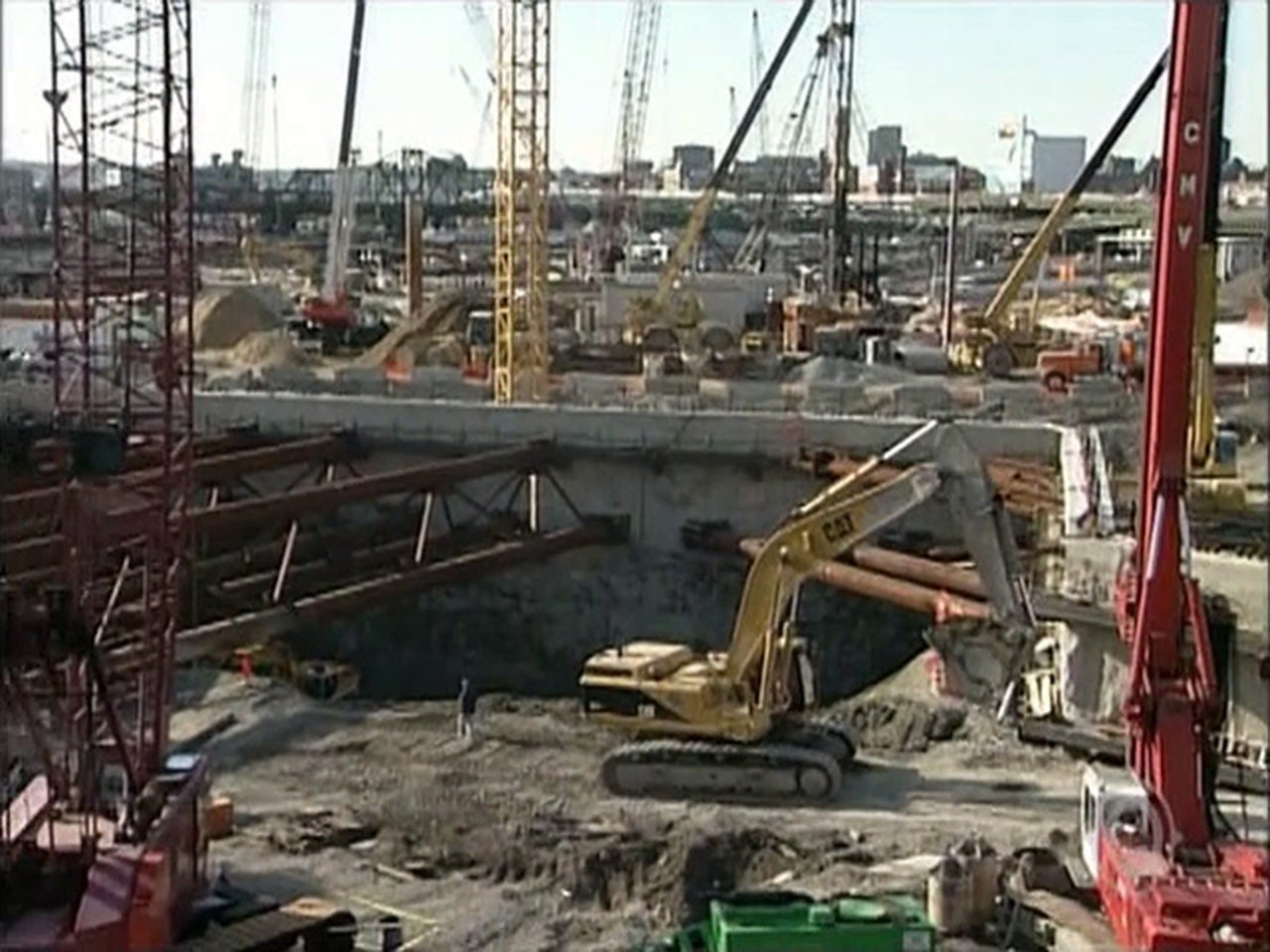
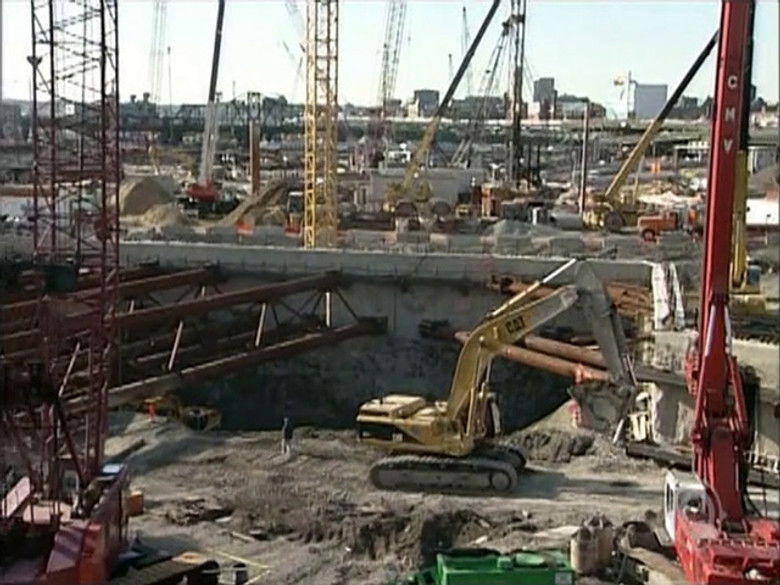
The Massachusetts Central Artery/Tunnel Project, a.k.a. The Big Dig, is the most amazing municipal construction project in U.S. history. Its objective–to replace Boston’s decaying highway infrastructure with 160 new highway miles, half of which run underground and underwater. After 14 years construction, its cost–$11 billion!
Details
- Series
- Modern Marvels
- Season
- Season 9
- Episode
- Episode 33
- Air date
- 2002-08-06
- Runtime
- 44 min
Episode context
The Big Dig is Episode 33 in Season 9 of Modern Marvels. It aired on 2002-08-06. The runtime is 44 min.
Previous / Next
 Episode 32: Beach Technology
Slap on your sun block and head to the ocean for a sizzling hour that explores the beach in a whole new way! We cover everything from Japan’s Seagaia, the world’s largest indoor beach, to boardwalks, dune buggies, surfboards, sunglasses, suntan lotion, wave pools, and more. We examine the development of each product and explain the technological advances that have been made over the years.
Episode 32: Beach Technology
Slap on your sun block and head to the ocean for a sizzling hour that explores the beach in a whole new way! We cover everything from Japan’s Seagaia, the world’s largest indoor beach, to boardwalks, dune buggies, surfboards, sunglasses, suntan lotion, wave pools, and more. We examine the development of each product and explain the technological advances that have been made over the years.
 Episode 34: Super Guns
They are the cutting edge in firearm technology. They fight simulated battles on computers, decades before a shot is fired. But will they make the world safer…or more dangerous than ever before? They are Super Guns of Today and Tomorrow.
Episode 34: Super Guns
They are the cutting edge in firearm technology. They fight simulated battles on computers, decades before a shot is fired. But will they make the world safer…or more dangerous than ever before? They are Super Guns of Today and Tomorrow.
More episodes from this season
 Episode 31: Hangars
Come in for a smooth landing as we explore the history of hangars–stark, massive structures that house and protect flight vehicles. We visit the first hangar, built on a German lake; Boeing’s Delta 4 rocket hangar; Hangar Number One in Lakehurst, New Jersey, that housed all US airships built in the 1920s and ’30s; and the Space Shuttle’s hangar–as big as four skyscrapers! Back in Germany, Cargolifter’s mammoth hangar, large enough to enclose the Superdome, signals the rebirth of an industry.
Episode 31: Hangars
Come in for a smooth landing as we explore the history of hangars–stark, massive structures that house and protect flight vehicles. We visit the first hangar, built on a German lake; Boeing’s Delta 4 rocket hangar; Hangar Number One in Lakehurst, New Jersey, that housed all US airships built in the 1920s and ’30s; and the Space Shuttle’s hangar–as big as four skyscrapers! Back in Germany, Cargolifter’s mammoth hangar, large enough to enclose the Superdome, signals the rebirth of an industry.
 Episode 35: Strategic Air Command.
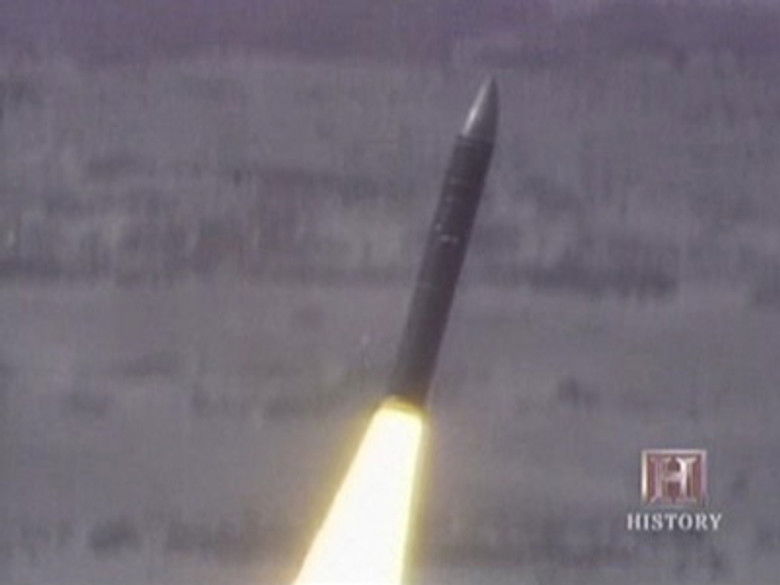
With the ironic motto "Peace is our Profession", the Strategic Air Command was in charge of US nuclear forces from 1946 to 1992. SAC was the ultimate Cold War military machine, at its height controlling thousands of nuclear weapons, planes, and missiles, and boasting over a quarter-million personnel. We travel to the Strategic Air and Space Museum, located 20 miles from SAC's old headquarters in Nebraska, and walk through the cavernous bomb bay of SAC's workhorse, the B-52 Bomber.
Episode 35: Strategic Air Command.
With the ironic motto "Peace is our Profession", the Strategic Air Command was in charge of US nuclear forces from 1946 to 1992. SAC was the ultimate Cold War military machine, at its height controlling thousands of nuclear weapons, planes, and missiles, and boasting over a quarter-million personnel. We travel to the Strategic Air and Space Museum, located 20 miles from SAC's old headquarters in Nebraska, and walk through the cavernous bomb bay of SAC's workhorse, the B-52 Bomber.
 Episode 30: Models
Though they duplicate the real world for fun and fantasy, models are not always toys and they’re not always tiny. We explore the magic of these fascinating replicas–from the Rover and Lander models for the Mars Exploration Project to ancient Egyptian ship models found in tombs to English ship models from the Age of Sail. We also look at the rage for hobby modeling, with Lionel trains leading the pack, watch models go to war with scale warplanes in WWII, and invade science fiction films.
Episode 30: Models
Though they duplicate the real world for fun and fantasy, models are not always toys and they’re not always tiny. We explore the magic of these fascinating replicas–from the Rover and Lander models for the Mars Exploration Project to ancient Egyptian ship models found in tombs to English ship models from the Age of Sail. We also look at the rage for hobby modeling, with Lionel trains leading the pack, watch models go to war with scale warplanes in WWII, and invade science fiction films.
 Episode 36: Gasoline
Traces the history and evolution of the world’s most important fossil fuel. Without gasoline, modern life would grind to a halt. Americans use about 360-million gallons of gas every day. And though most of us could not function without gas, very few understand what it really is, how it is made, what all those different octane numbers really mean, and how researchers developed cleaner burning gasoline. All these questions will be answered as we look at the history of this “supreme” fuel.
Episode 36: Gasoline
Traces the history and evolution of the world’s most important fossil fuel. Without gasoline, modern life would grind to a halt. Americans use about 360-million gallons of gas every day. And though most of us could not function without gas, very few understand what it really is, how it is made, what all those different octane numbers really mean, and how researchers developed cleaner burning gasoline. All these questions will be answered as we look at the history of this “supreme” fuel.
 Episode 29: Camouflage
From ancient hunters’ camouflage to computer-generated digital pattern uniforms, we uncover the past, present, and future of deception through disguise. During an ambush exercise by US Marines, we learn that camouflage came from natural coloration and patterns of flora and fauna. The art of military camouflage took off in WWI with the use of the airplane, when the French learnt to hide from “eyes in the sky”. It’s a world of shadows and smoke, where even cities disappear through disguise.
Episode 29: Camouflage
From ancient hunters’ camouflage to computer-generated digital pattern uniforms, we uncover the past, present, and future of deception through disguise. During an ambush exercise by US Marines, we learn that camouflage came from natural coloration and patterns of flora and fauna. The art of military camouflage took off in WWI with the use of the airplane, when the French learnt to hide from “eyes in the sky”. It’s a world of shadows and smoke, where even cities disappear through disguise.
 Episode 37: Towing.
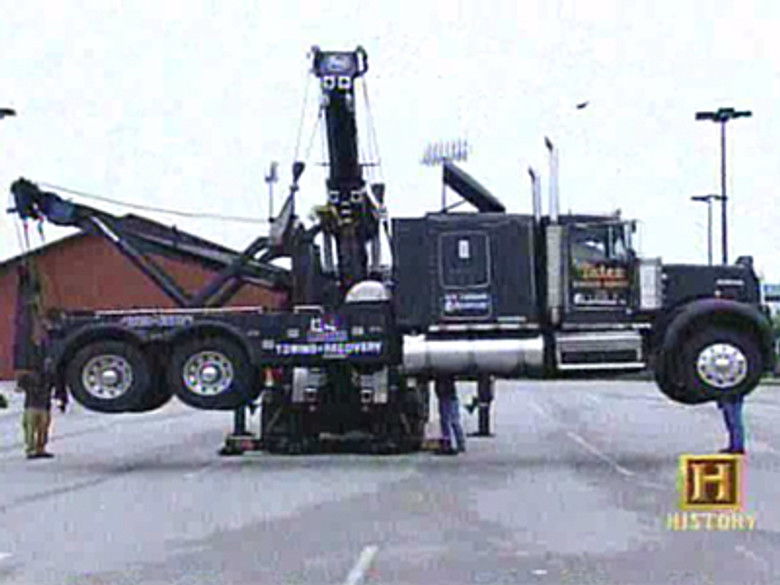
Think you know towing? As simple as engaging a tow man when your car is stalled? From mighty tugboats that guide massive ships safely into port, dizzying roller coasters that send cars careening up and down hills, to funicular railroads that climb mountainsides, when it comes to towing, being a "drag" was never so good! We also watch a 125-year-old church as it's towed on the back of a flatbed truck, and rocket towards space as we're hauled 20,000 feet-high behind a Boeing 747!
Episode 37: Towing.
Think you know towing? As simple as engaging a tow man when your car is stalled? From mighty tugboats that guide massive ships safely into port, dizzying roller coasters that send cars careening up and down hills, to funicular railroads that climb mountainsides, when it comes to towing, being a "drag" was never so good! We also watch a 125-year-old church as it's towed on the back of a flatbed truck, and rocket towards space as we're hauled 20,000 feet-high behind a Boeing 747!
 Episode 28: Hunting Gear.
They are lethal tools that ensured our survival, altered our evolution, and maintained our dominion over other animals. Though hunting technology is the backbone of a multi-billion-dollar sports industry, current cutting-edge gear is a far cry from prehistoric man's rudimentary tools. From the crude knife to 24-hour digital cameras that monitor animal movement and earmuffs with microphones to amplify outside noise while blocking gunshot sound, we examine the development of hunting weapons and gear.
Episode 28: Hunting Gear.
They are lethal tools that ensured our survival, altered our evolution, and maintained our dominion over other animals. Though hunting technology is the backbone of a multi-billion-dollar sports industry, current cutting-edge gear is a far cry from prehistoric man's rudimentary tools. From the crude knife to 24-hour digital cameras that monitor animal movement and earmuffs with microphones to amplify outside noise while blocking gunshot sound, we examine the development of hunting weapons and gear.
 Episode 38: Jet Engines
This program will tell the story of jet propulsion, which has radically transformed our world since it was first introduced near the end of World War II. We’ll trace the development of jet-powered aircraft from the Nazi’s first operational fighter, the Me 262, to the supersonic Concorde, to the latest U.S. jet fighter, the F-22 — and beyond, to the fighters and passenger planes of the future, which will be powered by new jet engines on the drawing boards (like the “scram-jet” — designed for a new hypersonic transport plane that would switch to rocket power once outside the earth’s atmosphere).
Episode 38: Jet Engines
This program will tell the story of jet propulsion, which has radically transformed our world since it was first introduced near the end of World War II. We’ll trace the development of jet-powered aircraft from the Nazi’s first operational fighter, the Me 262, to the supersonic Concorde, to the latest U.S. jet fighter, the F-22 — and beyond, to the fighters and passenger planes of the future, which will be powered by new jet engines on the drawing boards (like the “scram-jet” — designed for a new hypersonic transport plane that would switch to rocket power once outside the earth’s atmosphere).
 Episode 27: The Tackle Box
From ancient Egyptian fishing parties to today's high-tech bass tournaments, we untangle the fascinating technical history of man's quest to seduce creatures of the deep out of their watery world and into the frying pan. We trace the evolution of the basic rod and reel, from crude hickory poles with braided horsehair to ultra-light graphite wonder-rods with space-age nylon line, and examine the angler's glittering arsenal of spinners, spoons, plugs, and flies
Episode 27: The Tackle Box
From ancient Egyptian fishing parties to today's high-tech bass tournaments, we untangle the fascinating technical history of man's quest to seduce creatures of the deep out of their watery world and into the frying pan. We trace the evolution of the basic rod and reel, from crude hickory poles with braided horsehair to ultra-light graphite wonder-rods with space-age nylon line, and examine the angler's glittering arsenal of spinners, spoons, plugs, and flies
 Episode 39: Nordhausen
It was the world’s largest underground factory–seven miles of tunnels built to manufacture Hitler’s secret weapons, primarily the V-2 rocket. But Nordhausen kept more than one secret. Technology and torture went hand-in-hand–25,000 concentration camp workers died there–and some of those associated with Nordhausen later helped take America to the moon.
Episode 39: Nordhausen
It was the world’s largest underground factory–seven miles of tunnels built to manufacture Hitler’s secret weapons, primarily the V-2 rocket. But Nordhausen kept more than one secret. Technology and torture went hand-in-hand–25,000 concentration camp workers died there–and some of those associated with Nordhausen later helped take America to the moon.