Episode
Modern Marvels: Video Games: Behind The Fun
Overview
A fun-filled glimpse into the not so distant history of video games. Since inception, the gaming industry has been a driving force in computer technology and video games are one of today’s dominant entertainment mediums. We’ll talk to creators of many of the most popular games in an hour packed with thrilling visuals from the virtual world of video games.
Details
- Series
- Modern Marvels
- Season
- Season 7
- Episode
- Episode 25
- Air date
- 2000-09-12
- Runtime
- 44 min
Episode context
Video Games: Behind The Fun is Episode 25 in Season 7 of Modern Marvels. It aired on 2000-09-12. The runtime is 44 min.
Previous / Next
 Episode 24: The Maginot Line
The Maginot Line, a defensive string of large and small forts built during the years between World War I and World War II, was intended to forestall another invasion by aggressive Germany. Despite the Treaty of Versailles, France saw that it was only a matter of time before Germany would rise again and threaten France. News of northern neighbor Belgium’s neutrality left France with an exposed flank, which would ultimately be the Maginot Line’s weak point-the Germans were able to outflank the line almost entirely, readily conceding the Line’s impregnability while conquering the country.
Episode 24: The Maginot Line
The Maginot Line, a defensive string of large and small forts built during the years between World War I and World War II, was intended to forestall another invasion by aggressive Germany. Despite the Treaty of Versailles, France saw that it was only a matter of time before Germany would rise again and threaten France. News of northern neighbor Belgium’s neutrality left France with an exposed flank, which would ultimately be the Maginot Line’s weak point-the Germans were able to outflank the line almost entirely, readily conceding the Line’s impregnability while conquering the country.
 Episode 26: The Body Shop
Host Ron Hazelton and two mechanics dissect a 2000 Ford Taurus to trace the evolution of the automobile’s major systems. This 2-hour nuts-and-bolt special breaks the car down into its major components (engine, body, chassis, etc.). Starting with the earliest vehicles in the 1800s, automotive historians and experts describe how cars have evolved and explain major advances. And, finally concept cars and computer animations provide a glimpse into the future.
Episode 26: The Body Shop
Host Ron Hazelton and two mechanics dissect a 2000 Ford Taurus to trace the evolution of the automobile’s major systems. This 2-hour nuts-and-bolt special breaks the car down into its major components (engine, body, chassis, etc.). Starting with the earliest vehicles in the 1800s, automotive historians and experts describe how cars have evolved and explain major advances. And, finally concept cars and computer animations provide a glimpse into the future.
More episodes from this season
 Episode 23: China's Great Dam
When completed, China’s Three Gorges Dam will tower 607 feet in the air and weigh 40 Great Pyramids. Other than China’s Great Wall, it will be the only man-made object visible from the moon. Supporters see it as key to a new China, controlling floods and bringing hydroelectric power to one of its least-developed areas. Critics voice a litany of concerns–from environmental to flooding the spectacular area for which it’s named. We trace its story–from ancient flood control to current controversy.
Episode 23: China's Great Dam
When completed, China’s Three Gorges Dam will tower 607 feet in the air and weigh 40 Great Pyramids. Other than China’s Great Wall, it will be the only man-made object visible from the moon. Supporters see it as key to a new China, controlling floods and bringing hydroelectric power to one of its least-developed areas. Critics voice a litany of concerns–from environmental to flooding the spectacular area for which it’s named. We trace its story–from ancient flood control to current controversy.
 Episode 27: Machine Tools
No one wants a hand-made car or gun or an airplane. We want things made by machines. Machine tools are power–driven machines–of all shapes and sizes-used to make metal parts. Machine tools built our modern world. Our life would not be possible without them. This show will take a look at these amazing machines in action. Beginning with the story of the steam engine and traveling to modern day “machining centers”–used to make incredibly complex space shuttle parts–we’ll look at the basic types of machine tools and their development. We’ll also look at some of the most modern machine tools of the future, including machines that are changing the way products of tomorrow are made.
Episode 27: Machine Tools
No one wants a hand-made car or gun or an airplane. We want things made by machines. Machine tools are power–driven machines–of all shapes and sizes-used to make metal parts. Machine tools built our modern world. Our life would not be possible without them. This show will take a look at these amazing machines in action. Beginning with the story of the steam engine and traveling to modern day “machining centers”–used to make incredibly complex space shuttle parts–we’ll look at the basic types of machine tools and their development. We’ll also look at some of the most modern machine tools of the future, including machines that are changing the way products of tomorrow are made.
 Episode 22: Aswan Dam
In 1954, Gamal Abdel Nasser, the Arab Republic of Egypt’s first prime minister, had a plan to bring his poor country into the 20th century. To pull it off, he needed to harness the flow of the world’s longest river–the Nile. The ambitious plan called for construction of a high dam in southern Egypt at Aswan. But the builders of the pyramids and the Suez Canal were no strangers to large undertakings. We’ll see how the Aswan High Dam socially, politically, culturally, and agriculturally affected Egypt.
Episode 22: Aswan Dam
In 1954, Gamal Abdel Nasser, the Arab Republic of Egypt’s first prime minister, had a plan to bring his poor country into the 20th century. To pull it off, he needed to harness the flow of the world’s longest river–the Nile. The ambitious plan called for construction of a high dam in southern Egypt at Aswan. But the builders of the pyramids and the Suez Canal were no strangers to large undertakings. We’ll see how the Aswan High Dam socially, politically, culturally, and agriculturally affected Egypt.
 Episode 28: Farming Technology
The US agricultural process, from seed to shelf, is so efficient that most people don’t think much about it. But food growing and processing is ever more sophisticated, employing computer-guided, ground-shaking machinery, and sometimes controversial techniques. It’s an industry of declining family farms, diminishing returns, yet higher yields. We review the evolution of the tools used to produce food, show the steps in the cycle that bring food to the table, and look at the future of farming.
Episode 28: Farming Technology
The US agricultural process, from seed to shelf, is so efficient that most people don’t think much about it. But food growing and processing is ever more sophisticated, employing computer-guided, ground-shaking machinery, and sometimes controversial techniques. It’s an industry of declining family farms, diminishing returns, yet higher yields. We review the evolution of the tools used to produce food, show the steps in the cycle that bring food to the table, and look at the future of farming.
 Episode 21: Trucks
Icons of the open road, trucks form the backbone of the construction and transportation industries. The facility to handle nearly any load and the ability to deliver goods almost anywhere make trucks integral to modern life. From 18th-century steam-powered carriages to tomorrow’s computerized trucks, it’s a long haul you’ll enjoy!
Episode 21: Trucks
Icons of the open road, trucks form the backbone of the construction and transportation industries. The facility to handle nearly any load and the ability to deliver goods almost anywhere make trucks integral to modern life. From 18th-century steam-powered carriages to tomorrow’s computerized trucks, it’s a long haul you’ll enjoy!
 Episode 29: Assembly Lines
According to the Encyclopedia Britannica, an assembly line is an “industrial arrangement of machines, equipment, and workers for continuous flow of workpieces in mass production operations.” While the basic principles of the assembly line technique have not changed in one hundred years, the people and the products that exploit the technique have. Throughout the hour, we will hear from four generations of assembly line workers who will provide some perspective, heart and soul for this revolutionary production technique.
Episode 29: Assembly Lines
According to the Encyclopedia Britannica, an assembly line is an “industrial arrangement of machines, equipment, and workers for continuous flow of workpieces in mass production operations.” While the basic principles of the assembly line technique have not changed in one hundred years, the people and the products that exploit the technique have. Throughout the hour, we will hear from four generations of assembly line workers who will provide some perspective, heart and soul for this revolutionary production technique.
 Episode 20: The Erie Canal
The Erie Canal was America’s first superhighway. It was a narrow ribbon of water carved through sheer rock and untamed wilderness. It featured an ingenious network of stone locks and aqueducts. Skeptics called it “Clinton’s Ditch,” but visionaries saw it as the gateway to a gleaming future. An engineering marvel when it was built some called it the Eighth Wonder of the World.
Episode 20: The Erie Canal
The Erie Canal was America’s first superhighway. It was a narrow ribbon of water carved through sheer rock and untamed wilderness. It featured an ingenious network of stone locks and aqueducts. Skeptics called it “Clinton’s Ditch,” but visionaries saw it as the gateway to a gleaming future. An engineering marvel when it was built some called it the Eighth Wonder of the World.
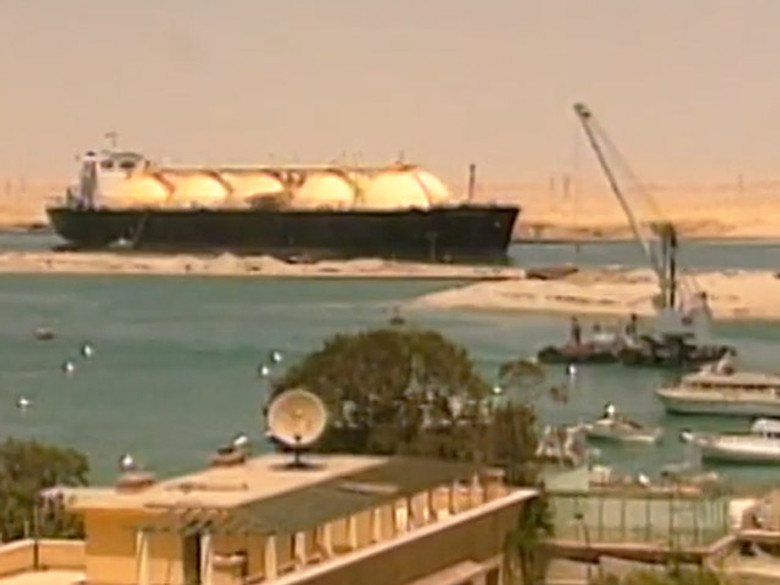 Episode 30: Suez Canal
Since the ancient pharaohs’ time, the Isthmus of Suez has been the gateway to trade between East and West. It’s thought that the pharaohs could connect the Red Sea with the Mediterranean using a system of small canals; but the desert sands buried them. Not until mid-19th century did mankind readdress the problem. Since its completion in 1869, the Suez Canal has been a vital link in world trade and a point of controversy in geopolitics. Today, more than 20,000 ships transit the canal yearly.
Episode 30: Suez Canal
Since the ancient pharaohs’ time, the Isthmus of Suez has been the gateway to trade between East and West. It’s thought that the pharaohs could connect the Red Sea with the Mediterranean using a system of small canals; but the desert sands buried them. Not until mid-19th century did mankind readdress the problem. Since its completion in 1869, the Suez Canal has been a vital link in world trade and a point of controversy in geopolitics. Today, more than 20,000 ships transit the canal yearly.
 Episode 19: Banks.
Backbones of worldwide economics, for centuries banks enabled the creation of wealth, and industry leaders became icons. But modern technology revolutionized the way banks do business, and the Internet insures they must adapt or disappear. From banking's early European origins to "e-banking", this is an hour you can't afford to miss!
Episode 19: Banks.
Backbones of worldwide economics, for centuries banks enabled the creation of wealth, and industry leaders became icons. But modern technology revolutionized the way banks do business, and the Internet insures they must adapt or disappear. From banking's early European origins to "e-banking", this is an hour you can't afford to miss!
 Episode 31: London Underground
Deep beneath London runs a complex network of many miles of tunnels; and, while traffic congests the roads above, hundreds of trains run through these iron and concrete arteries, carrying millions of people into, around, and out of the City. Here is the story of the “Tube”, the world’s first underground railway, which holds London together–from its opening in January 1863, through its deep-level expansion and electrification, to the fully automated trains of the 21st Century’s Jubilee Line.
Episode 31: London Underground
Deep beneath London runs a complex network of many miles of tunnels; and, while traffic congests the roads above, hundreds of trains run through these iron and concrete arteries, carrying millions of people into, around, and out of the City. Here is the story of the “Tube”, the world’s first underground railway, which holds London together–from its opening in January 1863, through its deep-level expansion and electrification, to the fully automated trains of the 21st Century’s Jubilee Line.