
Episode
Modern Marvels: Future Tech
Overview
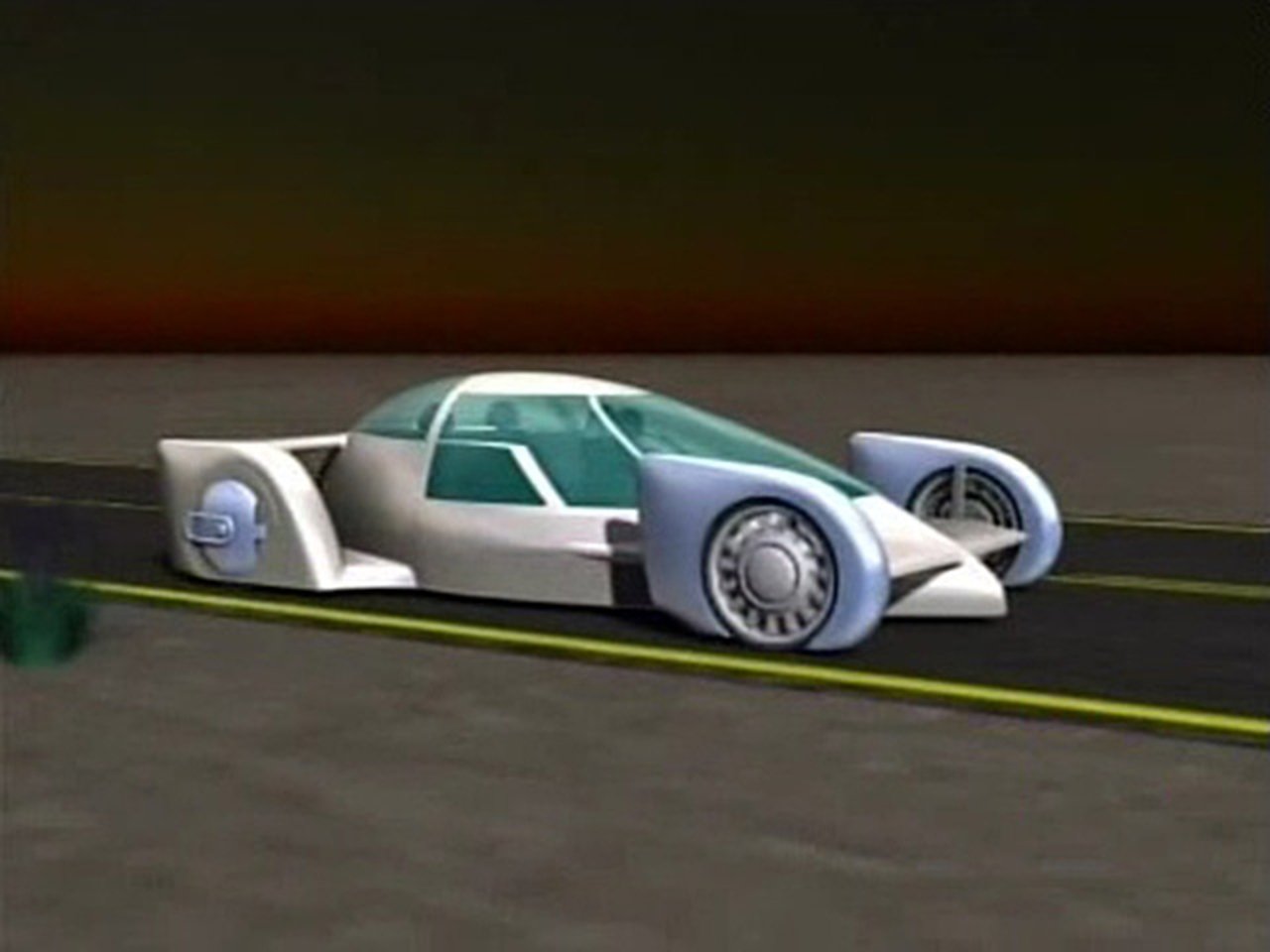
A paper-thin, wall-sized holographic television…a car that runs on processed seawater…an army of robotic killing machines…outer-space luxury resorts and a cleaning droid controlled by your mind? Buckle-up for safety as we race into the near future–where fantasy becomes fact. There have always been visionaries, futurists, and dreamers predicting the world of tomorrow–flying cars, space-station colonies, and android personal assistants. But time has proven the fallacy of many of their predictions. So what future technology can we realistically expect? With the help of 3D animation, we present some pretty far-out predictions and take you to various research labs to see working prototypes of these technologies in their infancy. Join us on a rollicking ride through the entertainment room, down the road, over the battlefield, through the mind, out in space, and into the future, where science fiction becomes science fact.
Details
- Series
- Modern Marvels
- Season
- Season 12
- Episode
- Episode 31
- Air date
- 2005-06-22
- Runtime
- 44 min
Episode context
Future Tech is Episode 31 in Season 12 of Modern Marvels. It aired on 2005-06-22. The runtime is 44 min.
Previous / Next
 Episode 30: Secret Japanese Aircraft of World War II
In the 1930s, Japanese designers created a range of warplanes, culminating in the legendary Ki-43 Oscar and the A6M Zero. As the war turned against Japan, designers created the rocket-powered Shusui, the Kikka jet fighter, and the experimental R2Y Keiun. We also disclose frantic preparations to assemble a secret air force of jet and rocket planes to counter an anticipated US invasion in1945, and chronicle post-war aviation and the birth of the Japanese rocket program in the 1950s and ’60s.
Episode 30: Secret Japanese Aircraft of World War II
In the 1930s, Japanese designers created a range of warplanes, culminating in the legendary Ki-43 Oscar and the A6M Zero. As the war turned against Japan, designers created the rocket-powered Shusui, the Kikka jet fighter, and the experimental R2Y Keiun. We also disclose frantic preparations to assemble a secret air force of jet and rocket planes to counter an anticipated US invasion in1945, and chronicle post-war aviation and the birth of the Japanese rocket program in the 1950s and ’60s.
 Episode 32: Edison Tech
He was the father of the future…electric lights, power systems, motion pictures, recorded sound–even the tattoo pen. Life as we know it would be inconceivable without the prodigious output of the Wizard of Menlo Park, Thomas Alva Edison. His intense focus on his work came with a hefty personal price, but his reward was a world forever changed by his genius. Years after his death, Edison's effect is seen, heard, and felt everywhere. We follow descendants of his motion-picture camera to the tops of Earth's highest mountains, to the bottoms of its deepest oceans, and even into outer space. We track his innovations in recorded sound to CDs, iPods, sophisticated movie sound, and satellite radio. And we illuminate his world of electric light, powering the world and turning night into day. Along the way, we discover a little Edison in corners of modern life less well-known and even look at his failures. From the Internet to the stock market to pay-per-view; the Wizard is everywhere.
Episode 32: Edison Tech
He was the father of the future…electric lights, power systems, motion pictures, recorded sound–even the tattoo pen. Life as we know it would be inconceivable without the prodigious output of the Wizard of Menlo Park, Thomas Alva Edison. His intense focus on his work came with a hefty personal price, but his reward was a world forever changed by his genius. Years after his death, Edison's effect is seen, heard, and felt everywhere. We follow descendants of his motion-picture camera to the tops of Earth's highest mountains, to the bottoms of its deepest oceans, and even into outer space. We track his innovations in recorded sound to CDs, iPods, sophisticated movie sound, and satellite radio. And we illuminate his world of electric light, powering the world and turning night into day. Along the way, we discover a little Edison in corners of modern life less well-known and even look at his failures. From the Internet to the stock market to pay-per-view; the Wizard is everywhere.
More episodes from this season
Episode 29: The Cape Cod Canal
In a battle against the ferocious Atlantic or safe passage through waters where ships wrecked and lives were lost, it was an engineering feat that many believed impossible. This is the story of the Cape Cod Canal and the men who braved the natural elements and the Great Depression by venturing into new engineering territory. In 1909 excavation began on what would become one of the greatest success stories of our time. The evolution of the Cape Cod Canal into what it is today–a major commerce and recreational route of the Intracoastal Waterway–is a tale of determination, ingenuity, and the American spirit. Through historical photographs and expert interviews, the Canal’s story unfolds, and while traveling along on an Army Corps of Engineers Patrol Boat and Coast Guard vessel we see firsthand what happens on the Canal on a daily basis. And we meet the people who make the Canal and its bridges functional and safe, keeping the legacy of the early engineers alive.
Episode 33: Secrets of Soviet Space Disasters
SECRETS OF SOVIET SPACE DISASTERS is one of our century’s most shocking hidden stories. Since the end of communism much has come to light about the failures of the Soviet’s systems. This program will uncover how personal rivalries, shifting political alliances and bureaucratic bungling led to the dismal failure (as well as more than 150 recorded deaths) of the Soviet space program. This one hour History Channel program will uncover never before seen footage from Russian sources that unveils THE SECRETS OF SOVIET SPACE DISASTERS.
Episode 28: John Hancock Center
A steel giant standing 1,107 feet high on broad shoulders, this vertical city houses 1,200 people. Join us as we explore how a young architectural team from Skidmore, Owings & Merrill conceived of an innovative 100-story, multi-use tower. A construction crisis halted the project for six months, but once it resumed, it took just four years and 50 million man-hours to complete the John Hancock Center. In the heart of Chicago, the John Hancock Center rises 100 stories above the luxury shops and restaurants that line the famous Magnificent Mile. It opened on May 5, 1970 with 237,657 square feet of retailing, 812,160 square feet of offices, 703 rental apartments (converted to condominiums in 1974), 507-car parking garage, and an ice skating rink! There are 1,250 miles of wiring and 11,459 panes of glass. Nicknamed “Big John”, it cost $100-million and took 46,000 tons of steel to build.
Episode 34: Mountain Roads
Join our journey along monumental feats of engineering that preserved America's natural wonders while paving the way towards her future. Travel the Donner Pass in the Sierra Nevada Mountains, site of a dark chapter in US history. Today, crews use the latest technology to keep I-80 open during the worst winter storms. Enjoy the view while traveling to the summit of Pike's Peak in Colorado, inspiration for America the Beautiful. The "Going-to-the-Sun-Road" slices through Montana's majestic Glacier National Park, crossing the Continental Divide and allowing motorists unsurpassed views of mountain scenery. Outside Denver, the Eisenhower Memorial Tunnel, carved through mountain rock, united eastern and western Colorado. And the Blue Ridge Parkway, which took 52 years to complete, snakes through large, scenic swatches.
 Episode 27: Machines of D-Day
June 6, 1944–the greatest machine of World War Two springs into action. It is made up of thousands of ships and aircraft, tens of thousands of men and millions of tons of steel and concrete. This is Operation Overlord–the invasion machine that will send Allied soldiers dropping from the skies and storming the beaches of Normandy. Each piece of this machine has been designed to fulfill a specific task in the air, on land, or at sea. The success of D-Day depends on it. Interlocking with pinpoint precision, the men and machines of Overlord overcome not just Hitler’s beach defenses, but nature itself in the greatest assault the world has ever seen. Using archive film, and color reenactments, we reveal the phenomenal hardware of D-Day.
Episode 27: Machines of D-Day
June 6, 1944–the greatest machine of World War Two springs into action. It is made up of thousands of ships and aircraft, tens of thousands of men and millions of tons of steel and concrete. This is Operation Overlord–the invasion machine that will send Allied soldiers dropping from the skies and storming the beaches of Normandy. Each piece of this machine has been designed to fulfill a specific task in the air, on land, or at sea. The success of D-Day depends on it. Interlocking with pinpoint precision, the men and machines of Overlord overcome not just Hitler’s beach defenses, but nature itself in the greatest assault the world has ever seen. Using archive film, and color reenactments, we reveal the phenomenal hardware of D-Day.
 Episode 35: Route 66
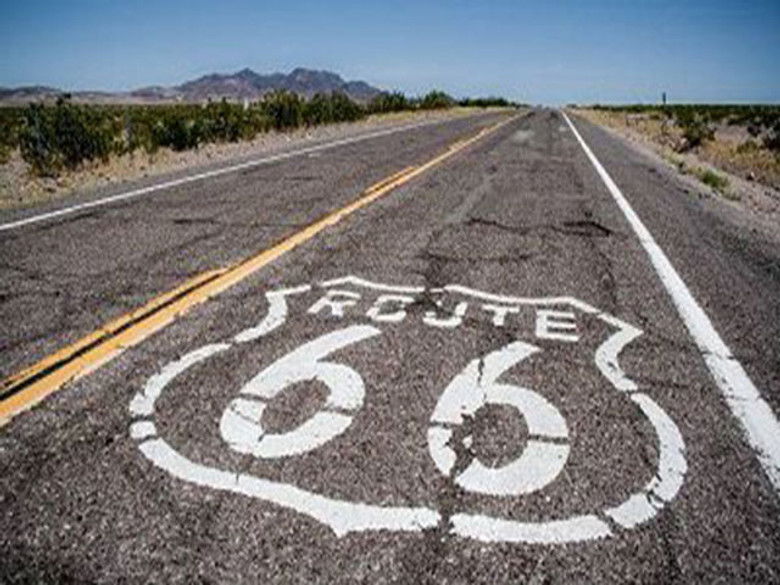
Route 66, encompassing eight states from Illinois to California and 2,400 miles, represented an American myth–that something better lay over the rainbow. Route 66 began in the early 20th century when a confluence of technologies–automotive, steel construction, and concrete paving–merged with population explosion, westward migration, and prosperity after WWI. The federal government responded with highway bills that converted existing roadways into an interstate called Route 66. Later, WWII highlighted the need for a strategic system similar to Germany's Autobahn–wider, safer, and more advanced. As federal and state governments worked on a superhighway, millions sought "their kicks on Route 66." By 1985, the abandoned roadway no longer "officially" existed, yet, it remains a destination for nostalgic travelers wishing to recapture a simpler, more adventurous era.
Episode 35: Route 66
Route 66, encompassing eight states from Illinois to California and 2,400 miles, represented an American myth–that something better lay over the rainbow. Route 66 began in the early 20th century when a confluence of technologies–automotive, steel construction, and concrete paving–merged with population explosion, westward migration, and prosperity after WWI. The federal government responded with highway bills that converted existing roadways into an interstate called Route 66. Later, WWII highlighted the need for a strategic system similar to Germany's Autobahn–wider, safer, and more advanced. As federal and state governments worked on a superhighway, millions sought "their kicks on Route 66." By 1985, the abandoned roadway no longer "officially" existed, yet, it remains a destination for nostalgic travelers wishing to recapture a simpler, more adventurous era.
 Episode 26: Civil War Tech
America protects its homeland with the most technologically advanced military force ever conceived. Although they fight 21st-century battles worldwide, the technology unleashed is directly descended from a war fought more than 140 years ago. This episode explores how the War between North and South was the first modern war, and the technology used in it was a quantum leap beyond any previous conflict. The machine gun, aerial reconnaissance, advanced battlefield medicine, instantaneous communication, ironclad ships, even the first aircraft carrier were all innovations developed during the Civil War. We'll investigate improvements in weapons, sea power, transportation, troop conveyance, food processing, medical care, and telecommunications. At a time when the nation was divided, Civil War technology revolutionized the way war was waged. Today, those technological milestones have evolved to ensure that our modern military has no equal in the world.
Episode 26: Civil War Tech
America protects its homeland with the most technologically advanced military force ever conceived. Although they fight 21st-century battles worldwide, the technology unleashed is directly descended from a war fought more than 140 years ago. This episode explores how the War between North and South was the first modern war, and the technology used in it was a quantum leap beyond any previous conflict. The machine gun, aerial reconnaissance, advanced battlefield medicine, instantaneous communication, ironclad ships, even the first aircraft carrier were all innovations developed during the Civil War. We'll investigate improvements in weapons, sea power, transportation, troop conveyance, food processing, medical care, and telecommunications. At a time when the nation was divided, Civil War technology revolutionized the way war was waged. Today, those technological milestones have evolved to ensure that our modern military has no equal in the world.
 Episode 36: Cowboy Tech
Today’s cowboy plants one boot firmly in the traditions of the Old West and the other in the world of modern technology. Beginning in the 19th century, the era in which the American cattle industry boomed, we examine cowboy technology. Learn how North American cowboys converted saddles, ropes, spurs, and other equipment originally developed by the Spanish, into tools of the trade perfectly suited for the developing cattle industry. And see how the invention of barbed wire revolutionized the cowboy’s world. Step into the 21st century with today’s cowboys who use computer chips, retinal scans, DNA evidence to round up cattle rustlers, and high-tech digital-imaging devices to aid in shoeing horses…and ride ATVs as often as their horses. In the world of rodeo, witness today’s cowboys as they utilize advanced theories of genetics and artificial insemination in an attempt to breed the perfect bucking bull.
Episode 25: F/A-22 Raptor
Built around “first look, first shot, first kill” design, the F/A-22 Raptor, the most advanced aircraft of its breed, is set to become the Air Dominance Fighter of the 21st century. Deadly and undetectable at long-range, this super-jet is the latest in 5th generation fighter technology. Capable of super-cruise and packing an array of deadly missile systems, this stealth jet blends dogfighting skill with precision-strike ground attack capability and can intercept and strike any target with near impunity. In the 1980s, as Cold War tensions heightened and US defense spending increased, the Air Force decided it needed a replacement fighter for its F15 Eagle. The Advanced Tactical Fighter program was born, and the largest, most expensive program of its kind hatched the Raptor. Follow the 25-year development of America’s deadliest fighter and see how stealth, super-cruise, and integrated avionics combine to create a fighter without equal.
Episode 37: Sewers
A simple flush and it’s forgotten. But haven’t you secretly wondered where it all goes when we go? Join us as we explore this less-than-polite topic, and examine the network of underground pipes and tunnels that carries human waste and excess storm water away. From ancient Rome’s pristine sewage-conveying systems, through the disease-spreading, out-the-window system of Europe in the Middle Ages, and into the progressive sanitation engineering of the 19th and 20th centuries, we go with the flow of sewage history. And we sift through the flotsam and jetsam of our cities’ sewer systems and delve into the sewers of Paris, Boston, and Los Angeles to study waste management’s evolution. We meet a sewer diver (and his robotic counterpart) who inspects and ensures the efficient operation of the conduits; decipher the myths about “treasures” and creatures found in the murky depths; and find out exactly where it goes, how it gets there, and how we’ve learned to use it to our benefit.
Episode 36: Cowboy Tech
Today’s cowboy plants one boot firmly in the traditions of the Old West and the other in the world of modern technology. Beginning in the 19th century, the era in which the American cattle industry boomed, we examine cowboy technology. Learn how North American cowboys converted saddles, ropes, spurs, and other equipment originally developed by the Spanish, into tools of the trade perfectly suited for the developing cattle industry. And see how the invention of barbed wire revolutionized the cowboy’s world. Step into the 21st century with today’s cowboys who use computer chips, retinal scans, DNA evidence to round up cattle rustlers, and high-tech digital-imaging devices to aid in shoeing horses…and ride ATVs as often as their horses. In the world of rodeo, witness today’s cowboys as they utilize advanced theories of genetics and artificial insemination in an attempt to breed the perfect bucking bull.
Episode 25: F/A-22 Raptor
Built around “first look, first shot, first kill” design, the F/A-22 Raptor, the most advanced aircraft of its breed, is set to become the Air Dominance Fighter of the 21st century. Deadly and undetectable at long-range, this super-jet is the latest in 5th generation fighter technology. Capable of super-cruise and packing an array of deadly missile systems, this stealth jet blends dogfighting skill with precision-strike ground attack capability and can intercept and strike any target with near impunity. In the 1980s, as Cold War tensions heightened and US defense spending increased, the Air Force decided it needed a replacement fighter for its F15 Eagle. The Advanced Tactical Fighter program was born, and the largest, most expensive program of its kind hatched the Raptor. Follow the 25-year development of America’s deadliest fighter and see how stealth, super-cruise, and integrated avionics combine to create a fighter without equal.
Episode 37: Sewers
A simple flush and it’s forgotten. But haven’t you secretly wondered where it all goes when we go? Join us as we explore this less-than-polite topic, and examine the network of underground pipes and tunnels that carries human waste and excess storm water away. From ancient Rome’s pristine sewage-conveying systems, through the disease-spreading, out-the-window system of Europe in the Middle Ages, and into the progressive sanitation engineering of the 19th and 20th centuries, we go with the flow of sewage history. And we sift through the flotsam and jetsam of our cities’ sewer systems and delve into the sewers of Paris, Boston, and Los Angeles to study waste management’s evolution. We meet a sewer diver (and his robotic counterpart) who inspects and ensures the efficient operation of the conduits; decipher the myths about “treasures” and creatures found in the murky depths; and find out exactly where it goes, how it gets there, and how we’ve learned to use it to our benefit.