

Episode
Modern Marvels: Bricks
Overview
The history of civilization has been built on the back of brick, and it’s been said that “architecture itself began when two bricks were put together well.” From great Egyptian temples to the Roman aqueducts, the Great Wall of China, and the dome of the Hagia Sophia, brick is one of the oldest, yet least celebrated, building materials manufactured by man. In this hard-packed episode, we explore brick’s past, highlighting defining moments, such as the Great London Fire of 1666, the zenith years of brick in the New York Hudson River Valley, and brick as an essential building block in infrastructure and industry. We’ll feature advancements through the ages as well as construction techniques, trends, and the future of brick construction. Essentially, brick is still just burnt clay…it has been around for thousands of years, but continues to serve as the backdrop of the modern age.
Details
- Series
- Modern Marvels
- Season
- Season 12
- Episode
- Episode 23
- Air date
- 2005-05-11
- Runtime
- 44 min
Episode context
Bricks is Episode 23 in Season 12 of Modern Marvels. It aired on 2005-05-11. The runtime is 44 min.
Previous / Next
 Episode 22: Punishment
 Episode 24: Glue
It’s Super! It’s Krazy! And it can be found in everything from carpet to computers, books to boats, shoes to the Space Shuttle. It’s even used in surgery! Without it, our material world would simply fall apart. In this episode, we’ll visit the stuck-up, tacky world of glue. Glue’s sticky trajectory spans human history and we’ll cover it all–from Neolithic cave dwellers who used animal glue to decorate ceremonial skulls to modern everyday glues and their uses, including Elmer’s glue, 3M’s masking and Scotch tape, and the super glues. Remember the Krazy Glue commercial in which a man held himself suspended from a hard hat that had just been glued to a beam? Well, that 1970s vintage ad understates the power of glue. With the help of a crane, we’re going to hoist a 6,000-pound pickup truck off the ground by a steel joint that’s been bonded with glue!
Episode 24: Glue
It’s Super! It’s Krazy! And it can be found in everything from carpet to computers, books to boats, shoes to the Space Shuttle. It’s even used in surgery! Without it, our material world would simply fall apart. In this episode, we’ll visit the stuck-up, tacky world of glue. Glue’s sticky trajectory spans human history and we’ll cover it all–from Neolithic cave dwellers who used animal glue to decorate ceremonial skulls to modern everyday glues and their uses, including Elmer’s glue, 3M’s masking and Scotch tape, and the super glues. Remember the Krazy Glue commercial in which a man held himself suspended from a hard hat that had just been glued to a beam? Well, that 1970s vintage ad understates the power of glue. With the help of a crane, we’re going to hoist a 6,000-pound pickup truck off the ground by a steel joint that’s been bonded with glue!
More episodes from this season
Episode 21: Mega Movers
Episode 25: F/A-22 Raptor
Built around “first look, first shot, first kill” design, the F/A-22 Raptor, the most advanced aircraft of its breed, is set to become the Air Dominance Fighter of the 21st century. Deadly and undetectable at long-range, this super-jet is the latest in 5th generation fighter technology. Capable of super-cruise and packing an array of deadly missile systems, this stealth jet blends dogfighting skill with precision-strike ground attack capability and can intercept and strike any target with near impunity. In the 1980s, as Cold War tensions heightened and US defense spending increased, the Air Force decided it needed a replacement fighter for its F15 Eagle. The Advanced Tactical Fighter program was born, and the largest, most expensive program of its kind hatched the Raptor. Follow the 25-year development of America’s deadliest fighter and see how stealth, super-cruise, and integrated avionics combine to create a fighter without equal.
 Episode 20: Paint
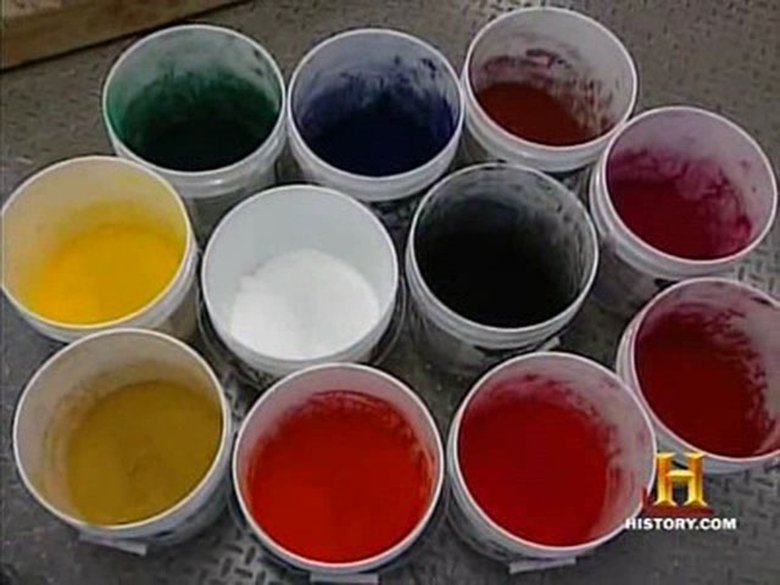
From the Impressionist canvas to the Space Shuttle…from customized hotrods to the brilliant orange hue of the Golden Gate Bridge or tiny electronic devices–paint is one of our most ubiquitous products. And paint adds more than just pigmentation. It’s a crucial engineering element, protecting ships from water corrosion, stovetops from heat, and the Stealth Bomber from radar detection. In homes and businesses, it provides a balanced spectrum of light and protects surfaces from wear. In this colorful hour, we discover how this marvel of chemistry and engineering is made, and how it is applied. Come see what’s beneath the surface as we reveal one of man’s most ingenious methods of defeating the elements and adding spice to life!
Episode 20: Paint
From the Impressionist canvas to the Space Shuttle…from customized hotrods to the brilliant orange hue of the Golden Gate Bridge or tiny electronic devices–paint is one of our most ubiquitous products. And paint adds more than just pigmentation. It’s a crucial engineering element, protecting ships from water corrosion, stovetops from heat, and the Stealth Bomber from radar detection. In homes and businesses, it provides a balanced spectrum of light and protects surfaces from wear. In this colorful hour, we discover how this marvel of chemistry and engineering is made, and how it is applied. Come see what’s beneath the surface as we reveal one of man’s most ingenious methods of defeating the elements and adding spice to life!
 Episode 26: Civil War Tech
America protects its homeland with the most technologically advanced military force ever conceived. Although they fight 21st-century battles worldwide, the technology unleashed is directly descended from a war fought more than 140 years ago. This episode explores how the War between North and South was the first modern war, and the technology used in it was a quantum leap beyond any previous conflict. The machine gun, aerial reconnaissance, advanced battlefield medicine, instantaneous communication, ironclad ships, even the first aircraft carrier were all innovations developed during the Civil War. We'll investigate improvements in weapons, sea power, transportation, troop conveyance, food processing, medical care, and telecommunications. At a time when the nation was divided, Civil War technology revolutionized the way war was waged. Today, those technological milestones have evolved to ensure that our modern military has no equal in the world.
Episode 26: Civil War Tech
America protects its homeland with the most technologically advanced military force ever conceived. Although they fight 21st-century battles worldwide, the technology unleashed is directly descended from a war fought more than 140 years ago. This episode explores how the War between North and South was the first modern war, and the technology used in it was a quantum leap beyond any previous conflict. The machine gun, aerial reconnaissance, advanced battlefield medicine, instantaneous communication, ironclad ships, even the first aircraft carrier were all innovations developed during the Civil War. We'll investigate improvements in weapons, sea power, transportation, troop conveyance, food processing, medical care, and telecommunications. At a time when the nation was divided, Civil War technology revolutionized the way war was waged. Today, those technological milestones have evolved to ensure that our modern military has no equal in the world.
 Episode 19: The Basement
Venture down that creaky staircase to explore the most misunderstood room in the house! From Pompeii to Pittsburgh, the dark, cool, and forlorn spaces beneath our living quarters have always contained things that helped us live comfortably. Ancient Hittites, Phrygians, and Persians carved subterranean rooms for food, water, and wine storage, and for shelter from weather and marauders. For ancient Greeks and Romans, a basement greatly increased a house’s value. Ruins of homes at Pompeii reveal the importance of basements in providing both heat and storage for rich Roman families. Renaissance architects placed kitchens, servant quarters, and laundry rooms there, hidden from the eyes of their aristocratic patrons! Colonial Americans expanded the practice, and by the 20th century, the basement was a routine feature. Come along as we demystify this domestic underworld, which turns out to be an area of innovation, imagination, and creativity.
Episode 19: The Basement
Venture down that creaky staircase to explore the most misunderstood room in the house! From Pompeii to Pittsburgh, the dark, cool, and forlorn spaces beneath our living quarters have always contained things that helped us live comfortably. Ancient Hittites, Phrygians, and Persians carved subterranean rooms for food, water, and wine storage, and for shelter from weather and marauders. For ancient Greeks and Romans, a basement greatly increased a house’s value. Ruins of homes at Pompeii reveal the importance of basements in providing both heat and storage for rich Roman families. Renaissance architects placed kitchens, servant quarters, and laundry rooms there, hidden from the eyes of their aristocratic patrons! Colonial Americans expanded the practice, and by the 20th century, the basement was a routine feature. Come along as we demystify this domestic underworld, which turns out to be an area of innovation, imagination, and creativity.
 Episode 27: Machines of D-Day
June 6, 1944–the greatest machine of World War Two springs into action. It is made up of thousands of ships and aircraft, tens of thousands of men and millions of tons of steel and concrete. This is Operation Overlord–the invasion machine that will send Allied soldiers dropping from the skies and storming the beaches of Normandy. Each piece of this machine has been designed to fulfill a specific task in the air, on land, or at sea. The success of D-Day depends on it. Interlocking with pinpoint precision, the men and machines of Overlord overcome not just Hitler’s beach defenses, but nature itself in the greatest assault the world has ever seen. Using archive film, and color reenactments, we reveal the phenomenal hardware of D-Day.
Episode 27: Machines of D-Day
June 6, 1944–the greatest machine of World War Two springs into action. It is made up of thousands of ships and aircraft, tens of thousands of men and millions of tons of steel and concrete. This is Operation Overlord–the invasion machine that will send Allied soldiers dropping from the skies and storming the beaches of Normandy. Each piece of this machine has been designed to fulfill a specific task in the air, on land, or at sea. The success of D-Day depends on it. Interlocking with pinpoint precision, the men and machines of Overlord overcome not just Hitler’s beach defenses, but nature itself in the greatest assault the world has ever seen. Using archive film, and color reenactments, we reveal the phenomenal hardware of D-Day.
 Episode 18: The Doomsday Clock
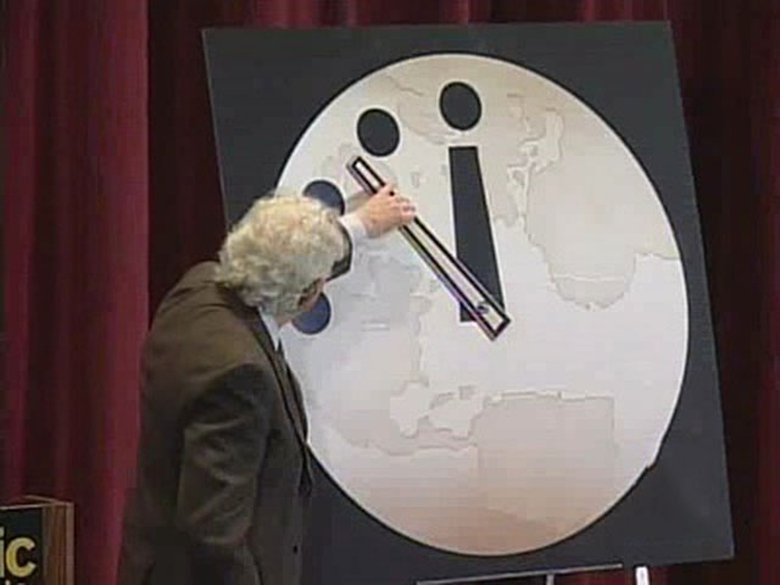
Developed in 1947 as an image to symbolize urgency in the Cold War and the threat of nuclear disaster, the mission of the Doomsday Clock has expanded to include non-nuclear global security issues. Maintained by the Board of Directors of the Bulletin of the Atomic Scientists, it’s based at the University of Chicago. In response to world events, they move the clock’s minute hand closer to or away from midnight–doomsday. In this hour, we cover the clock’s history, its effectiveness, and its critics.
Episode 28: John Hancock Center
A steel giant standing 1,107 feet high on broad shoulders, this vertical city houses 1,200 people. Join us as we explore how a young architectural team from Skidmore, Owings & Merrill conceived of an innovative 100-story, multi-use tower. A construction crisis halted the project for six months, but once it resumed, it took just four years and 50 million man-hours to complete the John Hancock Center. In the heart of Chicago, the John Hancock Center rises 100 stories above the luxury shops and restaurants that line the famous Magnificent Mile. It opened on May 5, 1970 with 237,657 square feet of retailing, 812,160 square feet of offices, 703 rental apartments (converted to condominiums in 1974), 507-car parking garage, and an ice skating rink! There are 1,250 miles of wiring and 11,459 panes of glass. Nicknamed “Big John”, it cost $100-million and took 46,000 tons of steel to build.
Episode 18: The Doomsday Clock
Developed in 1947 as an image to symbolize urgency in the Cold War and the threat of nuclear disaster, the mission of the Doomsday Clock has expanded to include non-nuclear global security issues. Maintained by the Board of Directors of the Bulletin of the Atomic Scientists, it’s based at the University of Chicago. In response to world events, they move the clock’s minute hand closer to or away from midnight–doomsday. In this hour, we cover the clock’s history, its effectiveness, and its critics.
Episode 28: John Hancock Center
A steel giant standing 1,107 feet high on broad shoulders, this vertical city houses 1,200 people. Join us as we explore how a young architectural team from Skidmore, Owings & Merrill conceived of an innovative 100-story, multi-use tower. A construction crisis halted the project for six months, but once it resumed, it took just four years and 50 million man-hours to complete the John Hancock Center. In the heart of Chicago, the John Hancock Center rises 100 stories above the luxury shops and restaurants that line the famous Magnificent Mile. It opened on May 5, 1970 with 237,657 square feet of retailing, 812,160 square feet of offices, 703 rental apartments (converted to condominiums in 1974), 507-car parking garage, and an ice skating rink! There are 1,250 miles of wiring and 11,459 panes of glass. Nicknamed “Big John”, it cost $100-million and took 46,000 tons of steel to build.
 Episode 17: Deadliest Weapons
In this fiery hour, we profile five of man's deadliest weapons, focusing on the inventors, battles, and dark technology behind their lethality. We begin with the deadliest bomb ever created, the Tsar Bomba–a 50-megaton nuclear bomb with a yield thousands of times greater than the one dropped on Hiroshima. During WWI, technological advances in weaponry led to the deaths of over 8-million, and one of the deadliest killers was the machine gun. In WWII, the use of incendiary bombs killed hundreds of thousands of people. Another deadly invention of WWII was the proximity fuse, or VT fuse, that allowed artillery to detonate within a predetermined range of an enemy target. Finally, we examine VX nerve gas, thought by many to be the deadliest chemical agent ever created and suspected to have been used by Saddam Hussein with devastating results. We'll visit Edgewood Chemical BioCenter, which plays a large role in protection and detection for our troops in Iraq.
Episode 29: The Cape Cod Canal
In a battle against the ferocious Atlantic or safe passage through waters where ships wrecked and lives were lost, it was an engineering feat that many believed impossible. This is the story of the Cape Cod Canal and the men who braved the natural elements and the Great Depression by venturing into new engineering territory. In 1909 excavation began on what would become one of the greatest success stories of our time. The evolution of the Cape Cod Canal into what it is today–a major commerce and recreational route of the Intracoastal Waterway–is a tale of determination, ingenuity, and the American spirit. Through historical photographs and expert interviews, the Canal’s story unfolds, and while traveling along on an Army Corps of Engineers Patrol Boat and Coast Guard vessel we see firsthand what happens on the Canal on a daily basis. And we meet the people who make the Canal and its bridges functional and safe, keeping the legacy of the early engineers alive.
Episode 17: Deadliest Weapons
In this fiery hour, we profile five of man's deadliest weapons, focusing on the inventors, battles, and dark technology behind their lethality. We begin with the deadliest bomb ever created, the Tsar Bomba–a 50-megaton nuclear bomb with a yield thousands of times greater than the one dropped on Hiroshima. During WWI, technological advances in weaponry led to the deaths of over 8-million, and one of the deadliest killers was the machine gun. In WWII, the use of incendiary bombs killed hundreds of thousands of people. Another deadly invention of WWII was the proximity fuse, or VT fuse, that allowed artillery to detonate within a predetermined range of an enemy target. Finally, we examine VX nerve gas, thought by many to be the deadliest chemical agent ever created and suspected to have been used by Saddam Hussein with devastating results. We'll visit Edgewood Chemical BioCenter, which plays a large role in protection and detection for our troops in Iraq.
Episode 29: The Cape Cod Canal
In a battle against the ferocious Atlantic or safe passage through waters where ships wrecked and lives were lost, it was an engineering feat that many believed impossible. This is the story of the Cape Cod Canal and the men who braved the natural elements and the Great Depression by venturing into new engineering territory. In 1909 excavation began on what would become one of the greatest success stories of our time. The evolution of the Cape Cod Canal into what it is today–a major commerce and recreational route of the Intracoastal Waterway–is a tale of determination, ingenuity, and the American spirit. Through historical photographs and expert interviews, the Canal’s story unfolds, and while traveling along on an Army Corps of Engineers Patrol Boat and Coast Guard vessel we see firsthand what happens on the Canal on a daily basis. And we meet the people who make the Canal and its bridges functional and safe, keeping the legacy of the early engineers alive.