
Episode
Frontline: The American Way of War
Overview
Frontline examines the complex relationship between the US Army, its fighting doctrine, the American people, and the government in an effort to understand the army's role in fighting modern wars.
Details
- Series
- Frontline
- Season
- Season 3
- Episode
- Episode 17
- Air date
- 1985-04-30
Episode context
The American Way of War is Episode 17 in Season 3 of Frontline. It aired on 1985-04-30.
Previous / Next
Episode 16: Catholics in America: Is Nothing Sacred?
One in four American citizens is Catholic, yet few seem to agree with-or follow-every doctrine and practice of their church. Frontline examines the conflicts within the American Catholic Church and its ongoing struggle with the Vatican.
 Episode 18: Memory of the Camps
Forty years ago, Allied troops invaded Germany and liberated Nazi death camps. They found unspeakable horrors which still haunt the world's conscience. Frontline presents the world broadcast of a 1945 film made by British and American film crews who were with the troops liberating the camps. The film was directed in part by Alfred Hitchcock and is broadcast for the first time in its entirety on Frontline.
Episode 18: Memory of the Camps
Forty years ago, Allied troops invaded Germany and liberated Nazi death camps. They found unspeakable horrors which still haunt the world's conscience. Frontline presents the world broadcast of a 1945 film made by British and American film crews who were with the troops liberating the camps. The film was directed in part by Alfred Hitchcock and is broadcast for the first time in its entirety on Frontline.
More episodes from this season
Episode 15: Men Who Molest
Experts estimate there are at least four million child sexual abusers in the US, and they do not fit our stereotypes. Almost half of those guilty of incest also molest children outside the family. Many also commit adult rape-and they come from every social background. Should they be treated, punished, or both? Frontline examines a controversial Seattle, Washington, program aimed at treating child sexual abusers.
Episode 19: You Are in the Computer
You go to rent an apartment and are turned down without any obvious reason. Then you find out your name is in a computer file of undesirable tenants and every other landlord in the city has access to the information. Correspondent Robert Krulwich investigates computerized information systems and the issues of privacy they raise.
Episode 14: Crisis in Central America 4: Battle for El Salvador
Many Americans had never heard of El Salvador until a few years ago. It is now the focus of American policy in Central America. Part 4 traces the evolution of El Salvador's civil war and the US policy toward El Salvador.
Episode 20: What About Mom and Dad?
Episode 13: Crisis in Central America 3: Revolution in Nicaragua
In 1979, the Sandinistas led a revolution that overthrew the Somoza dynasty which had ruled Nicaragua for almost 50 years. It was a revolution the US first tried to prevent, then tried to court, and later tried to undermine. Part 3 traces the evolution of US involvement in Nicaragua and the struggle for control of the revolution.
Episode 21: Breaking the Bank
In 1984, there were more bank failures in the US than at any time since the Great Depression. Correspondent Judy Woodruff investigates one of the largest banks that failed, Penn Square in Oklahoma City, and another which nearly failed, Continental Illinois in Chicago, to examine the implications on the nation's banking system.
Episode 12: Crisis in Central America 2: Castro's Challenge
The Cuban revolution of the 1950's was the first successful challenge to US preeminence in the Western hemisphere. Part 2 looks at the roots of the revolution, Fidel Castro's rise to power, the establishment of the first Communist state in the Americas, the support for his revolution abroad, and Cuba's troubled history with the United States.
Episode 11: Crisis in Central America 1: Yankee Years
From the Spanish-American War in 1898 until the 1950's, US preeminence in Central America and the Caribbean was never successfully challenged. Part 1 looks at these turbulent years that set the stage for today's crises-from the glory days of building the Panama Canal, through the early US Marine occupation of Nicaragua, to the Cold War crisis in Guatemala in 1954, which resulted in the CIA's first 'covert' war in the region.
Episode 10: Potomac Fever
Every two years, a desire to represent their home districts in Washington brings a group of first-time freshmen congressmen to the nation's capital on the shores of the Potomac river. Frontline follows two newly elected representatives from their homes to Washington where they experience the rewards-and the frustrations-of making the transition from citizen to congressman.
 Episode 9: A Class Divided
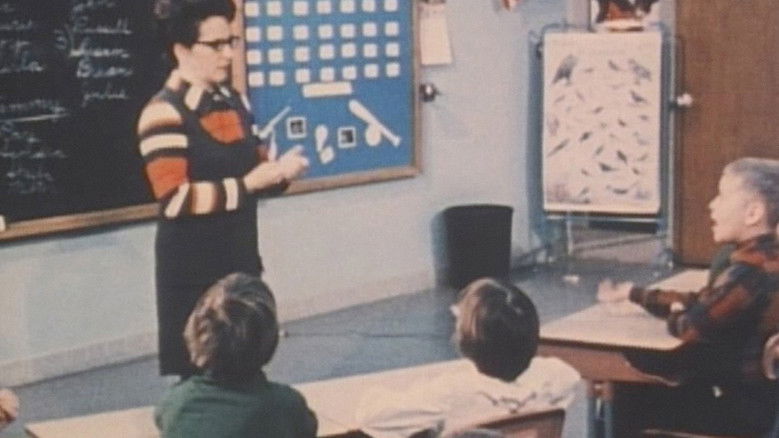
One day in 1968, Jane Elliott, a teacher in a small, all-white Iowa town, divided her third-grade class into blue-eyed and brown-eyed groups and gave them a daring lesson in discrimination. This is the story of that lesson, its lasting impact on the children, and its enduring power 30 years later.
Episode 9: A Class Divided
One day in 1968, Jane Elliott, a teacher in a small, all-white Iowa town, divided her third-grade class into blue-eyed and brown-eyed groups and gave them a daring lesson in discrimination. This is the story of that lesson, its lasting impact on the children, and its enduring power 30 years later.