
Episode
NOVA: Sputnik Declassified
Overview
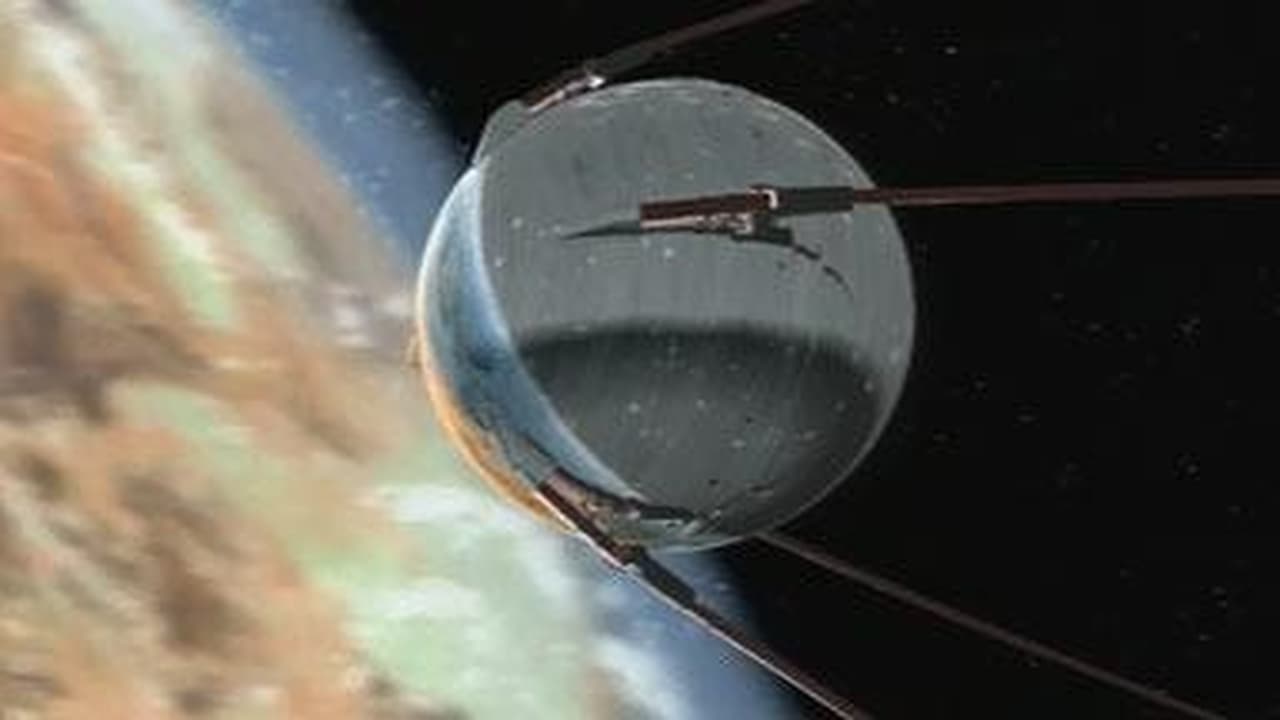
On October 4, 1957, the Space Age dawned with the red hue of the Communist flag when the Soviet Union launched the first artificial satellite. Sputnik I stunned the world and spurred a surge in science education and innovation that changed our world forever. But was Sputnik I really a shock to America's leaders, and how close was the U.S. to getting into space first? NOVA draws on previously classified documents to tell the real story behind the opening chapter in the space race.
Details
- Series
- NOVA
- Season
- Season 35
- Episode
- Episode 4
- Air date
- 2007-11-07
- Runtime
- 55 min
Episode context
Sputnik Declassified is Episode 4 in Season 35 of NOVA. It aired on 2007-11-07. The runtime is 55 min.
Previous / Next
 Episode 3: Marathon Challenge
Can anyone run a marathon? How do you run 26.2 miles if you have trouble making it around the block? With good coaching, discipline, and lots of group support, as NOVA shows when it follows 13 generally sedentary people through a training regimen designed to prepare them for an ultimate test of stamina and endurance. Produced in cooperation with the Boston Athletic Association®, which granted NOVA unprecedented access to the 111th Boston Marathon®, and Tufts University, "Marathon Challenge" takes viewers on a unique adventure inside the human body, tracking the physiological changes that exercise can bring about.
Episode 3: Marathon Challenge
Can anyone run a marathon? How do you run 26.2 miles if you have trouble making it around the block? With good coaching, discipline, and lots of group support, as NOVA shows when it follows 13 generally sedentary people through a training regimen designed to prepare them for an ultimate test of stamina and endurance. Produced in cooperation with the Boston Athletic Association®, which granted NOVA unprecedented access to the 111th Boston Marathon®, and Tufts University, "Marathon Challenge" takes viewers on a unique adventure inside the human body, tracking the physiological changes that exercise can bring about.
 Episode 5: Judgment Day: Intelligent Design on Trial
Using courtroom reenactments based on transcripts and interviews with those present, NOVA looks at the events of the federal case of Kitzmiller v. Dover School District.
Episode 5: Judgment Day: Intelligent Design on Trial
Using courtroom reenactments based on transcripts and interviews with those present, NOVA looks at the events of the federal case of Kitzmiller v. Dover School District.
More episodes from this season
 Episode 2: Ghost in Your Genes
Experts investigate how a mysterious "second genome" helps determine our biological fates.
Episode 2: Ghost in Your Genes
Experts investigate how a mysterious "second genome" helps determine our biological fates.
 Episode 6: Master of the Killer Ants
The Mofu people of northern Cameroon have a close relationship with insects, in particular, the red driver ants which they use to combat termites.
Episode 6: Master of the Killer Ants
The Mofu people of northern Cameroon have a close relationship with insects, in particular, the red driver ants which they use to combat termites.
 Episode 1: Secrets of the Samurai Sword
English archers had their longbows, Old West sheriffs had their six-guns, but Japan’s samurai warriors had the most fearsome weapon of all: the razor-sharp, unsurpassed technology of the katana, or samurai sword. In this program, NOVA probes the centuries-old secrets that went into forging what many consider the perfect blade. Fifteen traditional Japanese craftsmen spent nearly six months creating the sword that NOVA follows through production, from smelting the ore to forging the steel to sharpening the blade to a keen edge capable of slicing through a row of warriors at one swoop.
Episode 1: Secrets of the Samurai Sword
English archers had their longbows, Old West sheriffs had their six-guns, but Japan’s samurai warriors had the most fearsome weapon of all: the razor-sharp, unsurpassed technology of the katana, or samurai sword. In this program, NOVA probes the centuries-old secrets that went into forging what many consider the perfect blade. Fifteen traditional Japanese craftsmen spent nearly six months creating the sword that NOVA follows through production, from smelting the ore to forging the steel to sharpening the blade to a keen edge capable of slicing through a row of warriors at one swoop.
 Episode 7: Missing in MiG Alley
In the early 1950s, epic battles unfolded in the skies over North Korea as American and Russian fighters faced off in history's first jet war. This program explores the Korean War's aerial tactics, technology, and grim aftermath for downed pilots, many of whom disappeared without a trace.
The Korean War pitted the two most advanced fighters of their day, the American F-86 Sabre and the Soviet MiG-15, in furious air battles in North Korea's notorious "MiG Alley." With the help of dramatic reconstructions, rare archival footage, and interviews with veteran American and Soviet pilots, NOVA puts viewers in the cockpit to experience the lethal split-second duels that erupted in MiG Alley.
Episode 7: Missing in MiG Alley
In the early 1950s, epic battles unfolded in the skies over North Korea as American and Russian fighters faced off in history's first jet war. This program explores the Korean War's aerial tactics, technology, and grim aftermath for downed pilots, many of whom disappeared without a trace.
The Korean War pitted the two most advanced fighters of their day, the American F-86 Sabre and the Soviet MiG-15, in furious air battles in North Korea's notorious "MiG Alley." With the help of dramatic reconstructions, rare archival footage, and interviews with veteran American and Soviet pilots, NOVA puts viewers in the cockpit to experience the lethal split-second duels that erupted in MiG Alley.
 Episode 8: Absolute Zero: The Conquest of Cold
Our mastery of cold is something we take for granted, whether it s air conditioning and frozen food or the liquefied gases and superconductivity at the heart of cutting-edge technology. But what is cold? How do you achieve it, and how cold can it get? This two-part NOVA special brings the history of this frosty fascination to life with brilliant dramatic recreations of high moments in low-temperature research and the quest for ever-lower notches on the thermometer.
The first hour, The Conquest of Cold, opens in the 1600s when the nature of cold and heat was a complete mystery. Were they different aspects of the same phenomenon? The experiments that settled these questions helped stoke the Industrial Revolution.
Episode 9: Absolute Zero: The Race for Absolute Zero
Our mastery of cold is something we take for granted, whether it s air conditioning and frozen food or the liquefied gases and superconductivity at the heart of cutting-edge technology. But what is cold? How do you achieve it, and how cold can it get? This two-part NOVA special brings the history of this frosty fascination to life with brilliant dramatic recreations of high moments in low-temperature research and the quest for ever-lower notches on the thermometer.
In the second hour, The Race For Absolute Zero dramatizes the titanic rivalry between Scottish researcher James Dewar and Dutch physicist Heike Onnes, who plunged cold science to the forbidding realm at which oxygen and then nitrogen turn into liquids. The race continues today as scientists pioneer super-fast computing near absolute zero the ultimate chill of -459.67° F where atoms slow to a virtual standstill.
Episode 8: Absolute Zero: The Conquest of Cold
Our mastery of cold is something we take for granted, whether it s air conditioning and frozen food or the liquefied gases and superconductivity at the heart of cutting-edge technology. But what is cold? How do you achieve it, and how cold can it get? This two-part NOVA special brings the history of this frosty fascination to life with brilliant dramatic recreations of high moments in low-temperature research and the quest for ever-lower notches on the thermometer.
The first hour, The Conquest of Cold, opens in the 1600s when the nature of cold and heat was a complete mystery. Were they different aspects of the same phenomenon? The experiments that settled these questions helped stoke the Industrial Revolution.
Episode 9: Absolute Zero: The Race for Absolute Zero
Our mastery of cold is something we take for granted, whether it s air conditioning and frozen food or the liquefied gases and superconductivity at the heart of cutting-edge technology. But what is cold? How do you achieve it, and how cold can it get? This two-part NOVA special brings the history of this frosty fascination to life with brilliant dramatic recreations of high moments in low-temperature research and the quest for ever-lower notches on the thermometer.
In the second hour, The Race For Absolute Zero dramatizes the titanic rivalry between Scottish researcher James Dewar and Dutch physicist Heike Onnes, who plunged cold science to the forbidding realm at which oxygen and then nitrogen turn into liquids. The race continues today as scientists pioneer super-fast computing near absolute zero the ultimate chill of -459.67° F where atoms slow to a virtual standstill.
 Episode 10: Secrets of the Parthenon
For 25 centuries the Parthenon has been shot at, set on fire, rocked by earthquakes, looted for its sculptures, almost destroyed by explosion, and disfigured by well-meaning renovations. It has gone from temple, to church, to mosque, to munitions dump. What could be next? How about a scientific search for the secrets of its incomparable beauty and astonishingly rapid construction? With unprecedented access, NOVA unravels the architectural and engineering mysteries of this celebrated ancient temple.
Episode 10: Secrets of the Parthenon
For 25 centuries the Parthenon has been shot at, set on fire, rocked by earthquakes, looted for its sculptures, almost destroyed by explosion, and disfigured by well-meaning renovations. It has gone from temple, to church, to mosque, to munitions dump. What could be next? How about a scientific search for the secrets of its incomparable beauty and astonishingly rapid construction? With unprecedented access, NOVA unravels the architectural and engineering mysteries of this celebrated ancient temple.
 Episode 11: Astrospies
Millions remember the countdowns, launchings, splashdowns, and parades as the U.S. raced the USSR to the moon in the 1960s. But few know that both countries also ran parallel space programs, whose covert goal was to launch military astronauts on spying missions. With investigative journalist James Bamford, NOVA delves into the untold story of this top-secret space race, which might easily have turned into a shooting war in orbit.
Episode 11: Astrospies
Millions remember the countdowns, launchings, splashdowns, and parades as the U.S. raced the USSR to the moon in the 1960s. But few know that both countries also ran parallel space programs, whose covert goal was to launch military astronauts on spying missions. With investigative journalist James Bamford, NOVA delves into the untold story of this top-secret space race, which might easily have turned into a shooting war in orbit.
 Episode 12: Ape Genius
At a research site in Fongoli, Senegal, a female chimpanzee breaks off a branch, chews the end to make it sharp, and then uses this rudimentary spear to skewer a tasty bush baby hiding inside a hollow tree. It’s an astonishing breakthrough for primate researchers—the first time anyone has documented a chimpanzee wielding a carefully prepared, preplanned weapon. But it's only the latest in a slew of extraordinary new findings about ape behavior.
The more researchers learn about the great apes—chimpanzees, bonobos, gorillas, and orangutans—the more evidence they find of creative intelligence. What, then, is the essential difference between them and us? "Ape Genius," a NOVA-National Geographic special, explores that provocative question and examines research that is illuminating the ape mind. Bit by bit, investigators are finding an explanation for why the non-human great apes never made the breakthrough into a human-style culture that builds on the achievements of previous generations.
Episode 12: Ape Genius
At a research site in Fongoli, Senegal, a female chimpanzee breaks off a branch, chews the end to make it sharp, and then uses this rudimentary spear to skewer a tasty bush baby hiding inside a hollow tree. It’s an astonishing breakthrough for primate researchers—the first time anyone has documented a chimpanzee wielding a carefully prepared, preplanned weapon. But it's only the latest in a slew of extraordinary new findings about ape behavior.
The more researchers learn about the great apes—chimpanzees, bonobos, gorillas, and orangutans—the more evidence they find of creative intelligence. What, then, is the essential difference between them and us? "Ape Genius," a NOVA-National Geographic special, explores that provocative question and examines research that is illuminating the ape mind. Bit by bit, investigators are finding an explanation for why the non-human great apes never made the breakthrough into a human-style culture that builds on the achievements of previous generations.
 Episode 13: The Four Winged Dinosaur
A look at the 2002 discovery of a four-winged crow-sized dinosaur fossil dubbed Microraptor, which has rekindled the scientific debate over the origins of flight. Included is a wind tunnel test of a "flight-ready" model of the 130 million-year-old Microraptor.
Episode 13: The Four Winged Dinosaur
A look at the 2002 discovery of a four-winged crow-sized dinosaur fossil dubbed Microraptor, which has rekindled the scientific debate over the origins of flight. Included is a wind tunnel test of a "flight-ready" model of the 130 million-year-old Microraptor.