
Episode
NOVA: Escape! Because Accidents Happen: Plane Crash (3)
Overview
Details for NOVA: Escape! Because Accidents Happen: Plane Crash (3), powered by TMDB.
Details
- Series
- NOVA
- Season
- Season 26
- Episode
- Episode 16
- Air date
- 1999-02-17
- Runtime
- 55 min
Episode context
Escape! Because Accidents Happen: Plane Crash (3) is Episode 16 in Season 26 of NOVA. It aired on 1999-02-17. The runtime is 55 min.
Previous / Next
More episodes from this season
Episode 14: Escape! Because Accidents Happen: Fire (1)
The past five years have seen remarkable progress in both treatment and basic understanding of the human immunodeficiency virus (HIV) that causes AIDS. In laboratories and clinics across the country and around the world, scientists and doctors have pooled their expertise to keep people infected with HIV alive and disease-free longer than was imaginable at the start of the epidemic. And now, through what may well be an unprecedented cross-fertilization process among molecular biologists, immunologists, geneticists, and practicing physicians, a series of discoveries about HIV-infected patients who have successfully fought off AIDS for as long as 20 years are being closely analyzed for clues to the ultimate goal in this fierce scientific battle—a vaccine. NOVA tells the story of this ongoing battle through the experiences of patients like Robert Massie, a "long-term non-progressor." Massie, a 43-year old environmental activist and Episcopalian minister was infected by a blood transfusion in 1978 and after an acute period of illness, somehow his immune system has kept the HIV virus at bay without drugs. Surviving AIDS reveals the scientific community engaged in an enormous and ongoing struggle, with discoveries traveling from labs to patients and back. And NOVA brings together the most promising research with compelling human stories of the patients and doctors who are devoting themselves to unraveling one of the most complicated mysteries in scientific history.
Episode 18: Battle Alert in the Gulf
Episode 13: Everest: The Mystery of Mallory and Irvin
When George Mallory was asked why he was willing to risk his life to climb Mount Everest in 1924 he simply replied "Because it's there." In Nova Video Library: Everest - The Mystery of Mallory and Irvine you are invited to unravel some of the mystery surrounding the success of Mallory and his climbing partner Andrew Irvine, who set off to climb Everest on June 8, 1924. Did they make it to the top of the summit before their eventual demise? If they did, their success would predate Sir Edmund Hillary and Tenzig Norgay by 30 years. This award-winning film takes a compelling look at their brave attempt and includes insightful interviews with the last two living members of Mallory's climbing team.
Episode 19: Volcanoes of the Deep
 Episode 12: Submarines, Secrets, and Spies
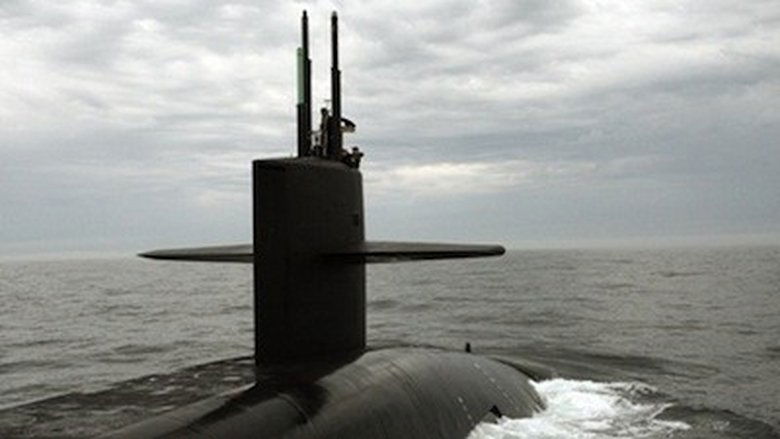
At the height of the Cold War, US subs gathered secrets that neither spies nor satellites could expose. Until recently, almost nobody knew the hidden history of their tragedies and triumphs. As the US strove for supremacy in the Cold War, it pushed submarine technology to its limits. Breakthroughs led to unparalleled triumphs of espionage. And, missteps cost hundreds their lives. With recently declassified film, NOVA lifts the veil on tragic and mysterious submarine accidents and their high-risk spy missions that helped win the Cold War. Along with celebrated oceanographer and explorer, Robert Ballard (discoverer of the Titanic), NOVA goes in search of clues to two tragedies of the Cold War, the wrecks of the nuclear submarines Thresher and Scorpion. Recently declassified footage gives a unique glimpse of the wrecks and a chance to investigate the catastrophic accidents that overtook these subs and their crew.
Episode 20: Surviving AIDS
The past five years have seen remarkable progress in both treatment and basic understanding of the human immunodeficiency virus (HIV) that causes AIDS. In laboratories and clinics across the country and around the world, scientists and doctors have pooled their expertise to keep people infected with HIV alive and disease-free longer than was imaginable at the start of the epidemic. And now, through what may well be an unprecedented cross-fertilization process among molecular biologists, immunologists, geneticists, and practicing physicians, a series of discoveries about HIV-infected patients who have successfully fought off AIDS for as long as 20 years are being closely analyzed for clues to the ultimate goal in this fierce scientific battle—a vaccine. NOVA tells the story of this ongoing battle through the experiences of patients.
Episode 11: The Beast of Loch Ness
Is it just a fairy tale, or could a primeval beast lurk in the deep, dark waters of a Scottish lake? Since it was first reported more than 60 years ago, hundreds claim to have witnessed the Loch Ness Monster, while one scientist after another has brought the latest technology to the loch to probe the phenomenon. Twenty-five years after their first, groundbreaking expedition to Loch Ness, NOVA joins two American scientists as they return to Scotland for one last go at Nessie. During a three-week expedition, they use state-of-the-art sonar and sensitive underwater cameras in an attempt to track down and identify the elusive beast. Biologists study the ecosystem of the loch to determine if it could support a large animal. Geologists study its history, looking for clues about what kind of creature might have colonized it, and when. NOVA examines the photographic evidence in the case. And eyewitnesses vividly recount their sightings. Could this legendary creature be real, perhaps a relic from the time of dinosaurs? Or is it a shared illusion—a product of myth, mirage and wishful thinking?
Episode 12: Submarines, Secrets, and Spies
At the height of the Cold War, US subs gathered secrets that neither spies nor satellites could expose. Until recently, almost nobody knew the hidden history of their tragedies and triumphs. As the US strove for supremacy in the Cold War, it pushed submarine technology to its limits. Breakthroughs led to unparalleled triumphs of espionage. And, missteps cost hundreds their lives. With recently declassified film, NOVA lifts the veil on tragic and mysterious submarine accidents and their high-risk spy missions that helped win the Cold War. Along with celebrated oceanographer and explorer, Robert Ballard (discoverer of the Titanic), NOVA goes in search of clues to two tragedies of the Cold War, the wrecks of the nuclear submarines Thresher and Scorpion. Recently declassified footage gives a unique glimpse of the wrecks and a chance to investigate the catastrophic accidents that overtook these subs and their crew.
Episode 20: Surviving AIDS
The past five years have seen remarkable progress in both treatment and basic understanding of the human immunodeficiency virus (HIV) that causes AIDS. In laboratories and clinics across the country and around the world, scientists and doctors have pooled their expertise to keep people infected with HIV alive and disease-free longer than was imaginable at the start of the epidemic. And now, through what may well be an unprecedented cross-fertilization process among molecular biologists, immunologists, geneticists, and practicing physicians, a series of discoveries about HIV-infected patients who have successfully fought off AIDS for as long as 20 years are being closely analyzed for clues to the ultimate goal in this fierce scientific battle—a vaccine. NOVA tells the story of this ongoing battle through the experiences of patients.
Episode 11: The Beast of Loch Ness
Is it just a fairy tale, or could a primeval beast lurk in the deep, dark waters of a Scottish lake? Since it was first reported more than 60 years ago, hundreds claim to have witnessed the Loch Ness Monster, while one scientist after another has brought the latest technology to the loch to probe the phenomenon. Twenty-five years after their first, groundbreaking expedition to Loch Ness, NOVA joins two American scientists as they return to Scotland for one last go at Nessie. During a three-week expedition, they use state-of-the-art sonar and sensitive underwater cameras in an attempt to track down and identify the elusive beast. Biologists study the ecosystem of the loch to determine if it could support a large animal. Geologists study its history, looking for clues about what kind of creature might have colonized it, and when. NOVA examines the photographic evidence in the case. And eyewitnesses vividly recount their sightings. Could this legendary creature be real, perhaps a relic from the time of dinosaurs? Or is it a shared illusion—a product of myth, mirage and wishful thinking?
 Episode 10: The Perfect Pearl
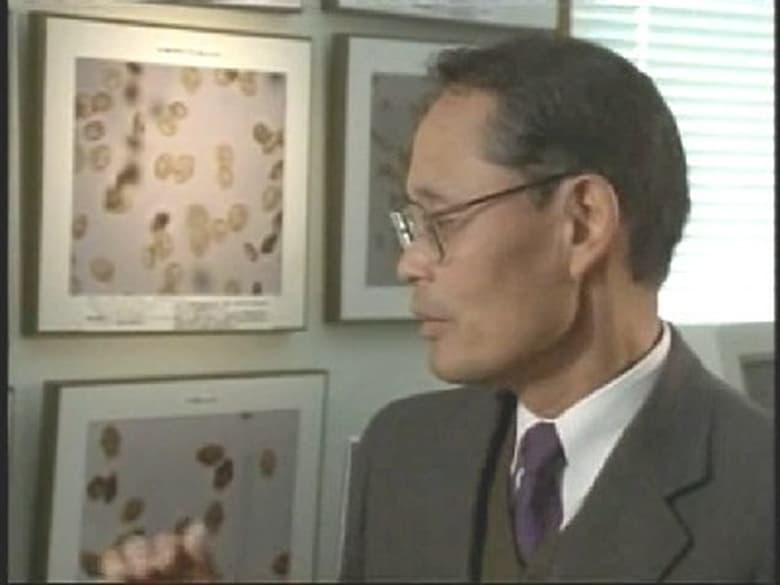
The pearl—the only gem produced by a living animal—has long carried a certain allure. Yet the best mollusk for making this gem—the pearl oyster—doesn't always produce a pearl, and even then, the pearls are rarely perfectly round. It wasn't until the late nineteenth century, when a Japanese scientist discovered a technique to incite oysters to produce these gems, that an industry was formed.
Inducing an oyster to create a pearl is only half the battle—the oyster then needs a nutrient-rich, open environment in which to grow. This NOVA program looks at the science of pearl farming, follows efforts of oyster farmers trying to cope with growing problems of pollution and overcrowding, and considers the shifting sands of dominance within the pearl industry.
Episode 9: Leopards of the Night with David Attenborough
Night stalkers by nature, leopards are observed both by night and day, using state-of-the-art camera equipment, to reveal never before seen hunting behavior. Filmed in the Luangua Valley in Zambia, Leopard reveals the challenges and dangers faced daily by these beautiful animals. Shadowed by hungry hyenas in pursuit of leftovers, and stalked by lumbering crocodiles hoping to tackle a lone leopard on a kill, how can they hope to challenge such beasts?
Episode 8: Ice Mummies: Return of the Iceman (3)
Cutting-edge science and archaeology are reconstructing the life and culture of The Iceman—the 5000-year-old frozen corpse found buried in the ice of the Alps. By analyzing every inch of the Iceman's body and the tools and equipment found with it, scientists are piecing together the most complete picture yet of the late Stone Age in this part of Europe. X-ray, CAT scan, and microscopic analysis of this spectacular find is revealing where the iceman lived, what he ate, and how he may have died; nuclear physics reveals that the Iceman's hair was contaminated with arsenic and copper, suggesting he was involved in copper production centuries before it was known to exist in the region.
Episode 10: The Perfect Pearl
The pearl—the only gem produced by a living animal—has long carried a certain allure. Yet the best mollusk for making this gem—the pearl oyster—doesn't always produce a pearl, and even then, the pearls are rarely perfectly round. It wasn't until the late nineteenth century, when a Japanese scientist discovered a technique to incite oysters to produce these gems, that an industry was formed.
Inducing an oyster to create a pearl is only half the battle—the oyster then needs a nutrient-rich, open environment in which to grow. This NOVA program looks at the science of pearl farming, follows efforts of oyster farmers trying to cope with growing problems of pollution and overcrowding, and considers the shifting sands of dominance within the pearl industry.
Episode 9: Leopards of the Night with David Attenborough
Night stalkers by nature, leopards are observed both by night and day, using state-of-the-art camera equipment, to reveal never before seen hunting behavior. Filmed in the Luangua Valley in Zambia, Leopard reveals the challenges and dangers faced daily by these beautiful animals. Shadowed by hungry hyenas in pursuit of leftovers, and stalked by lumbering crocodiles hoping to tackle a lone leopard on a kill, how can they hope to challenge such beasts?
Episode 8: Ice Mummies: Return of the Iceman (3)
Cutting-edge science and archaeology are reconstructing the life and culture of The Iceman—the 5000-year-old frozen corpse found buried in the ice of the Alps. By analyzing every inch of the Iceman's body and the tools and equipment found with it, scientists are piecing together the most complete picture yet of the late Stone Age in this part of Europe. X-ray, CAT scan, and microscopic analysis of this spectacular find is revealing where the iceman lived, what he ate, and how he may have died; nuclear physics reveals that the Iceman's hair was contaminated with arsenic and copper, suggesting he was involved in copper production centuries before it was known to exist in the region.