Episode
The Untouchables: Canada Run
Overview
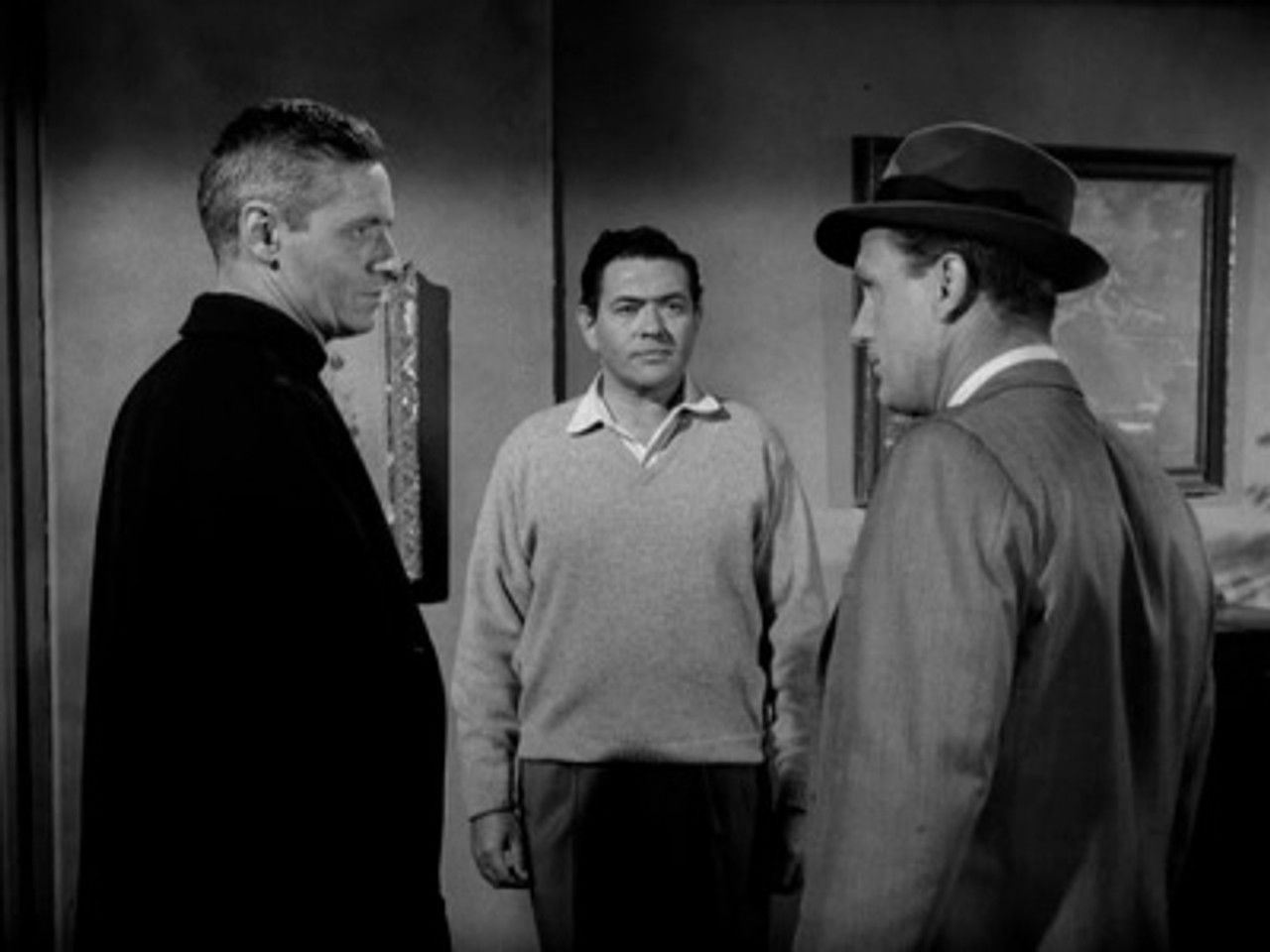
November 1932. Big-time gangster Joe Palakopolous is playing a dangerous game-- he just had his hitman rub out Danny Kugan, the biggest supplier of Canadian whiskey that Frank Nitti had. And Nitti's plenty sore. Kugan was the only guy who could import Canadian Gold for Nitti. The phony stuff is no good; Nitti quips that bottled rotgut is so bad, ""it peels off the labels from the inside."" Eliot Ness and his men investigate Kugan's killing, and try to find out who will take over the operation.
Details
- Series
- The Untouchables
- Season
- Season 3
- Episode
- Episode 11
- Air date
- 1962-01-04
- Runtime
- 60 min
Episode context
Canada Run is Episode 11 in Season 3 of The Untouchables. It aired on 1962-01-04. The runtime is 60 min.
Previous / Next
 Episode 10: Hammerlock
New York, middle of 1932. The Syndicate-- headed by Joe Kulak, Louis ""Lepke"" Buchalter and Dutch Schultz-- has the city's huge garment industry organized and under control. Now they are setting their sights on bakeries; there are 500 independent wholesale bakers in the city. They give Bull Hanlon the word: get the biggest independent baker, Adam Stone, to sign up and all the rest will fall in line.
Episode 10: Hammerlock
New York, middle of 1932. The Syndicate-- headed by Joe Kulak, Louis ""Lepke"" Buchalter and Dutch Schultz-- has the city's huge garment industry organized and under control. Now they are setting their sights on bakeries; there are 500 independent wholesale bakers in the city. They give Bull Hanlon the word: get the biggest independent baker, Adam Stone, to sign up and all the rest will fall in line.
 Episode 12: Fall Guy
October 1932, Chicago. With Capone in the slammer, other bosses are biting off chunks of Capone's empire. One boss is Frankie Gruder, head of a group that is the forerunner of Murder, Inc.; Gruder wants control of all the Canadian imports and exports. Gruder and his boys go to a warehouse, Gruder shoots a longshoreman. Ness and his men show up and start blasting. There's a shoot-out. Gruder manages to escape.
Episode 12: Fall Guy
October 1932, Chicago. With Capone in the slammer, other bosses are biting off chunks of Capone's empire. One boss is Frankie Gruder, head of a group that is the forerunner of Murder, Inc.; Gruder wants control of all the Canadian imports and exports. Gruder and his boys go to a warehouse, Gruder shoots a longshoreman. Ness and his men show up and start blasting. There's a shoot-out. Gruder manages to escape.
More episodes from this season
 Episode 9: City Without a Name
1933. Violence and corruption were at an all-time high in Chicago, New York, St. Louis, Detroit, Kansas City-- virtually every city in the U.S. The lone exception is an Eastern seaboard metropolis, referred to as City Without a Name, in which the voters had used the ballot box to vote corruption out of public office. And Federal agent Arnold Wainwright had kept organized crime out-- but on October 22, he is blasted by machine-guns while in a coffee shop.
Episode 9: City Without a Name
1933. Violence and corruption were at an all-time high in Chicago, New York, St. Louis, Detroit, Kansas City-- virtually every city in the U.S. The lone exception is an Eastern seaboard metropolis, referred to as City Without a Name, in which the voters had used the ballot box to vote corruption out of public office. And Federal agent Arnold Wainwright had kept organized crime out-- but on October 22, he is blasted by machine-guns while in a coffee shop.
 Episode 13: The Gang War
1932. Chicago is a thirsty town, consuming 86,000 gallons of booze a day; that's 32-million gallons a year. Almost all this booze is beer and rotgut, but 1% is the finest Canadian scotch. Nitti's boys, armed with tommy guns, shoot up a rival speak, the Blue Lion, that's serving the Canadian scotch. Ness and his men investigate; 2 people dead, 3 critically injured.
Episode 13: The Gang War
1932. Chicago is a thirsty town, consuming 86,000 gallons of booze a day; that's 32-million gallons a year. Almost all this booze is beer and rotgut, but 1% is the finest Canadian scotch. Nitti's boys, armed with tommy guns, shoot up a rival speak, the Blue Lion, that's serving the Canadian scotch. Ness and his men investigate; 2 people dead, 3 critically injured.
 Episode 8: Man Killer
Chicago, July 1934. Anonymous phone calls have been tipping off Ness and his men to narcotics activities; they do a bunch of raids. On August 4, even though sales have fallen off, Frank Nitti is ordering 15 kilos of heroin*, the biggest single shipment ever. That night, one of Nitti's boys makes the trade: dough for the H. He gets into a car driven by another of Nitti's boys, Manny Kravitz.
Episode 8: Man Killer
Chicago, July 1934. Anonymous phone calls have been tipping off Ness and his men to narcotics activities; they do a bunch of raids. On August 4, even though sales have fallen off, Frank Nitti is ordering 15 kilos of heroin*, the biggest single shipment ever. That night, one of Nitti's boys makes the trade: dough for the H. He gets into a car driven by another of Nitti's boys, Manny Kravitz.
 Episode 14: The Silent Partner
Chicago, March 2, 1932. The hottest nightspot in town is the Club Tunisian, owned by gangster Pete Kalik, who built it up from a small speak. Ness and Lee Hobson show up, but not to see gorgeous singer Mavis Carroll-- they had gotten an anonymous phone tip earlier. Lee Hobson is tired, he is due to take his vacation leave starting Friday. Ness and Hobson get contacted by the club comedian Eddie Paris, he is the one who phoned them. After his show, he meets with Ness and Hobson at the Denton Street wharf; Eddie wants Pete Kalik put away behind bars, he says Kalik is working out a big alcohol deal with the Partner, the mysterious man who had backed Torrio and Capone.
Episode 14: The Silent Partner
Chicago, March 2, 1932. The hottest nightspot in town is the Club Tunisian, owned by gangster Pete Kalik, who built it up from a small speak. Ness and Lee Hobson show up, but not to see gorgeous singer Mavis Carroll-- they had gotten an anonymous phone tip earlier. Lee Hobson is tired, he is due to take his vacation leave starting Friday. Ness and Hobson get contacted by the club comedian Eddie Paris, he is the one who phoned them. After his show, he meets with Ness and Hobson at the Denton Street wharf; Eddie wants Pete Kalik put away behind bars, he says Kalik is working out a big alcohol deal with the Partner, the mysterious man who had backed Torrio and Capone.
 Episode 7: Jigsaw
September 14, 1932. At 11:30 p.m., Eliot Ness goes to the Odeon movie theatre (not the Odeon Burlesque theatre used in several episodes); he gives stoolie Marty Wilger an envelope with cash for his tips. Those tips had led to successful raids by Ness against Nitti's speaks: booze, girls, gambling tables; also 2 warehouses and a distillery in the last week.
Nitti's plenty sore.
Episode 7: Jigsaw
September 14, 1932. At 11:30 p.m., Eliot Ness goes to the Odeon movie theatre (not the Odeon Burlesque theatre used in several episodes); he gives stoolie Marty Wilger an envelope with cash for his tips. Those tips had led to successful raids by Ness against Nitti's speaks: booze, girls, gambling tables; also 2 warehouses and a distillery in the last week.
Nitti's plenty sore.
 Episode 15: The Whitey Steele Story
New York City. July 23, 1934. The Underworld, which had long made big money by covering bets on horse races, wants to get their hands on a new invention-- the racewire, which can speed the results of horse races to bookmakers everywhere. That rainy night, Michael Barrigan and Frederic Withers (who, along with their partner Douglas Barrows, own and run the Trans-Pacific News Service) receive an urgent call from Barrows-- but Barrigan finds Barrows dead in a bookie joint (the back room of Hayes florists) when he gets there.
Episode 15: The Whitey Steele Story
New York City. July 23, 1934. The Underworld, which had long made big money by covering bets on horse races, wants to get their hands on a new invention-- the racewire, which can speed the results of horse races to bookmakers everywhere. That rainy night, Michael Barrigan and Frederic Withers (who, along with their partner Douglas Barrows, own and run the Trans-Pacific News Service) receive an urgent call from Barrows-- but Barrigan finds Barrows dead in a bookie joint (the back room of Hayes florists) when he gets there.
 Episode 6: Loophole
Chicago, January 1933. Ness and his men raid a speakeasy owned by gangster Mikhail ""Red Mike"" Probich, and run by Connie LaVerne. At the trial, Probich is represented by his crooked lawyer Morton Halas, who grew up in poverty. The trial drags on for 5 days. Finally, Ness is ready to call the last prosecution witness, Connie LaVerne, who ""is 80% of their case."" Morton Halas objects, on the grounds that a wife cannot be forced to testify against her husband.
Episode 6: Loophole
Chicago, January 1933. Ness and his men raid a speakeasy owned by gangster Mikhail ""Red Mike"" Probich, and run by Connie LaVerne. At the trial, Probich is represented by his crooked lawyer Morton Halas, who grew up in poverty. The trial drags on for 5 days. Finally, Ness is ready to call the last prosecution witness, Connie LaVerne, who ""is 80% of their case."" Morton Halas objects, on the grounds that a wife cannot be forced to testify against her husband.
 Episode 16: The Death Tree
Early November 1931. On West Madison Street, there is a wonderfully diverse neighborhood made up of gypsies of Romanian, Hungarian and Czech descent. The area is flooded with Capone's rotgut, being distributed by Janos Colescu. There are many colorful characters, including the chestnut vendor with his singsong voice: ""Get your red-hot che-e-estnuts, the wind is cold."" When the rotgut leads to a drunken knife-fight that leaves a gypsy dead, the 8-member gypsy Senate, headed by Victor Bartok, with his brother Fedor Bartok, convenes. Eliot Ness shows up to offer his help to end the bootleg booze; they decline his help, saying they will handle matters themselves.
Episode 16: The Death Tree
Early November 1931. On West Madison Street, there is a wonderfully diverse neighborhood made up of gypsies of Romanian, Hungarian and Czech descent. The area is flooded with Capone's rotgut, being distributed by Janos Colescu. There are many colorful characters, including the chestnut vendor with his singsong voice: ""Get your red-hot che-e-estnuts, the wind is cold."" When the rotgut leads to a drunken knife-fight that leaves a gypsy dead, the 8-member gypsy Senate, headed by Victor Bartok, with his brother Fedor Bartok, convenes. Eliot Ness shows up to offer his help to end the bootleg booze; they decline his help, saying they will handle matters themselves.
 Episode 5: The Matt Bass Scheme
In mid-June 1932, Eliot Ness, having compiled a list of Frank Nitti's breweries & distilleries, began a series of raids designed to break the back of the Capone empire. This puts the pressure on Frank Nitti, Capone's lieutenant. Nitti calls a meet with Seth Otis and Phil Grier, who jointly own the biggest speakeasy in Chicago, the Hotsy Totsy Club.
Episode 5: The Matt Bass Scheme
In mid-June 1932, Eliot Ness, having compiled a list of Frank Nitti's breweries & distilleries, began a series of raids designed to break the back of the Capone empire. This puts the pressure on Frank Nitti, Capone's lieutenant. Nitti calls a meet with Seth Otis and Phil Grier, who jointly own the biggest speakeasy in Chicago, the Hotsy Totsy Club.
 Episode 17: Takeover
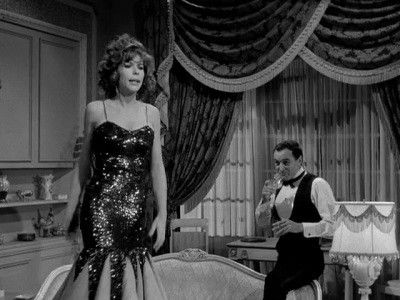
Chicago, October 1932. The only ""beer"" allowed to be served during Prohibition is ""near-beer"" or ""Near-O""-- which is 0.5% alcohol, as opposed to real beer which is 4.0% alcohol. And so, a lot of legitimate beer producers wind up ""spiking"" the barrels of near-beer with pure alcohol, to get it up to strength. A northside brewer named Woody O'Mara wants to smash all his competition; he tells his girlfriend Amy Gratzner, a rather plain-looking 23-year-old secretary for rival brewer Franz Koenig, to blow the whistle on her boss.
Episode 17: Takeover
Chicago, October 1932. The only ""beer"" allowed to be served during Prohibition is ""near-beer"" or ""Near-O""-- which is 0.5% alcohol, as opposed to real beer which is 4.0% alcohol. And so, a lot of legitimate beer producers wind up ""spiking"" the barrels of near-beer with pure alcohol, to get it up to strength. A northside brewer named Woody O'Mara wants to smash all his competition; he tells his girlfriend Amy Gratzner, a rather plain-looking 23-year-old secretary for rival brewer Franz Koenig, to blow the whistle on her boss.