Episode
The Universe: Star of Bethlehem
Overview
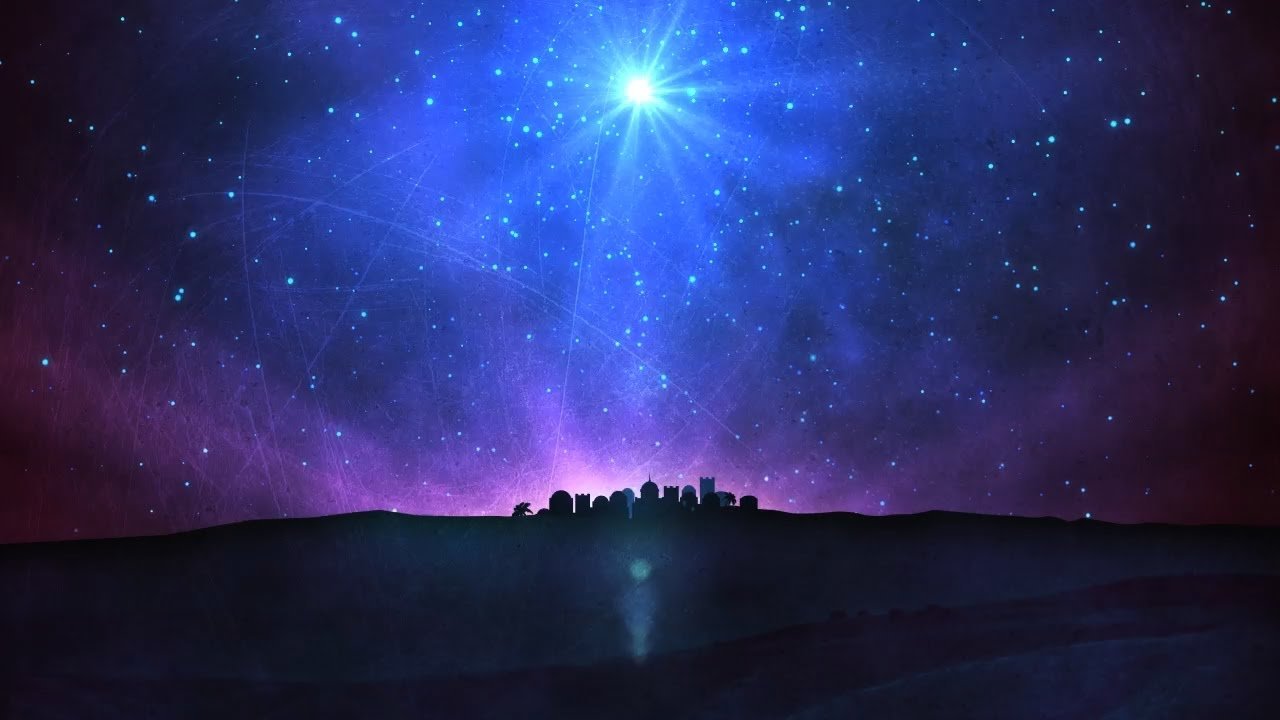
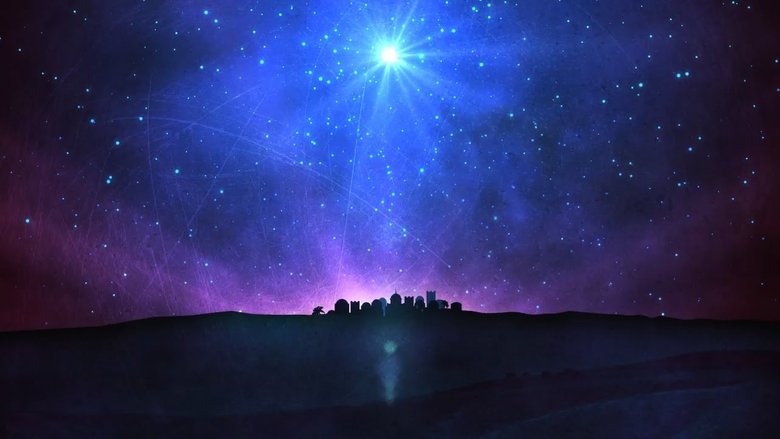
What was the astronomical reality behind the star that, according to the Gospel of Matthew, guided the Magi to the young Jesus? This episode examines almost 20 centuries of theories, including meteors, novae, supernovae and comets…but is the truth to be found in a combination of astronomy–and astrology? Recent theories suggest that the "star" was the planet Jupiter in a series of conjunctions with other planets, stars and constellations, and that these conjunctions were interpreted by the Magi–astrologers and priests of the Zoroastrian religion–as heralding the birth of the Jewish Messiah.
Details
- Series
- The Universe
- Season
- Season 8
- Episode
- Episode 4
- Air date
- 2014-03-22
- Runtime
- 45 min
Episode context
Star of Bethlehem is Episode 4 in Season 8 of The Universe. It aired on 2014-03-22. The runtime is 45 min.
Previous / Next

More episodes from this season
 Episode 2: Pyramids
The Great Pyramids of Giza remain one of the enduring wonders of the ancient world. These mesmerizing monuments have eluded astronomers and archeologists for centuries. Why and how were they built? Were they merely burial tombs, or a cosmic vehicle to the celestial world? The world's renowned Egyptologists, astronomers and engineers join forces to solve some of the long-held mysteries about the pyramids. What were the motives and methods behind the orientation of the pyramids to face the four cardinal directions with extreme accuracy? Did the ancient Egyptians use the sun or nighttime stars in the orientation of the pyramids? Were the pyramids the pharaohs' portal to the nighttime stars? Or was the entire Giza complex built as a place of cult worship to the sun?
Episode 2: Pyramids
The Great Pyramids of Giza remain one of the enduring wonders of the ancient world. These mesmerizing monuments have eluded astronomers and archeologists for centuries. Why and how were they built? Were they merely burial tombs, or a cosmic vehicle to the celestial world? The world's renowned Egyptologists, astronomers and engineers join forces to solve some of the long-held mysteries about the pyramids. What were the motives and methods behind the orientation of the pyramids to face the four cardinal directions with extreme accuracy? Did the ancient Egyptians use the sun or nighttime stars in the orientation of the pyramids? Were the pyramids the pharaohs' portal to the nighttime stars? Or was the entire Giza complex built as a place of cult worship to the sun?
 Episode 1: Stonehenge
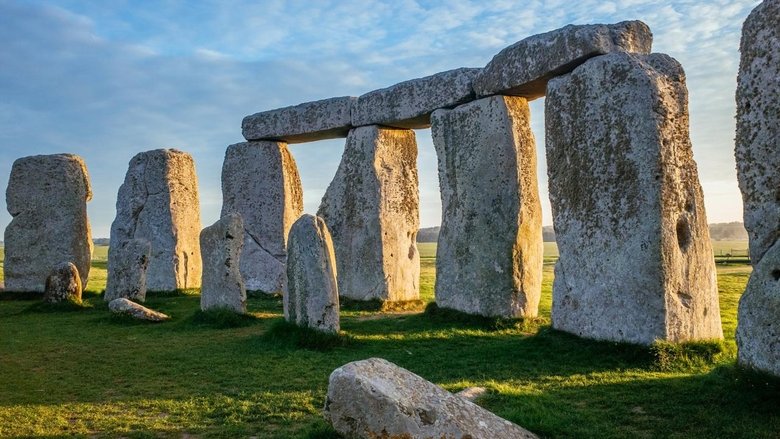
Perhaps the most mysterious structure on Earth, Stonehenge has stood on a plain in Southern England for 5000 years. Why is it there? In this episode we explore the possibility that this was a prehistoric astronomical observatory. Here ancient astronomer priests may have divined the complex movements of the Sun and Moon, recognizing patterns that would not be discovered elsewhere for thousands of years. The primitive Shamans may have also been the first astronomers to predict eclipses.
Episode 1: Stonehenge
Perhaps the most mysterious structure on Earth, Stonehenge has stood on a plain in Southern England for 5000 years. Why is it there? In this episode we explore the possibility that this was a prehistoric astronomical observatory. Here ancient astronomer priests may have divined the complex movements of the Sun and Moon, recognizing patterns that would not be discovered elsewhere for thousands of years. The primitive Shamans may have also been the first astronomers to predict eclipses.