TV series
The Genius of Photography
Overview
Documentary series exploring the history of photography - from daguerreotype to digital, from portraits to photo-journalism, from art to advertising.
Details
- First air date
- 2007-10-25
- Status
- Ended
- Seasons
- 1 season
- Episodes
- 6 episodes
- Genres
- Documentary
- Network
- BBC Four
- Production
- BBC, Wall to Wall
- Country
- GB
- Original language
- EN
Cast
- Denis Lawson as Narrator (voice)
Creators and crew
- Martin Davidson - Creator
- Michael Jackson - Executive Producer
- Alex Graham - Executive Producer
- Chris Rodley - Producer
- Tim Kirby - Producer
- Deborah Lee - Producer
Episodes
 Episode 1: Fixing the Shadows
This elegant, studious documentary - the first of a six-part series - leads us from ancient Rome to the Great War. Taking as its starting point the baffling natural phenomenon of camera obscura, it reveals how mathematician Henry Fox Talbot’s inability to draw led him to pioneer photographic methods, and how the new discovery made a big impression on painter Edgar Degas. The early tussle to see which photographic process would gain the upper hand is a fascinating one. Though occasionally dry and prone to pseudobabble, it covers a lot of territory, and Denis Lawson’s arch narration is the perfect accompaniment to some unforgettable images
Episode 2: Documents For Artists
By the end of World War One photography had become the central medium of the age. Photographers began to turn their lenses to the plight of rural victims of the American Depression and minority communities. Alexander Rodchenko and August Sander found their artistic skills put to another use by the state – as propaganda.
Documents for Artists focuses on the first few decades after World War One when the potential of photography attracted the attention of artists and governments alike.
Episode 3: Right Time Right Place
Examines the photographs of D-Day, the Holocaust and Hiroshima raising questions about history as seen through the viewfinder.
Episode 4: Paper Movies
After World War One the potential of photography attracted the attention of artists and governments alike.
Episode 5: We Are Family
Having conquered the street and the road, photographers approached the final frontier: the home, the self, and private life.
Episode 6: Snap Judgements
Shows how photography has become part of the art world where a single image can cost $2.9m and, in the digital world, where all images are possible.
Episode 1: Fixing the Shadows
This elegant, studious documentary - the first of a six-part series - leads us from ancient Rome to the Great War. Taking as its starting point the baffling natural phenomenon of camera obscura, it reveals how mathematician Henry Fox Talbot’s inability to draw led him to pioneer photographic methods, and how the new discovery made a big impression on painter Edgar Degas. The early tussle to see which photographic process would gain the upper hand is a fascinating one. Though occasionally dry and prone to pseudobabble, it covers a lot of territory, and Denis Lawson’s arch narration is the perfect accompaniment to some unforgettable images
Episode 2: Documents For Artists
By the end of World War One photography had become the central medium of the age. Photographers began to turn their lenses to the plight of rural victims of the American Depression and minority communities. Alexander Rodchenko and August Sander found their artistic skills put to another use by the state – as propaganda.
Documents for Artists focuses on the first few decades after World War One when the potential of photography attracted the attention of artists and governments alike.
Episode 3: Right Time Right Place
Examines the photographs of D-Day, the Holocaust and Hiroshima raising questions about history as seen through the viewfinder.
Episode 4: Paper Movies
After World War One the potential of photography attracted the attention of artists and governments alike.
Episode 5: We Are Family
Having conquered the street and the road, photographers approached the final frontier: the home, the self, and private life.
Episode 6: Snap Judgements
Shows how photography has become part of the art world where a single image can cost $2.9m and, in the digital world, where all images are possible.
More like this
 History 101
Infographics and archival footage deliver bite-size history lessons on scientific breakthroughs, social movements and world-changing discoveries.
History 101
Infographics and archival footage deliver bite-size history lessons on scientific breakthroughs, social movements and world-changing discoveries.
 The Story of Film: An Odyssey
A worldwide guided tour of the greatest movies ever made and the story of international cinema through the history of cinematic innovation.
The Story of Film: An Odyssey
A worldwide guided tour of the greatest movies ever made and the story of international cinema through the history of cinematic innovation.
 Top Gear
Motoring programme featuring reviews of and reports about cars of all types.
Top Gear
Motoring programme featuring reviews of and reports about cars of all types.
 Eli Roth's History of Horror
An in-depth look at the history and pop cultural significance of horror films.
Eli Roth's History of Horror
An in-depth look at the history and pop cultural significance of horror films.
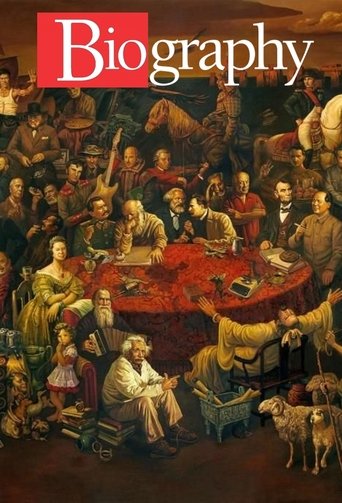 Biography
 is a documentary television series. It was originally a half-hour filmed series produced for CBS by David Wolper from 1961 to 1964 and hosted by Mike Wallace. The A&E Network later re-ran it and has produced new episodes since 1987. The older version featured historical figures such as Helen Keller and Mark Twain, or long-dead entertainment figures such as Will Rogers or John Barrymore. The A&E series has placed the emphasis on such people as Marilyn Monroe, Elvis Presley, Plácido Domingo, Freddie Mercury, Jacqueline Kennedy Onassis, Eric Clapton, Pope John Paul II, Gene Tierney, Selena, Diego Rivera, Mao Zedong and Queen Elizabeth II, and fictional characters like The Phantom, Superman, Hamlet, Betty Boop, and Santa Claus. The program ended up profiling enough figures that in 1999, A&E spun it off into an entire network, The Biography Channel.
Biography
Biography is a documentary television series. It was originally a half-hour filmed series produced for CBS by David Wolper from 1961 to 1964 and hosted by Mike Wallace. The A&E Network later re-ran it and has produced new episodes since 1987. The older version featured historical figures such as Helen Keller and Mark Twain, or long-dead entertainment figures such as Will Rogers or John Barrymore. The A&E series has placed the emphasis on such people as Marilyn Monroe, Elvis Presley, Plácido Domingo, Freddie Mercury, Jacqueline Kennedy Onassis, Eric Clapton, Pope John Paul II, Gene Tierney, Selena, Diego Rivera, Mao Zedong and Queen Elizabeth II, and fictional characters like The Phantom, Superman, Hamlet, Betty Boop, and Santa Claus. The program ended up profiling enough figures that in 1999, A&E spun it off into an entire network, The Biography Channel.
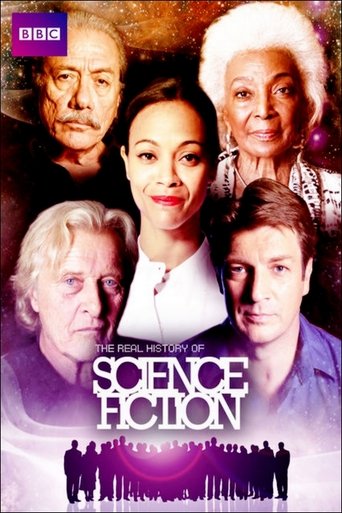 The Real History of Science Fiction
The series heads to the very frontiers of space and science to produce the definitive television history of science fiction, told through its impact on cinema, television and literature, with the help of filmmakers, writers, actors, and graphic artists. Each episode will explore one of the enduring themes of science fiction: time travel; the exploration of space; robots and artificial intelligence; and aliens.
The Real History of Science Fiction
The series heads to the very frontiers of space and science to produce the definitive television history of science fiction, told through its impact on cinema, television and literature, with the help of filmmakers, writers, actors, and graphic artists. Each episode will explore one of the enduring themes of science fiction: time travel; the exploration of space; robots and artificial intelligence; and aliens.
 The New York Times Presents
A series of standalone documentaries powered by the unparalleled journalism and insight of The New York Times, bringing viewers close to the essential stories of our time.
The New York Times Presents
A series of standalone documentaries powered by the unparalleled journalism and insight of The New York Times, bringing viewers close to the essential stories of our time.
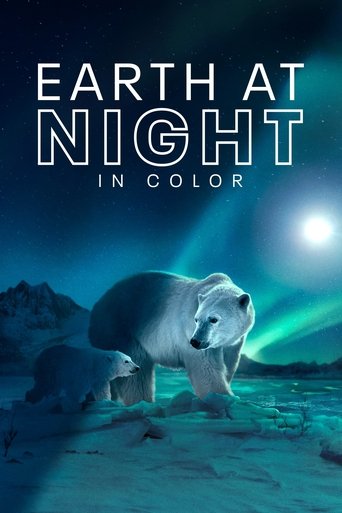 Earth at Night in Colour
Filmed across six continents, this docuseries uses cutting-edge camera technology to capture animals' nocturnal lives, revealing new behaviours filmed in full color like never before.
Earth at Night in Colour
Filmed across six continents, this docuseries uses cutting-edge camera technology to capture animals' nocturnal lives, revealing new behaviours filmed in full color like never before.
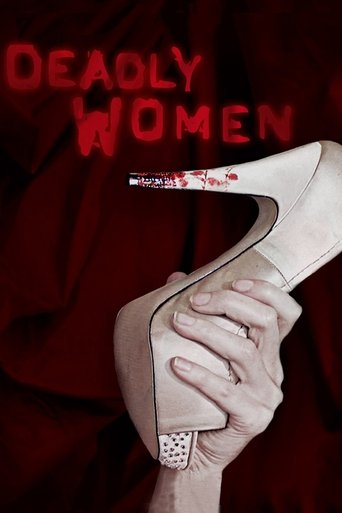 Deadly Women
This compelling series investigates the motives and m.o. of female murderers. While males are often driven by anger, impulse and destruction, women usually have more complex, long-term reasons to kill.
Deadly Women
This compelling series investigates the motives and m.o. of female murderers. While males are often driven by anger, impulse and destruction, women usually have more complex, long-term reasons to kill.
 Doctor Who Confidential
 is a documentary to complement the revival of the long-running British science fiction television series Doctor Who. Each episode was broadcast on BBC Three on Saturdays, immediately after the broadcast of the weekly television episode on BBC One. The running time of the first two series was 30 minutes, being extended to 45 minutes in the third. BBC Three also broadcast a cut-down edition of the programme, lasting 15 minutes, shown after the repeats on Sundays and Fridays and after the weekday evening repeats of earlier seasons.
Doctor Who Confidential
Doctor Who Confidential is a documentary to complement the revival of the long-running British science fiction television series Doctor Who. Each episode was broadcast on BBC Three on Saturdays, immediately after the broadcast of the weekly television episode on BBC One. The running time of the first two series was 30 minutes, being extended to 45 minutes in the third. BBC Three also broadcast a cut-down edition of the programme, lasting 15 minutes, shown after the repeats on Sundays and Fridays and after the weekday evening repeats of earlier seasons.