
Episode
Horizon: Man in Space
Overview
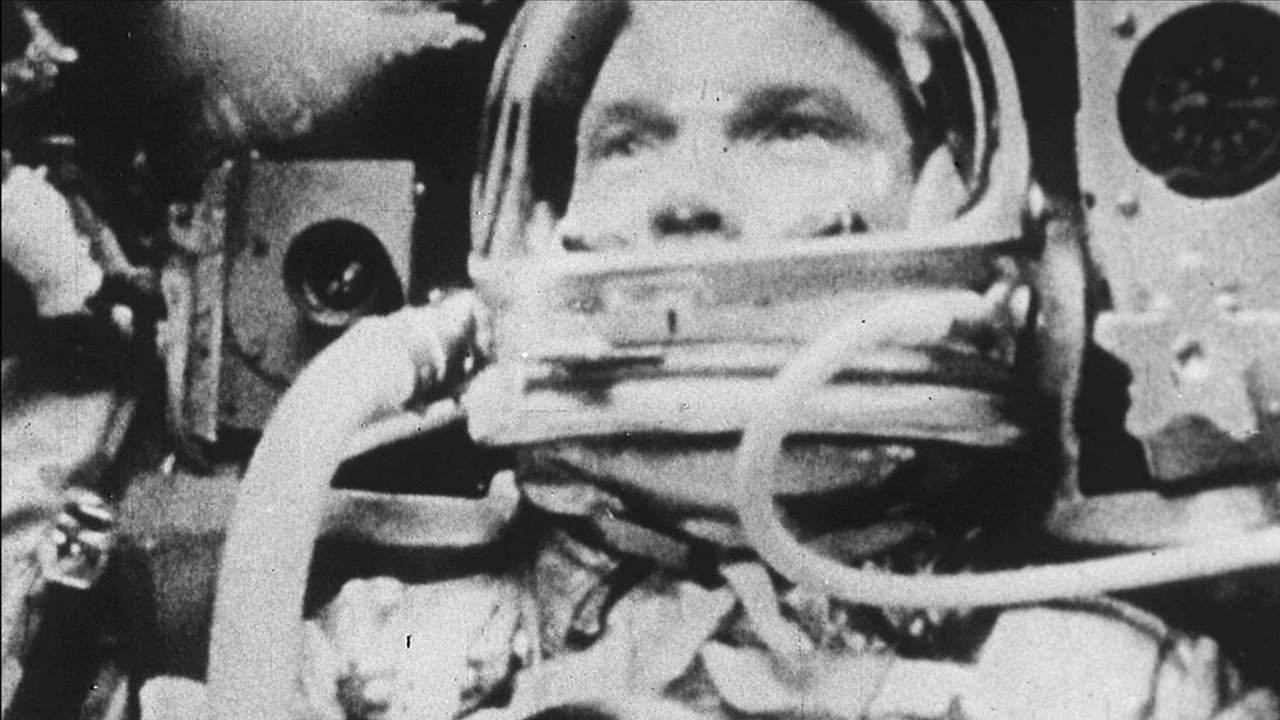
Horizon travels to the spacecraft center in Houston, Texas to study astronauts in space and how they react to being in space and the stresses of launching and re-entry.
Details
- Series
- Horizon
- Season
- Season 3
- Episode
- Episode 10
- Air date
- 1966-05-08
- Runtime
- 40 min
Episode context
Man in Space is Episode 10 in 1966 of Horizon. It aired on 1966-05-08. The runtime is 40 min.
Previous / Next
 Episode 9: Towers of Ilium / The Exploding City
The location of the historic city of Troy was finally pinned down by the researches of Carl Blegen.
By A.D. 2,000, more than half the world's population may be living in cities. The population of some of them may exceed 60 million. This is one of the main preoccupations of the World Institute of Ekistics.
Episode 11: Destination Mars / Editors in Conference"
Horizon looks at the possibilities of landing a man on the planet Mars.
The Editors of two leading scientific magazines, Dennis Flanagan of the Scientific American, and Nigel Calder of the New Scientist, discuss with Gordon Rattray Taylor the problems of popularizing science and placing it in a social context.
Episode 9: Towers of Ilium / The Exploding City
The location of the historic city of Troy was finally pinned down by the researches of Carl Blegen.
By A.D. 2,000, more than half the world's population may be living in cities. The population of some of them may exceed 60 million. This is one of the main preoccupations of the World Institute of Ekistics.
Episode 11: Destination Mars / Editors in Conference"
Horizon looks at the possibilities of landing a man on the planet Mars.
The Editors of two leading scientific magazines, Dennis Flanagan of the Scientific American, and Nigel Calder of the New Scientist, discuss with Gordon Rattray Taylor the problems of popularizing science and placing it in a social context.
More episodes from this season
Episode 8: Chance and Decay / Meteorite Mystery
Europe's heritage of pictures, statues, and buildings is being destroyed at a frightening rate by atmospheric pollution, but an American scientist has just invented a method of preserving limestone.
In 1908, a vast explosion shook the Tungus district of Siberia: was it due to the biggest meteorite ever to hit the earth, or something odder?
Episode 12: Man meets Duck / The Picture Machines
Gordon Taylor meets with Konrad Lorenz, the inventor of ethology, and interviews him about his work on animal instinct and his theories about human instinct.
The world knows all about the uncanny mathematical abilities of the computer. But what happens when these machines learn to draw?
Episode 7: So you want to be an Inventor? / The Severed Hand
Horizon looks into inventors who struggle against exploding technology, the buying power of great industries and taxation problems to make their leaps into the unknown.
An account of a remarkable surgical operation recently performed in China.
Episode 13: Where must the Money Go? / Phantoms Incorporated
Horizon explores substitute 'phantoms' which are used in radiation studies, manned spaceflight experiments and accident research that gives valuable information on the limits of tolerance on the human body.
Episode 6: The Beginning of Life / Science Friction
A remarkable Swedish film of the gradual development of the human embryo from fertilisation until birth.
One man's impression of what science has done for the modern world: an animated film by Stan Vanderbeek.
Episode 14: Genes in Action / Scientists and War
Dr. John Gurdon talks about the action of the chromosomes puffing when they undergo intense genetic activity.
Sir Solly Zuckerman talks about his new book Scientists and War which outlines his views on the impact of science on affairs civil and military.
Episode 5: Route 128
North of Boston, on Route 128, a new industrial landscape based on science is developing. Here men of high intellectual qualifications are developing way-out products, including a helicopter powered by radio waves, a computer which teaches medical diagnosis, and a hair-raising way of testing driving conditions.
Episode 15: The Lonely Children
Horizon investigates the research conducted in England and America on the problems associated with autistic children.
Episode 4: The Dolphins that Joined The Navy / A Theory of The Earth
Horizon looks at the research of dolphins being conducted at a United States naval base in Port Magu, California. The research concentrates on the dolphin's abilities of navigation.
The eminent Canadian geologist, Professor Tuzo Wilson, explains his new 'Froth on the Broth' theory of the structure of the earth to David Wilson.
Episode 16: Man of Science / 'Nature' Tomorrow
This episode of Horizon reports on the famous science fiction writer, H. G. Wells.
An interview with John Maddox, the new editor of one of the world's most influential scientific journals, Nature, in which he discusses his ideas for bringing up-to-date the magazine's coverage of scientific events.