Episode
Horizon: Time Stood Still / Weighty Matters
Overview
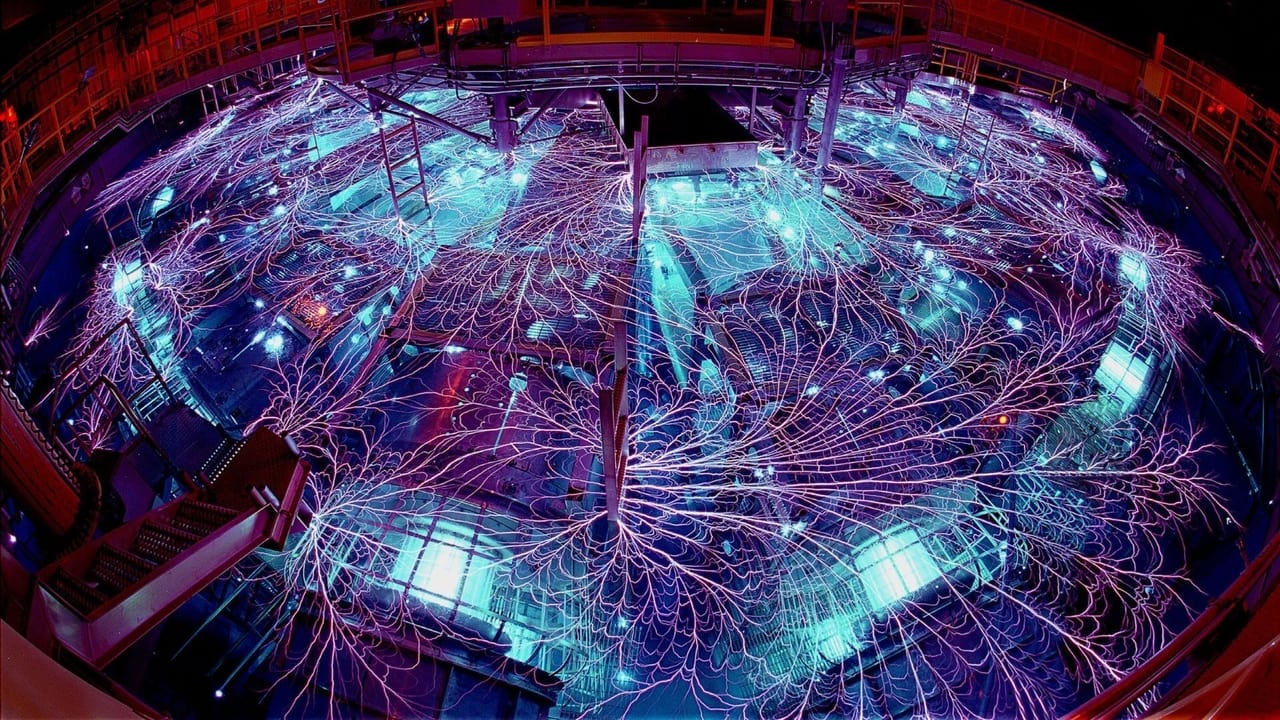
Professor Harold Edgerton of the Massachusetts Institute of Technology, who has won international recognition for his achievements in ultra-high-speed photography, talks about his work and shows some of the remarkable pictures, both still and moving, that he has taken.
Details
- Series
- Horizon
- Season
- Season 2
- Episode
- Episode 16
- Air date
- 1965-08-25
- Runtime
- 60 min
Episode context
Time Stood Still / Weighty Matters is Episode 16 in 1965 of Horizon. It aired on 1965-08-25. The runtime is 60 min.
Previous / Next
Episode 15: Certain of Uncertainty / State of Nature
The four men who opened up a new field of physics: Max Born, Paul Dirac, Werner Heisenberg and George Thompson meet and discuss topic with John Charap at the annual science conference in Lindau, Germany.
Episode 17: Fuel for the Future / Collector's Piece
Horizon interviews Prof. Andrade about his collection of rare scientific books which he was about to sell.
More episodes from this season
Episode 14: Science Fiction : Science Fact? / Alone and Unarmed
Is all science fiction merely fantasy - or can it give valuable clues to the future?
A discussion between Desmond Morris and the ethologist George Schaller.
Episode 18: Let Newton Be
On the 300th anniversary of Isaac Newton's greatest year of discovery, one of his most ardent disciples, Prof. Julius Summer-Miller, comes from California to illustrate the excitement of seeing Newton's principles in action.
Episode 13: Dr. Joseph Needham / Mariner IV
This episode of Horizon features Dr. Joseph Needham, an eminent scientist and humanist who is perhaps the greatest living authority on China.
An account of the space probe Mariner IV which will be flying past Mars tonight.
Episode 19: Special Senses / Toil, Sweat & Tears
What sort of person can invent a 3-D microscope, a new way of photographing the moon, publish fifty papers on perception, and spend three weeks hunting for a minute sea creature to see how its eyes work? Cambridge psychologist Richard Gregory is a man of many facets. Tonight's film examines his inventiveness—its sources and its products.
An M.R.C. team headed by Dr. D. G. Phillips has taken the first step towards answering the vital question: how do enzymes work?
Episode 12: The Brain Gain / The Sudden Night / Learning to Speak
Dr. Jacob Bronowski, who a year ago took up the deputy directorship of the Salk Institute in California, discusses with Tom Rosenthal his new activities and how he feels about working in the golden West.
The recent total eclipse of the sun was probably the most closely studied ever. With special film from the Pacific, Horizon examines what was done and why.
For the first time deaf children can see a visual pattern of their own attempts at speech. In the programme a new machine is shown which may revolutionize the teaching of speech and language to these handicapped children.
Episode 20: An Affair of the Heart
Horizon explores heart attacks and thrombosis.
Episode 11: Men and Sharks / Sir Henry Dale, OM, FRS
Horizon looks at Prof. Perry Gilbert's research on captured sharks and meets with the eminent physiologist Sir Henry Dale as he celebrates his 90th birthday and looks back on his career in medical research.
The eminent physiologist, who celebrates his ninetieth birthday today, looks back on his first discovery sixty years ago.
Episode 21: 10,000 Tombs
Horizon probes into the Etruscan tombs in Italy.
Carlo Lerici, scientist and archaeologist, has brought past and future together. Using geophysical methods intended for mineral surveying, he has detected 10,000 unknown Etruscan tombs in ten years.
Episode 10: The Long Slide / Men with Gills
When a rubber tyre rolls fast on a wet surface it may rise on a film of water and begin to 'aquaplane.' Scientists are studying this fact which creates a real hazard to aircraft passengers and fast drivers.
A new membrane developed in America holds forth the prospect of men being able to live under water.
Episode 22: Albert Szent-Györgyi M.D., Ph.D., D.h.c.
Horizon profiles the scientist, polymath, and Nobel prize winner Prof. Albert Szent-Gyorgi.