
Episode
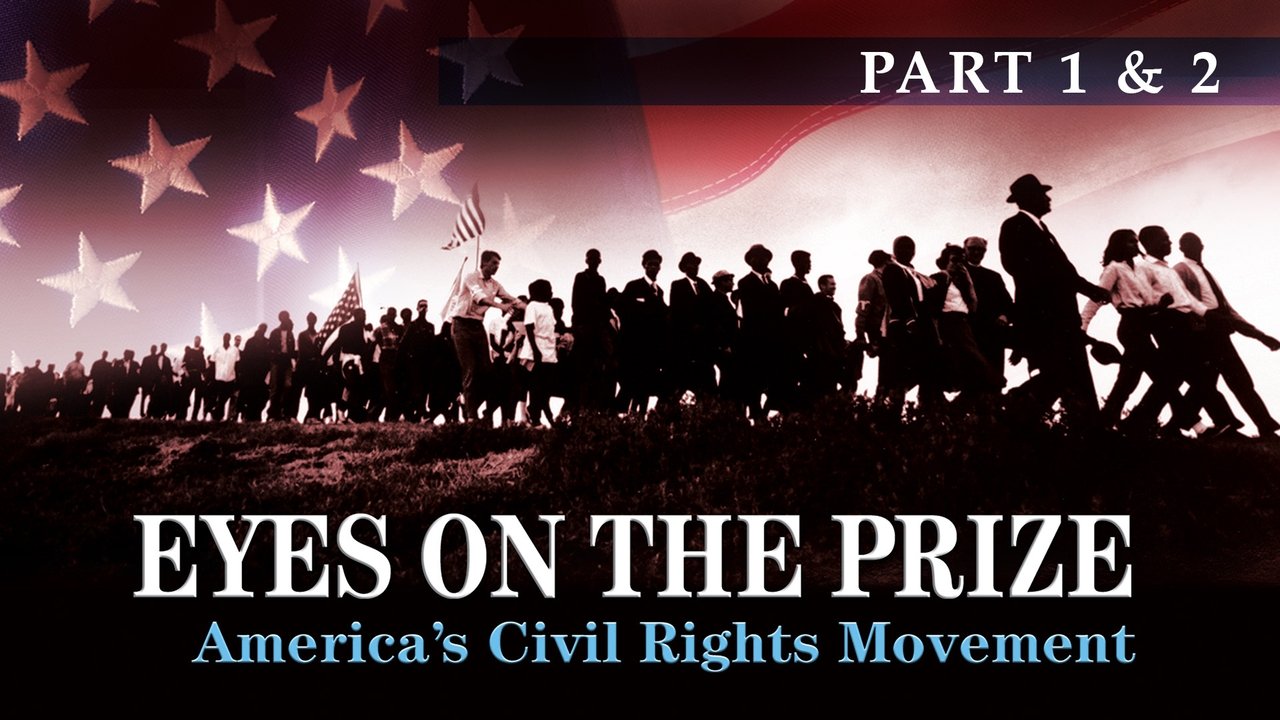
American Experience: Eyes on the Prize (1 & 2): Awakenings 1954-1956 / Fighting Back 1957-1962
Overview
Part 1 of 3 of the award-winning 1987 documentary "Eyes on the Prize." Included: profiles of Mose Wright and Rosa Parks; conflicts sparked by the Supreme Court's 1955 ruling that schools should be integrated; James Meredith's efforts to enroll at the University of Mississippi in 1962; and newsreel comments by former Mississippi senator James Eastland.
Details
- Series
- American Experience
- Season
- Season 19
- Episode
- Episode 1
- Air date
- 2006-10-02
- Runtime
- 55 min
Episode context
Eyes on the Prize (1 & 2): Awakenings 1954-1956 / Fighting Back 1957-1962 is Episode 1 in Season 19 of American Experience. It aired on 2006-10-02. The runtime is 55 min.
Previous / Next

More episodes from this season
 Episode 3: Eyes on the Prize (5 & 6): Is This America? 1963-1964 / Bridge to Freedom 1965
Conclusion of the 1987 documentary “Eyes on the Prize.” Included: events of 1963 and '64, when Mississippi became a battleground in the civil-rights movement; the 1963 assassination of Medgar Evers; the 1964 black voter-registration drive; the march for voting rights from Selma to Montgomery.
Episode 3: Eyes on the Prize (5 & 6): Is This America? 1963-1964 / Bridge to Freedom 1965
Conclusion of the 1987 documentary “Eyes on the Prize.” Included: events of 1963 and '64, when Mississippi became a battleground in the civil-rights movement; the 1963 assassination of Medgar Evers; the 1964 black voter-registration drive; the march for voting rights from Selma to Montgomery.
 Episode 4: Test Tube Babies
History of in vitro fertilization, traces IVF from an early success with rabbits to the present. Included: controversy and setbacks; the 1978 birth of Louise Joy Brown, the first IVF-born baby; the birth of America's first test-tube baby, Elizabeth Jordan Carr, in 1981. Also: comments from scientists, a couple involved in a lawsuit against a hospital.
Episode 4: Test Tube Babies
History of in vitro fertilization, traces IVF from an early success with rabbits to the present. Included: controversy and setbacks; the 1978 birth of Louise Joy Brown, the first IVF-born baby; the birth of America's first test-tube baby, Elizabeth Jordan Carr, in 1981. Also: comments from scientists, a couple involved in a lawsuit against a hospital.
 Episode 5: The Great Fever
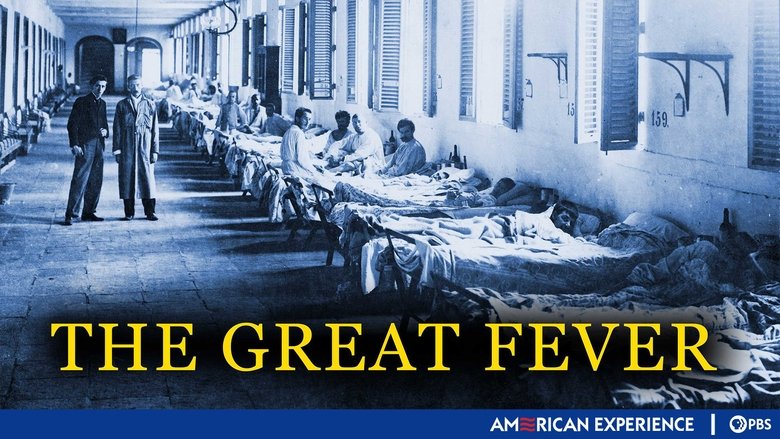
The history of yellow fever, and how it was determined that the disease was transmitted by mosquitoes. Included: the work of Carlos Finlay, the Cuban physician who found the link to the insects; how Finlay's theory influenced Jesse Lazear and James Carroll, scientists who were part of Walter Reed's team after Reed was sent by the U.S. to Havana to find the cause of the disease when American troops were sent to Cuba following the Spanish-American War.
Episode 5: The Great Fever
The history of yellow fever, and how it was determined that the disease was transmitted by mosquitoes. Included: the work of Carlos Finlay, the Cuban physician who found the link to the insects; how Finlay's theory influenced Jesse Lazear and James Carroll, scientists who were part of Walter Reed's team after Reed was sent by the U.S. to Havana to find the cause of the disease when American troops were sent to Cuba following the Spanish-American War.
 Episode 6: The Gold Rush
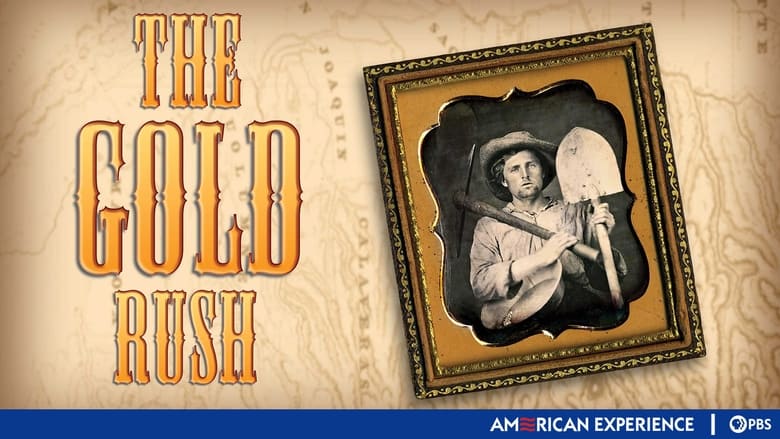
A vibrant retelling of the mania that followed the discovery of gold in San Francisco in 1848. "Next to the Civil War in the 19th century," says historian J.S. Holliday, "no other event had a greater impact." The focus is on five real-life adventurers, including a down-on-his-luck Chilean aristocrat; a New York blacksmith who leaves his family in hopes of striking it rich; and a determined Missouri woman.
Episode 6: The Gold Rush
A vibrant retelling of the mania that followed the discovery of gold in San Francisco in 1848. "Next to the Civil War in the 19th century," says historian J.S. Holliday, "no other event had a greater impact." The focus is on five real-life adventurers, including a down-on-his-luck Chilean aristocrat; a New York blacksmith who leaves his family in hopes of striking it rich; and a determined Missouri woman.
 Episode 7: The Berlin Airlift
One of the first skirmishes of the Cold War, the 1948-49 Soviet blockade of rail and road traffic to and from West Berlin, is recalled. The U.S. and its allies responded with an airlift of food and supplies to residents. Included: archival footage; and comments from mission pilots and some of the civilians who received aid.
Episode 7: The Berlin Airlift
One of the first skirmishes of the Cold War, the 1948-49 Soviet blockade of rail and road traffic to and from West Berlin, is recalled. The U.S. and its allies responded with an airlift of food and supplies to residents. Included: archival footage; and comments from mission pilots and some of the civilians who received aid.
 Episode 8: The Living Weapon
"The Living Weapon" explores the history of America's biological-weapons program, which began in 1942 with a group that worked parallel to the Manhattan Project, and continued to 1969, when President Nixon terminated it. Included: comments from Bill Patrick, the program's chief of product development; bioweapons historian Norman Covert; biowarfare expert Martin Furmanski; historian Brian Balmer; Jeanne Guillemin, senior adviser to MIT's Security Studies Program.
Episode 8: The Living Weapon
"The Living Weapon" explores the history of America's biological-weapons program, which began in 1942 with a group that worked parallel to the Manhattan Project, and continued to 1969, when President Nixon terminated it. Included: comments from Bill Patrick, the program's chief of product development; bioweapons historian Norman Covert; biowarfare expert Martin Furmanski; historian Brian Balmer; Jeanne Guillemin, senior adviser to MIT's Security Studies Program.
 Episode 9: New Orleans (1 & 2)
A history of New Orleans, from its origins as a French settlement to its post-Katrina present. Included: archival photos and film footage; and comments from New Orleans historians, residents and scholars on subjects like the birth of jazz, the city's struggles with integration and segregation, the white flight to the suburbs in the 1950s and the return of Katrina survivors.
Episode 9: New Orleans (1 & 2)
A history of New Orleans, from its origins as a French settlement to its post-Katrina present. Included: archival photos and film footage; and comments from New Orleans historians, residents and scholars on subjects like the birth of jazz, the city's struggles with integration and segregation, the white flight to the suburbs in the 1950s and the return of Katrina survivors.
 Episode 10: Sister Aimee
A profile of Sister Aimee Semple McPherson (1890-1944), a popular Pentecostal evangelist during the 1920s and '30s. Included: comments from biographer Matthew Avery Sutton, author Daniel Mark Epstein, and Boston University religion professor Stephen Prothero.
Episode 10: Sister Aimee
A profile of Sister Aimee Semple McPherson (1890-1944), a popular Pentecostal evangelist during the 1920s and '30s. Included: comments from biographer Matthew Avery Sutton, author Daniel Mark Epstein, and Boston University religion professor Stephen Prothero.
 Episode 11: Jonestown: The Life and Death of Peoples Temple
Examines the story behind the November 1978 mass murder-suicide in Jonestown, Guyana, where more than 900 people were led to their deaths by cult leader Jim Jones. Included: comments from Jones' son, Jim Jr.; survivor Stanley Clayton; and Hue Fortson, whose wife and child died in the incident.
Episode 11: Jonestown: The Life and Death of Peoples Temple
Examines the story behind the November 1978 mass murder-suicide in Jonestown, Guyana, where more than 900 people were led to their deaths by cult leader Jim Jones. Included: comments from Jones' son, Jim Jr.; survivor Stanley Clayton; and Hue Fortson, whose wife and child died in the incident.
 Episode 12: Summer of Love
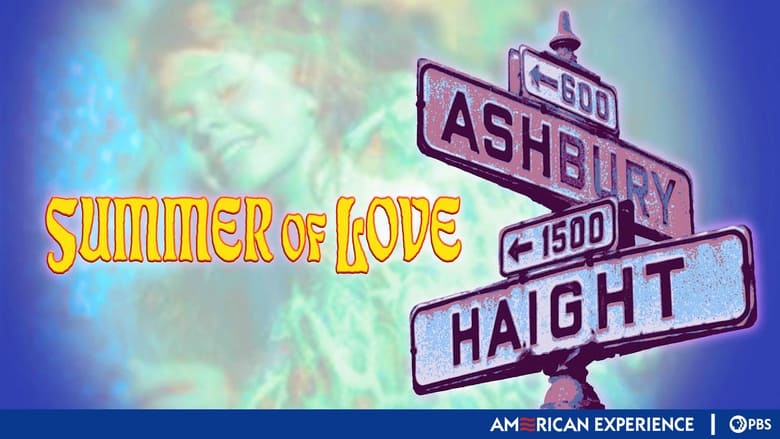
In 1967, San Francisco's Haight-Ashbury district became a mecca for young people seeking free music, free love and cosmic oneness, but quickly became home to rampant drug abuse, food shortages and STDs. Included: the cultural and social forces that spurred people to migrate to the Haight; and comments from music critic Joel Selvin, actor Peter Coyote and former mayor Willie Brown.
Episode 12: Summer of Love
In 1967, San Francisco's Haight-Ashbury district became a mecca for young people seeking free music, free love and cosmic oneness, but quickly became home to rampant drug abuse, food shortages and STDs. Included: the cultural and social forces that spurred people to migrate to the Haight; and comments from music critic Joel Selvin, actor Peter Coyote and former mayor Willie Brown.